 Free Shipping On Every Order



Rent More, Save More! Use code: KBRENTAL
5% off 1 book, 7% off 2 books, 10% off 3+ books
Saving the Light at Chartres How the Great Cathedral and Its Stained-Glass Treasures Were Rescued during World War II
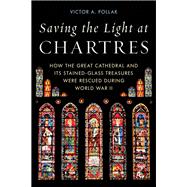
Saving the Light at Chartres How the Great Cathedral and Its Stained-Glass Treasures Were Rescued during World War II
- ISBN 13: 9780811739016
- ISBN 10: 0811739015
- Format: Hardcover
- Copyright: 03/16/2020
- Publisher: Stackpole Books
Sorry, this item is currently unavailable.
 Free Shipping On Every Order
List Price $29.95 Save $0.18
New
$29.77
This is a hard-to-find title. We are making every effort to obtain this item, but do not guarantee stock.
 We Buy This Book Back!
Included with your book
.svg "Free Shipping On Every Order") Free Shipping On Every Order
Free Shipping On Every Order
Note: Supplemental materials are not guaranteed with Rental or Used book purchases.
Need to keep your rental past your due date? At any time before your due date you can extend or purchase your rental through your account.
Summary
Built around 1200 and now a UNESCO World Heritage Site that draws more than a million visitors and pilgrims each year, Chartres Cathedral is one of the jewels of Western Civilization. How Chartres Cathedral and its priceless stained glass (today the largest such collection in one location) survived World War II’s widespread destruction of cultural monuments is one of the great stories of recent history.
Saving the Light at Chartres begins half a decade before World War II, when a young French architect developed a plan to save the cathedral’s precious stained glass. As war engulfed Europe in the fall of 1939, master glass artisans dismantled the hundreds of windows, and soldiers, tradesmen, and laborers with local volunteers crated thousands of glass panels, stowed them in the crypt, and months later—just before German invaders reached Chartres—hauled them across the country to an underground quarry.
This effort to save the stained glass is but a prologue. By August 1944, the U.S. Army had broken out of Normandy and was racing across France toward Paris and the Seine. Chartres became a key battleground. Allied bombing blew out the cathedral’s temporary window coverings, and when the Americans—assisted by French Resistance fighters—entered the city in the face of unexpectedly heavy defiance and snipers in the cathedral, many soldiers believed German artillery spotters were occupying the cathedral’s spires. When Colonel Welborn Griffith Jr.—a senior operations officer of Twentieth Corps in Patton’s Third Army—arrived, some were pressing to countermand the army’s standing order to avoid the cathedral and threatened to destroy it to neutralize the German spotters. Griffith was skeptical. He inspected the cathedral himself, climbed its towers, but found no Germans, so he rang the bell, waved an American flag, and ordered that the cathedral be spared, saving it from destruction. Griffith would be killed later that day.
Victor Pollak tells both stories—the rescue of the windows and Colonel Griffith’s fateful role—in a compelling narrative. Saving the Light at Chartres honors the government and local teams who saved the windows, the Resistance that performed a vital role in the liberation of Chartres, Welborn Griffith, and the enduring treasure that is Chartres Cathedral.
Saving the Light at Chartres begins half a decade before World War II, when a young French architect developed a plan to save the cathedral’s precious stained glass. As war engulfed Europe in the fall of 1939, master glass artisans dismantled the hundreds of windows, and soldiers, tradesmen, and laborers with local volunteers crated thousands of glass panels, stowed them in the crypt, and months later—just before German invaders reached Chartres—hauled them across the country to an underground quarry.
This effort to save the stained glass is but a prologue. By August 1944, the U.S. Army had broken out of Normandy and was racing across France toward Paris and the Seine. Chartres became a key battleground. Allied bombing blew out the cathedral’s temporary window coverings, and when the Americans—assisted by French Resistance fighters—entered the city in the face of unexpectedly heavy defiance and snipers in the cathedral, many soldiers believed German artillery spotters were occupying the cathedral’s spires. When Colonel Welborn Griffith Jr.—a senior operations officer of Twentieth Corps in Patton’s Third Army—arrived, some were pressing to countermand the army’s standing order to avoid the cathedral and threatened to destroy it to neutralize the German spotters. Griffith was skeptical. He inspected the cathedral himself, climbed its towers, but found no Germans, so he rang the bell, waved an American flag, and ordered that the cathedral be spared, saving it from destruction. Griffith would be killed later that day.
Victor Pollak tells both stories—the rescue of the windows and Colonel Griffith’s fateful role—in a compelling narrative. Saving the Light at Chartres honors the government and local teams who saved the windows, the Resistance that performed a vital role in the liberation of Chartres, Welborn Griffith, and the enduring treasure that is Chartres Cathedral.


