 Free Shipping On Every Order



Rent More, Save More! Use code: KBRENTAL
5% off 1 book, 7% off 2 books, 10% off 3+ books
The Big Book of Restorative Justice
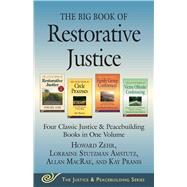
The Big Book of Restorative Justice
- ISBN 13: 9781680990560
- ISBN 10: 168099056X
- Format: Paperback
- Copyright: 10/13/2015
- Publisher: Skyhorse Pub
List Price $24.99 Save
| TERM | PRICE | DUE |
|---|---|---|
 Free Shipping Both Ways
Highlight/Take Notes Like You Own It
Purchase/Extend Before Due Date
 Free Shipping On Every Order
List Price $24.99 Save $4.96
In Stock Usually Ships in 24 Hours.
 We Buy This Book Back!
.svg "Free Shipping On Every Order") Free Shipping On Every Order
Free Shipping On Every Order
List Price $24.99 Save $0.14
In Stock Usually Ships in 24 Hours.
We Buy This Book Back!
Free Shipping On Every Order
Note: Supplemental materials are not guaranteed with Rental or Used book purchases.
Need to keep your rental past your due date? At any time before your due date you can extend or purchase your rental through your account.
Summary
Restorative justice, with its emphasis on identifying the justice needs of everyone involved in a crime, is a worldwide movement of growing influence that is helping victims and communities heal while holding criminals accountable for their actions. This is not a soft-on-crime, feel-good philosophy, but rather a concrete effort to bring justice and healing to everyone involved in a crime. Circle processes draw from the Native American tradition of gathering in a circle to solve problems as a community. Peacemaking circles are used in neighborhoods, in schools, in the workplace, and in social services to support victims of all kinds, resolve behavior problems, and create positive climates.
Each book is written by a scholar at the forefront of these movements, making this important reading for classrooms, community leaders, and anyone involved with conflict resolution.


