FREE SHIPPING BOTH WAYS
ON EVERY ORDER!
LIST PRICE:
$41.00

OUR PRICE:
$16.24

You may extend rentals at any time.


The ABCs of CBM; A Practical Guide to Curriculum-Based Measurement
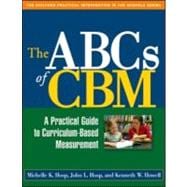
ISBN: 9781593853990 | 1593853998
Edition: 1st
Format: Trade Paper
Publisher: The Guilford Press
Pub. Date: 12/12/2006

Why Rent from Knetbooks?

Because Knetbooks knows college students. Our rental program is designed to save you time and money. Whether you need a textbook for a semester, quarter or even a summer session, we have an option for you. Simply select a rental period, enter your information and your book will be on its way!

Top 5 reasons to order all your textbooks from Knetbooks:

  • We have the lowest prices on thousands of popular textbooks
  • Free shipping both ways on ALL orders
  • Most orders ship within 48 hours
  • Need your book longer than expected? Extending your rental is simple
  • Our customer support team is always here to help
SummaryTable of ContentsAuthor Biography
This pragmatic, accessible book presents an empirically supported conceptual framework and hands-on instructions for conducting curriculum-based measurement (CBM) in grades K-8. The authors provide everything needed to evaluate student learning in reading, spelling, writing, and math; graph the resulting data; and use this information to make sound instructional decisions, plan interventions, and monitor progress. The role of CBM within a response-to-intervention model is also explained. Every chapter includes helpful answers to frequently aske... MORE
... MORE
What Is CBM and Why Should I Do It?p. 1
What Will I Learn from This Book?p. 2
What Is CBM?p. 2
Why Were the Other Attributes, Like the Timing and Charting, Developed?p. 3
How Is CBM Different from Other Forms of Measurement?p. 5
Curriculump. 5
Alterable Variablesp. 6
Low-Inference Measuresp. 6
Criterion-Referenced Measuresp. 7
What Are the Main Advantages of CBM?p. 8
What Kind of Decisions Can I Make with CBM Data?p. 9
How Does CBM Relate to RTI?p. 9
So CBM Does Just About Everything?p. 10
Are There Different Types of CBM?p. 10
General Outcome Measuresp. 10
Skills-Based Measuresp. 11
Mastery Measuresp. 12
I Have Never Seen CBM Being Used. If It's So Great, Why Isn't It More Popular?p. 14
Is CBM Used in Special Education or General Education?p. 16
Who Gives CBM Measures?p. 16
If I Want to Use CBM, Does This Mean I'll Need to Make Tests Out of the Instructional Materials I'm Using?p. 17
Where Do I Get CBM Materials?p. 18
CBM for Assessment and Problem Solvingp. 19
What Do I Need to Know about Educational Decision Making?p. 20
What Is a Criterion-Referenced Test?p. 22
Are CBMs Standardized Tests?p. 24
How Reliable and Valid Is CBM?p. 24
Where Do They Get the Performance Standards Used in CBM?p. 25
How Can CBM Be Used for Screening/Benchmarking?p. 26
Screening Summaryp. 27
How Can CBM Be Used for Progress Monitoring?p. 27
Progress Monitoring Summaryp. 28
So Where Do We Go from Here?p. 29
How to Conduct Reading CBMp. 31
Overview of Why to Conduct Reading CBMp. 31
ORF CBMp. 32
Materials Needed to Conduct ORF CBMp. 32
Directions and Scoring Procedures for ORF CBMp. 35
Maze CBMp. 40
Materials Needed to Conduct Maze CBMp. 40
Directions and Scoring Procedures for Maze CBMp. 42
How Often Should ORF and Maze CBM Be Given?p. 44
How Much Time Does It Take to Administer and Score Reading CBM?p. 46
Expected Growth Rates and Norms for ORF and Maze CBMp. 46
How Much Progress Can We Expect in Reading?p. 46
Proficiency Levels or Benchmarks for Reading CBMp. 48
Norms for Reading CBMp. 48
Survey-Level Assessment with ORF CBMp. 51
How to Use the Information to Write Reading IEP Goals and Objectivesp. 51
Frequently Asked Questions about Reading CBMp. 53
How to Conduct Early Reading CBMp. 55
Overview of Why to Conduct Early Reading CBMp. 55
Overview of Dibels Measuresp. 56
Initial Sound Fluency and Phoneme Segmentation Fluencyp. 56
Nonsense Word Fluencyp. 57
Letter Naming Fluencyp. 57
LSF CBMp. 57
Materials Needed to Conduct LSF CBMp. 57
Directions and Scoring Procedures for LSF CBMp. 59
WIF CBMp. 63
Materials Needed to Conduct WIF CBMp. 63
Directions and Scoring Procedure for WIF CBMp. 64
How Often Should LSF and WIF CBM Be Given?p. 67
How Much Time Does It Take to Administer and Score Early Reading CBM?p. 68
Expected Growth Rates and Norms for LSF and WIF CBMp. 68
Proficiency Levels or Benchmarks for Early Reading CBMp. 68
Norms for Early Reading CBMp. 68
How to Use the Information to Write Early Reading IEP Goals and Objectivesp. 69
Frequently Asked Questions about Early Reading CBMp. 70
How to Conduct Spelling CBMp. 72
Overview of Why to Conduct Spelling CBMp. 72
Materials Needed to Conduct Spelling CBMp. 72
Spelling CBM Listsp. 73
Directions and Scoring Procedures for Spelling CBMp. 75
Directions for Spelling CBMp. 75
Scoring Spelling CBMp. 76
How Often Should Spelling CBM Be Given?p. 78
How Much Time Does It Take to Administer and Score Spelling CBM?p. 78
Expected Growth Rates and Norms for Spelling CBMp. 79
How Much Progress Can We Expect in Spelling?p. 79
Norms for Spelling CBMp. 80
How to Use the Information to Write Spelling IEP Goals and Objectivesp. 80
Frequently Asked Questions about Spelling CBMp. 80
How to Conduct Writing CBMp. 84
Overview of Why to Conduct Writing CBMp. 84
Materials Needed to Conduct Writing CBMp. 85
Writing CBM Story Startersp. 85
Directions and Scoring Procedures for Writing CBMp. 88
Directions for Writing CBMp. 88
Scoring Writing CBMp. 88
How Often Should Writing CBM Be Given?p. 93
How Much Time Does It Take to Administer and Score Writing CBM?p. 93
Expected Growth Bates and Norms for Writing CBMp. 93
How to Use the Information to Write Writing IEP Goals and Objectivesp. 94
Frequently Asked Questions about Writing CBMp. 94
How to Conduct Math CBMp. 97
Overview of Why to Conduct Math CBMp. 97
Materials Needed to Conduct Math CBMp. 98
Math CBM Sheetsp. 98
Directions and Scoring Procedures for Math CBMp. 104
Directions for Math CBMp. 104
Scoring Math CBMp. 104
How Often Should Math CBM Be Given?p. 108
How Much Time Does It Take to Administer and Score Math CBM?p. 108
Expected Growth Rates and Norms for Math CBMp. 109
How Much Progress Can We Expect in Math?p. 109
Proficiency Levels or Benchmarks for Math CBMp. 109
Norms for Math CBMp. 109
Survey-Level Assessment with Math CBMp. 110
How to Use the Information to Write Math IEP Goals and Objectivesp. 111
Special Considerations That Apply to Math CBMp. 112
Accuracy of Teacher/Examiner Copyp. 112
Setting Up Math CBM Sheets to Provide Potential Diagnostic Informationp. 112
Early Numeracyp. 113
Concepts and Applicationsp. 115
Estimationp. 115
Frequently Asked Questions About Math CBMp. 116
Charting and Graphing Data to Help Make Decisionsp. 118
Procedures and Materials Needed to Chart CBM Datap. 118
How to Set and Graph Goalsp. 120
End-of-Year Benchmarksp. 120
Normsp. 121
Intraindividual Frameworkp. 122
Graphing Goalsp. 123
How Often Should Data Be Collected?p. 123
Decision Rules to Help Educators Use the Data to Inform Instructionp. 124
Considerations for Graphing and Charting the Data in the Content Areasp. 126
The Use of CBM in Response to Interventionp. 126
Computerized Graphing and Data Management Systemsp. 127
Material-Specific Programsp. 128
Material-Flexible Programsp. 129
Spreadsheet and Data Management Programsp. 130
Frequently Asked Questions about Charting and Graphing CBM Datap. 130
Planning to Use CBM-and Keeping It Goingp. 132
Developing a Plan for Using CBMp. 132
Ten Steps to Using CBM before, during, and after Initial Implementationp. 133
Hints on How to Get CBM Goingp. 138
Hints on How to Keep CBM Goingp. 138
Frequently Asked Questions about Planning and Using CBMp. 139
Summary of Validity and Reliability Studies for CBMp. 141
Reproducible Quick Guides and Forms for Conducting CBMp. 143
Referencesp. 163
Indexp. 167
Table of Contents provided by Ingram. All Rights Reserved.
Michelle K. Hosp, PhD, is an Assistant Professor of Special Education at the University of Utah. Her research focus is on using curriculum-based measurement (CBM) to inform instruction in the area of reading. Dr. Hosp has been using CBM and conducting trainings for more than 10 years and has 3 years of experience working as a trainer for the National Center on Student Progress Monitoring.
 
John L. Hosp, PhD, is an Assistant Professor of Special Education at the University of Utah. His research interests include disproportionate representation of minority students in special education, aligning assessment with intervention, and the design and implementation of response to intervention (RTI). Dr. Hosp has used CBM extensively in his own practice as a school psychologist and has trained educators in several states to use CBM and Dynamic Indicators of Basic Early Literacy Skills (DIBELS). 
 
Kenneth W. Howell, PhD, is a Professor in the Department of Special Education at Western Washington University. Dr. Howell has published extensively in the areas of curriculum-based evaluation (CBE), CBM, and evaluation. His primary areas of research interest are problem solving, RTI, CBE, CBM, and school violence. A former special education teacher and school psychologist, Dr. Howell is well known in both fields as a speaker and trainer. 


Please wait while this item is added to your cart...