FREE SHIPPING BOTH WAYS
ON EVERY ORDER!
LIST PRICE:
$81.00

OUR PRICE:
$18.24

You may extend rentals at any time.


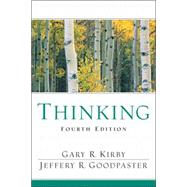
Thinking

ISBN: 9780132209748 | 0132209748
Edition: 4th
Format: Paperback
Publisher: Pearson
Pub. Date: 3/21/2006

Why Rent from Knetbooks?

Because Knetbooks knows college students. Our rental program is designed to save you time and money. Whether you need a textbook for a semester, quarter or even a summer session, we have an option for you. Simply select a rental period, enter your information and your book will be on its way!

Top 5 reasons to order all your textbooks from Knetbooks:

  • We have the lowest prices on thousands of popular textbooks
  • Free shipping both ways on ALL orders
  • Most orders ship within 48 hours
  • Need your book longer than expected? Extending your rental is simple
  • Our customer support team is always here to help
SummaryTable of Contents
This book about thinking presents readers with a systematic, practical, and friendly approach that encompasses all fields of study and business. It explores a valuable skill that will inspire and enlarge people' s ability to think through life. Chapter topics cover what thinking is, personal barriers, sensing, brain and memory, language, feeling, creative thinking, organizing, logical thinking, scientific thinking, persuasive thinking, problem solving, evaluating, decision and action, and the challenge to go on thinking. They draw ideas on thin... MORE
Prefacexiii
What Is Thinking?
1(13)
Our Cultural Legacy
1(1)
... MOREWhy Think?
2(3)
Thoughts Richer Than Gold
3(1)
Thinking as Possibility
4(1)
Thoughts Accumulate
5(1)
Life Without Thinking
5(1)
What Is Thinking?
5(1)
The Mystery
5(1)
Toward a Definition: Thinking as Communicating
6(1)
Communicating: The Mirror of Thought
6(4)
Thinking as Writing: Clarity, Exactness, Awareness, Richness
8(2)
Thinking as Dialogue: Validation and Insight
10(1)
Misthinking
10(1)
Summary
11(1)
Thinking Challenges
11
Thinking Activities Things More Important than Thinking
3(5)
Thinking, Sensing, Writing
8
Box The Centrality of Thinking
7(7)
Personal Barriers
14(39)
Enculturation
14(9)
Sources of Enculturation
15(2)
Religion and Enculturation
17(6)
Self-Concept
23(3)
Ego Defenses
26(3)
Denial
26(1)
Projection
27(1)
Rationalization
28(1)
Self-Serving Biases
29(4)
The Role of Expectations and Schemata
33(2)
Emotional Influences
35(8)
Anger
35(3)
Passion
38(1)
Depression
39(4)
Striving for Cognitive Consistency
43(2)
Stress
45(5)
Stress Management
47(3)
Summary
50(1)
Barrier Challenges
50
Thinking Activities
An Exercise in Enculturation
19(5)
The Idea of Self
24(1)
Letting Go
25(7)
Owning Up to Our Dark Side
32(9)
Five Thinking Errors
41(8)
Five Ways to Prevent Stress
49
Boxes
Some Common American Beliefs
16(3)
Spinoza: A Man of Reason
19(12)
Other Attribution Errors
31(1)
Self-Serving Biases?
31(15)
Signs and Symptoms of Stress
46(7)
Sensing
53(13)
Sensual Beginnings
53(1)
The Power of Our Senses
54(1)
The Deception of Our Senses
55(2)
Sharpening Our Senses
57(2)
Powerful Listening
59(3)
The Paradox of Powerful Listening
59(1)
How to Listen
59(3)
Summary
62(1)
Sensing and Thinking Challenges
63
Thinking Activities
Ideas: Innate or Learned?
55(1)
Our Personal Sense Deceptions
56(2)
Seeing Anew
58(3)
Developing an Action Plan
61(5)
Brain and Memory
66(24)
The Mystery
66(1)
Thinking and Our Brain
67(11)
Food and Drugs
69(3)
Sleep
72(2)
Our Thinking Potential
74(4)
Thinking and Memory
78(9)
The Changing Nature of Memory
79(2)
Forgetting
81(1)
Why We Forget
82(2)
How to Improve Memory
84(3)
Summary
87(1)
Brain and Memory Challenges
88
Thinking Activities
An Exercise in Mental Discipline
68(5)
Critical Reading Before We Sleep
73(6)
Memories of Childhood
79(6)
Using Mnemonics
85
Boxes
Brain and Mind
77(5)
Recall Versus Recognition
82(5)
Memory Pills
87(3)
Language: Our Thinking Medium
90(24)
Language and our Mind
91(4)
The Universalizing Power of Language
92(1)
The Structuring Power of Language
93(2)
Language and Society
95(2)
The Metaphorical Power of Language
97(3)
What Is a Metaphor?
97(1)
Metaphorical Models Control Thinking
98(2)
The Limitations of Language
100(1)
The Power of English
101(6)
Word Meanings
101(4)
Word Order Creates Meaning
105(1)
The Power Parts: Noun and Verb
106(1)
Thinking and the Context
106(1)
Clarity
107(1)
The Pitfalls of English
107(3)
Generalizations and Abstractions
108(1)
Wordiness
109(1)
Redundancies
109(1)
Illogicalities
109(1)
Cliches
110(1)
Summary
110(1)
Language Challenges
111
Thinking Activities
Language and Thinking
91(3)
A Brief Mind Sketch
94(8)
The Language In Our Mind
102(2)
Identifying Our Flame Words
104
Boxes
Evolution of Languages and the Effect on Metaphors
98(1)
Language, Lawyers, and Lawmakers
99(8)
Clearly Embarrassing
107(1)
High Specificity
108(6)
Feeling
114(11)
Feelings and Thinking
114(1)
Cultural Context
115(1)
Business
116(1)
Church
116(1)
Family
116(1)
The Force Behind Our Thoughts
116(2)
Beneath the Rational Surface
117(1)
The Importance of Tone
117(1)
Controlling Emotions
118(1)
Generating Speech
119(1)
Generating Writing
120(1)
The Inspiration Method
120(1)
The Recollection Method
121(1)
The Conscious Selection Method
121(1)
Feelings Toward Topic and Audience
121(2)
Observing Feelings
123(1)
Summary
123(1)
Thinking and Feeling Challenges
123
Thinking Activities
Feelings Beneath Our Thoughts
118(4)
Evoking Emotions
122(3)
Creative Thinking
125(14)
What is Creativity?
126(1)
Metaphorical Thinking
126(2)
Kinds of Creative Thinking
128(1)
Who Can Think Creatively?
128(1)
Conditions and Limitations of Creativity
129(1)
Beginning to Create
130(2)
Brainstorming
130(1)
Starbursting
131(1)
Coaxing Creativity
132(4)
Step 1: Desire
132(1)
Step 2: Knowledge and Skills
133(1)
Step 3: Edisonian Effort
133(2)
Step 4: Fermentation and Insight
135(1)
Step 5: Evaluation
135(1)
Summary
136(1)
Creating Challenges
136
Thinking Activities
Making Metaphors
127(1)
Poetic Impressions
128(5)
Prepcreation
133
Box
Leonardo da Vinci
132(7)
Organizing
139(17)
Origins of Order
139(1)
Natural/Mental Orders
140(2)
Topical Order
140(1)
Analogical Order
140(1)
Chronological Order
140(1)
Causal Order
141(1)
Mental Orders
142(2)
Clarity and Memory
144(1)
Steps In Organizing
144(6)
Clustering
144(2)
Analyzing
146(1)
Prioritizing
147(1)
Organizing Your Space
147(1)
Organizing Electronic Data
148(2)
Using The Orders
150(4)
Summary
154(1)
Organizing Challenges
154
Thinking Activities
Other Natural Orders?
141(1)
The Order of the Elements
141(2)
Other Mental Orders
143(3)
Analyzing the Clusters
146(7)
Creating a Seminal Structural Analogy
153(3)
Logical Thinking
156(64)
Deductive Thinking: The Syllogism
156(1)
Categorical Syllogisms
157(12)
Three Kinds of Propositions
159(1)
Four Figures
160(3)
Validity of Categorical Syllogisms
163(6)
Enthymemes and Syllogisms In Everyday Life
169(4)
Reasoning Errors in Categorical Syllogisms
173(9)
Undistributed Middle
174(1)
Illicit Process
175(4)
The Four-Terms Fallacy
179(1)
Equivocation
179(3)
Existential Fallacy
182(1)
Rules for The Categorical Syllogism
182(6)
Hypothetical Syllogisms
183(2)
Reasoning Errors in Hypothetical Syllogisms
185(3)
Disjunctive Syllogisms
188(1)
Reasoning Error in the Disjunctive Syllogism
189(1)
Valid Conversions
189(3)
Informal Deductive Fallacies
192(4)
The Fallacy of Division
192(1)
Circular Reasoning
193(1)
The Either/Or Fallacy
193(3)
Inductive Thinking
196(5)
Analogical Argument
201(2)
Causation
203(2)
Informal Inductive Fallacies
205(5)
Hasty Generalization
205(1)
The Fallacy of Composition
206(1)
Post Hoc Ergo Propter Hoc
207(1)
Extravagant Hypothesis
208(1)
False Analogy
209(1)
Slippery Slope
209(1)
Other Reasoning Fallacies
210(6)
The Genetic Fallacy
210(1)
Appeal to Authority
211(1)
Appeal to Tradition
212(1)
The Is/Ought Fallacy
213(2)
Bandwagon Appeal
215(1)
Appeal to Ignorance
215(1)
Summary
216(1)
Logic Challenges
217
Thinking Activities
Drawing the Conclusion
161(1)
Finding Terms and Figures
162(2)
Identifying Valid Categorical Syllogisms
164(1)
Using Venn Diagrams
164(9)
Finding Multiple Syllogisms and False Premises
173(5)
Finding Undistributed Terms
178(5)
Identifying Invalid Syllogisms
183(9)
Writing Valid Conversions
192(3)
Identifying the Either/Or Fallacy
195(5)
Distinguishing Between Inductive and Deductive Arguments
200(1)
Considering Past Errors
200(3)
Using Analogies
203(2)
Thinking About Causation
205
Boxes
The Importance of Agreed Meaning
181(14)
Reductio ad Absurdum
195(7)
Chuang Tzu's Analogies
202(7)
Conspiracy Theories: Did We Land on the Moon?
209(5)
More Thoughts About Oughts
214(6)
Scientific Thinking
220(39)
The Scientific Method
220(5)
Observation
221(1)
Hypothesis
221(1)
Experimentation
222(1)
Verification
222(1)
Science and Other Ways of Knowing
223(2)
The Empirical Nature of Science
225(4)
Erroneous Operational Definitions
225(1)
Operational Debates
226(1)
The Limits of Science
226(3)
Science and the Understanding of Human Nature
229(4)
Determinism as Foundation
229(1)
Human Beings and Determinism
230(3)
Proving a Theory
233(2)
Controlled Experiments
235(2)
Quasi-Experimental Design
237(1)
Nonexperimental Design
237(10)
Ex Post Facto Design
238(2)
Correlational Design
240(2)
The Survey Method
242(4)
The Case Study
246(1)
The Role of Chance
247(3)
Experimenter Bias
250(4)
Pseudoscience
254(1)
Summary
255(2)
Scientific Thinking Challenges
257
Thinking Activities
Creating Operational Definitions
227(1)
The Domain of Science
228(14)
Determining the Research Design
242
Boxes
Copernicus and Galileo
224(8)
Determinism and Probability
232(14)
Opinion Versus Fact
246(3)
Sizeable Effects
249(1)
The Gambler's Fallacy: Don't Bet on It!
250(2)
The Placebo Effect
252(1)
Cases of Fraud
253(6)
Persuasive Thinking
259(28)
What Is Persuasion?
259(1)
The Ethics of Persuasion
260(1)
Thinking about What Moves US
260(4)
Knowledge
261(1)
Objectivity and Honesty
261(1)
Biases
261(1)
Likability
262(1)
Motivation and Purpose
262(1)
The Rational Appeal
262(1)
The Emotional Appeal: The Root Elements
263(1)
Thinking about What Moves Our Audience
264(4)
Demographics
265(1)
Values and Needs
265(2)
Adjusting Our Goals
267(1)
Organizing For Persuasion
268(4)
Step 1: Establishing Credibility
269(1)
Step 2: Acknowledging the Audience's Position
269(1)
Step 3: Constructing Our Rationale
270(1)
Step 4: Transplanting the Root Elements
271(1)
Step 5: Asking for the Response
271(1)
Defending Ourselves Against Deceitful Persuasion
272(12)
Manipulative Tactics
272(6)
Erroneous Attacks
278(3)
Abuse of Language
281(3)
Summary
284(1)
Persuasion Challenges
284
Thinking Activities
A Demographic Analysis
265(1)
Identifying Values and Needs
266(1)
Motivation Mountain
267(3)
Recognizing the Other Side
270(7)
Your Vulnerability to Fear Appeals
277
Box
Confucius, Christ, and Kant
261(26)
Problem Solving
287(23)
Defining the Problem
288(3)
Discovering Causes
290(1)
Problems Without a Cause
291(1)
Removing Barriers
291(1)
The Myth of Perfection
291(1)
The Myth of Genius
292(1)
Generating Solutions
292(6)
Gathering Information
292(5)
Creative Thinking
297(1)
Let It Rest
297(1)
Selecting Solutions
298(9)
Preliminary Evaluation
299(2)
Pros and Cons
301(2)
Subgoal Analysis
303(1)
Trial and Error
304(1)
Working Backward
304(2)
Problem-Solving Tips
306(1)
Evaluating Solutions
307(1)
Summary
308(1)
Problem-Solving Challenges
308
Thinking Activities
Forming More Precise Definitions
289(5)
Identifying Problem Components
294(4)
Functional Fixedness
298(5)
Weighing Pros and Cons
303
Boxes
Creating a Healthy Communication Climate
295(5)
Chaotic Systems
300(2)
Rejections on Minor Grounds
302(3)
Thinking Backward
305(5)
Evaluating
310(10)
The Necessity to Test Thinking
311(4)
The Crucible of Critical Dialogue
311(1)
Critical Monologue
312(1)
The Elegance of Simplicity
313(1)
The Flattery of Imitation and Development
313(1)
The Power of Predictability
314(1)
Perspective, Balance, and Completeness
314(1)
The Test of Time
315(1)
Testing Against Our Thinking Bases
315(3)
Personal Barriers
315(1)
Perceptions and Memory
316(1)
Language
316(1)
Feelings
316(1)
Creativity Check
317(1)
Organization
317(1)
Logic Check
317(1)
Summary
318(1)
Evaluation Challenges
318
Thinking Activities
Using Dialogue
312(3)
Does Time Always Test True?
315(2)
Our Tone Toward Our Thinking
317(3)
Decision and Action
320(12)
Why Act?
320(1)
Decision
321(7)
Difficulties in Deciding
322(2)
How to Decide
324(3)
When to Decide
327(1)
The Deciding Moment
328(1)
Action
328(1)
After Action
329(1)
Summary
329(1)
Decision and Action Challenges
330
Thinking Activities
Feelings and Decisions
326(1)
Role-Playing
327
Box
Changing Criteria: Putting on the Gloves
325(7)
The Challenge to Go on Thinking
332(3)
Appendix: Propositional Logic335(2)
References337(8)
Index345

Related Products


  • THINKING
    THINKING
  • Thinking
    Thinking
  • Thinking
    Thinking


Please wait while this item is added to your cart...