FREE SHIPPING BOTH WAYS
ON EVERY ORDER!
LIST PRICE:
$71.95

Sorry, this item is currently unavailable.

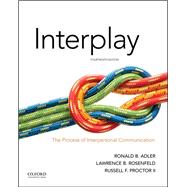
Interplay : The Process of Interpersonal Communication

ISBN: 9780195167078 | 0195167074
Edition: 9th
Format: Paperback
Publisher: Oxford Univ Pr (Txt)
Pub. Date: 7/31/2003

Why Rent from Knetbooks?

Because Knetbooks knows college students. Our rental program is designed to save you time and money. Whether you need a textbook for a semester, quarter or even a summer session, we have an option for you. Simply select a rental period, enter your information and your book will be on its way!

Top 5 reasons to order all your textbooks from Knetbooks:

  • We have the lowest prices on thousands of popular textbooks
  • Free shipping both ways on ALL orders
  • Most orders ship within 48 hours
  • Need your book longer than expected? Extending your rental is simple
  • Our customer support team is always here to help
SummaryTable of Contents
Now in a new edition, Interplay: The Process of Interpersonal Communication provides a comprehensive and engaging introduction to communication in interpersonal relationships. Based on an extensive body of scholarship, interplay cites more than 1,000 sources-30% of which are new to the ninth edition-and provides a variety of thought-provoking photos, sidebars, and cartoons that illustrate key points in the text and connect them to everyday life and popular culture. The ninth edition is updated and revised throughout to help make material more c... MORE
Prefacexii
PART ONE FOUNDATIONS OF INTERPERSONAL COMMUNICATION
Interpersonal Process
1(26)
... MORE
2(4)
Physical Needs
3(1)
Identity Needs
4(1)
Social Needs
4(1)
Practical Needs
5(1)
The Communication Process
6(8)
A Model of Communication
6(1)
Insights from the Communication Model
6(3)
Communication Principles
9(4)
Communication Misconceptions
13(1)
Interpersonal Communication Defined
14(5)
Quantitative and Qualitative Definitions
14(2)
Personal and Impersonal Communication: A Matter of Balance
16(1)
Interpersonal Communication and Technology
17(2)
Communication Competence
19(4)
Communication Competence Defined
19(2)
Characteristics of Competent Communication
21(2)
Summary
23(1)
Activities
24(3)
Communication and the Self
27(26)
Communication and the Self-Concept
28(13)
How the Self-Concept Develops
29(3)
Characteristics of the Self-Concept
32(5)
The Self-Fulfilling Prophecy and Communication
37(3)
Changing Your Self-Concept
40(1)
Presenting the Self: Communication as Identity Management
41(9)
Public and Private Selves
41(1)
Characteristics of Identity Management
42(3)
Why Manage Impressions?
45(1)
How Do We Manage Impressions?
46(2)
Identity Management and Honesty
48(2)
Summary
50(1)
Activities
50(3)
Perceiving Others
53(28)
The Perception Process
54(6)
Selection
55(1)
Organization
55(3)
Interpretation
58(1)
Negotiation
59(1)
Influences on Perception
60(7)
Physiological Influences
60(2)
Psychological Influences
62(1)
Social Influences
63(3)
Cultural Influences
66(1)
Common Tendencies in Perception
67(4)
We Judge Ourselves More Charitably than We Do Others
68(1)
We Are Influenced by Our Expectations
68(1)
We Are Influenced by the Obvious
69(1)
We Cling to First Impressions
69(1)
We Assume Others Are Like Us
70(1)
We Favor Negative Impressions
70(1)
Perceiving Others More Accurately
71(6)
Perception Checking
71(1)
Building Empathy
72(5)
Summary
77(1)
Activities
77(4)
PART TWO CREATING AND RESPONDING TO MESSAGES
Language
81(30)
The Nature of Language
82(5)
Language Is Symbolic
82(1)
Language Is Rule-Governed
83(1)
Language Is Subjective
84(3)
The Impact of Language
87(6)
Naming and Identity
87(1)
Credibility and Status
88(1)
Affiliation, Attraction, and Interest
89(1)
Power
90(1)
Sexism and Racism
91(2)
Uses (and Abuses) of Language
93(9)
Precision and Vagueness
93(5)
The Language of Responsibility
98(3)
Disruptive Language
101(1)
Male and Female Language Use
102(9)
Content
103(1)
Reasons for Communicating
103(1)
Conversational Style
104(1)
Non-Sex Variables
105(2)
Summary
107(1)
Activities
108(3)
Nonverbal Communication
111(30)
Nonverbal Communication Defined
112(1)
Characteristics of Nonverbal Communication
113(5)
All Behavior Has Communicative Value
113(1)
Nonverbal Communication Is Primarily Relational
114(2)
Nonverbal Communication Is Ambiguous
116(1)
Nonverbal Communication Is Influenced by Culture
117(1)
Functions of Nonverbal Communication
118(4)
Repeating
118(1)
Substituting
118(1)
Complementing and Accenting
119(1)
Regulating
119(1)
Contradicting
119(1)
Deceiving
120(2)
Types of Nonverbal Communication
122(15)
Face and Eyes
122(1)
Body Movement
123(1)
Touch
124(2)
Voice
126(2)
Proxemics and Territoriality
128(3)
Time
131(1)
Physical Attractiveness
132(1)
Clothing
132(4)
Physical Environment
136(1)
Summary
137(1)
Activities
137(4)
Listening
141(30)
The Importance of Listening
142(1)
Reasons for Listening
143(1)
The Challenge of Listening
144(3)
Hearing Is Not Listening
144(1)
Listening Is Not Easy
144(2)
All Listeners Do Not Receive the Same Message
146(1)
Poor Listening Habits
146(1)
Components of Listening
147(2)
Hearing
147(1)
Attending
148(1)
Understanding
148(1)
Remembering
149(1)
Responding
149(1)
Types of Listening Responses
149(16)
Silent Listening
150(1)
Questioning
151(3)
Paraphrasing
154(3)
Empathizing
157(1)
Supporting
158(2)
Analyzing
160(2)
Evaluating
162(2)
Advising
164(1)
Which Style to Use?
165(1)
Summary
165(2)
Activities
167(4)
Emotions
171(28)
What Are Emotions?
172(3)
Physiological Changes
172(1)
Nonverbal Reactions
173(1)
Cognitive Interpretations
173(1)
Verbal Expression
174(1)
Types of Emotions
175(1)
First-Order and Second-Order Emotions
175(1)
Primary and Mixed Emotions
175(1)
Intense and Mild Emotions
176(1)
Influences on Emotional Expression
176(5)
Personality
176(1)
Culture
177(1)
Biological Sex and Gender
178(1)
Social Conventions
179(1)
Social Roles
180(1)
Fear of Self-Disclosure
180(1)
Emotional Contagion
181(1)
Guidelines for Expressing Emotions
181(5)
Recognize Your Feelings
182(1)
Choose the Best Language
182(1)
Share Multiple Feelings
182(2)
Recognize the Difference between Feeling and Acting
184(1)
Accept Responsibility for Your Feelings
185(1)
Choose the Best Time and Place to Express Your Feelings
185(1)
Managing Difficult Emotions
186(9)
Facilitative and Debilitative Emotions
186(1)
1
Thoughts Cause Feelings
187(2)
Irrational Thinking and Debilitative Emotions
189(5)
Minimizing Debilitative Emotions
194(1)
Summary
195(1)
Activities
196(3)
PART THREE DIMENSIONS OF INTERPERSONAL RELATIONSHIPS
Dynamics of Interpersonal Relationships
199(32)
Why We Form Relationships
201(4)
Appearance
201(1)
Similarity
201(2)
Complementarity
203(1)
Rewards
203(1)
Competency
204(1)
Proximity
205(1)
Disclosure
205(1)
Communication and Relational Dynamics
205(14)
Developmental Models of Interpersonal Relationships
205(8)
Dialectical Perspectives on Relational Dynamics
213(5)
Characteristics of Relational Development
218(1)
Communicating about Relationships
219(1)
Content and Relational Messages
219(1)
Expression of Relational Messages
220(1)
Compliance Gaining in Interpersonal Relationships
220(7)
Types of Compliance-Gaining Strategies
221(4)
Which Strategy to Choose?
225(2)
Summary
227(1)
Activities
228(3)
Intimacy and Distance in Relationships
231(34)
Intimacy and Distance: Striking a Balance
232(3)
Dimensions of Intimacy
232(1)
Dimensions of Distance
233(1)
The Dialectics of Intimacy and Distance
234(1)
Influences on Intimacy and Distance
235(4)
Male and Female Intimacy Styles
236(2)
Cultural Influences on Intimacy
238(1)
Self-Disclosure in Relationships
239(12)
A Definition of Self-Disclosure
240(2)
Degrees of Self-Disclosure
242(2)
A Model of Self-Disclosure
244(2)
Risks and Benefits of Self-Disclosure
246(5)
Alternatives to Self-Disclosure
251(7)
Lying
252(3)
Equivocation
255(2)
Hinting
257(1)
The Ethics of Evasion
257(1)
Guidelines for Self-Disclosure
258(2)
Is the Other Person Important to You?
258(1)
Is the Risk of Disclosing Reasonable?
258(1)
Is the Self-Disclosure Appropriate?
258(1)
Is the Disclosure Relevant to the Situation at Hand?
259(1)
Is the Disclosure Reciprocated?
259(1)
Will the Effect Be Constructive?
260(1)
Is the Self-Disclosure Clear and Understandable?
260(1)
Summary
260(1)
Activities
261(4)
Communication Climate
265(30)
What Is Communication Climate?
266(1)
How Communication Climates Develop
266(10)
Levels of Message Confirmation
267(6)
Defensiveness
273(2)
Climate Patterns
275(1)
Creating Positive Climates
276(7)
Evaluation versus Description
277(2)
Control versus Problem Orientation
279(1)
Strategy versus Spontaneity
279(1)
Neutrality versus Empathy
280(1)
Superiority versus Equality
281(1)
Certainty versus Provisionalism
282(1)
Transforming Negative Climates
283(8)
Seek More Information
283(4)
Agree with the Critic
287(4)
Summary
291(1)
Activities
291(4)
Managing Conflict
295(32)
What Is Conflict?
296(2)
Expressed Struggle
296(1)
Perceived Incompatible Goals
297(1)
Perceived Scarce Rewards
297(1)
Interdependence
297(1)
Inevitability
297(1)
Functional and Dysfunctional Conflicts
298(4)
Integration versus Polarization
299(1)
Cooperation versus Opposition
299(1)
Confirmation versus Disconfirmation
300(1)
Agreement versus Coercion
300(1)
De-escalation versus Escalation
300(1)
Focusing versus Drifting
301(1)
Foresight versus Shortsightedness
301(1)
Positive versus Negative Results
301(1)
Individual Conflict Styles
302(6)
Nonassertion
303(1)
Indirect Communication
304(1)
Passive Aggression
305(1)
Direct Aggression
305(1)
Assertion
306(1)
Which Style to Use?
307(1)
Conflict in Relational Systems
308(3)
Complementary, Symmetrical, and Parallel Styles
308(2)
Intimate and Aggressive Styles
310(1)
Conflict Rituals
310(1)
Variables in Conflict Styles
311(4)
Biological Sex and Gender
312(1)
Culture
313(2)
Methods of Conflict Resolution
315(9)
Win-Lose
315(2)
Lose-Lose
317(1)
Compromise
318(1)
Win-Win
319(5)
Summary
324(1)
Activities
325(2)
PART FOUR CONTEXTS OF INTERPERSONAL COMMUNICATION
Culture and Communication
327(26)
Fundamental Concepts
329(3)
Culture
329(1)
Intercultural Communication
329(1)
Interpersonal and Intercultural Communication
330(2)
Cultural Values and Norms
332(6)
High- versus Low-Context
332(1)
Individualism versus Collectivism
333(1)
Power Distance
334(2)
Uncertainty Avoidance
336(1)
Achievement versus Nurturing
337(1)
Codes and Culture
338(8)
Verbal Codes
338(4)
Nonverbal Codes
342(1)
Decoding Messages
343(3)
Developing Intercultural Communication Competence
346(4)
Motivation and Attitude
346(2)
Tolerance for Ambiguity
348(1)
Open-mindedness
348(1)
Knowledge and Skill
349(1)
Summary
350(1)
Activities
351(2)
Communicating with Family and at Work
353(24)
Communication in Families
354(10)
Types of Family Communication
354(2)
Elements of Family Communication
356(4)
Effective Communication in Families
360(4)
Relationships at Work
364(9)
Communicating in Organizations
364(3)
Relationships in Work Groups
367(3)
Interviewing
370(3)
Summary
373(2)
Activities
375(2)
Glossary377(7)
References384(34)
Name Index418(11)
Subject Index429(12)
Credits441

Related Products


  • Interplay : The Process of Interpersonal Communication
    Interplay : The Process of Int...
  • Outlines and Highlights for Interplay : The Process of Interpersonal Communication by Adler, Rosenfeld and Proctor, ISBN
    Outlines and Highlights for In...


Please wait while this item is added to your cart...