FREE SHIPPING BOTH WAYS
ON EVERY ORDER!
LIST PRICE:
$17.00

OUR PRICE:
$10.00

You may extend rentals at any time.


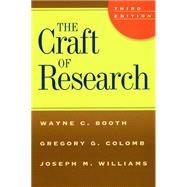
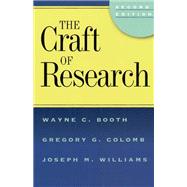
The Craft of Research

ISBN: 9780226065663 | 0226065669
Edition: 3rd
Format: Paperback
Publisher: UNIV OF CHICAGO PRESS
Pub. Date: 4/1/2008

Why Rent from Knetbooks?

Because Knetbooks knows college students. Our rental program is designed to save you time and money. Whether you need a textbook for a semester, quarter or even a summer session, we have an option for you. Simply select a rental period, enter your information and your book will be on its way!

Top 5 reasons to order all your textbooks from Knetbooks:

  • We have the lowest prices on thousands of popular textbooks
  • Free shipping both ways on ALL orders
  • Most orders ship within 48 hours
  • Need your book longer than expected? Extending your rental is simple
  • Our customer support team is always here to help
SummaryTable of ContentsAuthor Biography
With more than 400,000 copies now in print,The Craft of Researchis the unrivaled resource for researchers at every level, from first-year undergraduates to research reporters at corporations and government offices. Seasoned researchers and educators Gregory G. Colomb and Joseph M. Williams present an updated third edition of their classic handbook, whose first and second editions were written in collaboration with the late Wayne C. Booth.The Craft of Researchexplains how to build an argument that motivates readers to accept a claim; how to anti... MORE
Preface: The Aims of This Editionp. xi
Our Debtsp. xv
Research, Researchers, and Readersp. 1
Prologue: Becoming a Researcherp. 3
Thinking in Print: The Uses of Research, Public and Privatep. 9
What Is Research?p. 10
Why Write It Up?p. 11
Why a Formal Report?p. 13
Writing Is Thinkingp. 14
Connecting w... MOREp. 16
Creating Roles for Yourself and Your Readersp. 16
Understanding Your Rolep. 18
Imagining Your Reader's Rolep. 20
Quick Tip: A Checklist for Understanding Your Readersp. 26
Asking Questions, Finding Answersp. 29
Prologue: Planning Your Project-An Overviewp. 31
Quick Tip: Creating a Writing Groupp. 34
From Topics to Questionsp. 35
From an Interest to a Topicp. 36
From a Broad Topic to a Focused Onep. 39
From a Focused Topic to Questionsp. 40
From a Question to Its Significancep. 45
Quick Tip: Finding Topicsp. 49
From Questions to a Problemp. 51
Distinguishing Practical and Research Problemsp. 52
Understanding the Common Structure of Problemsp. 54
Finding a Good Research Problemp. 62
Learning to Work with Problemsp. 64
Quick Tip: Manage the Unavoidable Problem of Inexperiencep. 66
From Problems to Sourcesp. 68
Knowing How to Use Three Kinds of Sourcesp. 68
Locating Sources through a Libraryp. 70
Locating Sources on the Internetp. 75
Evaluating Sources for Relevance and Reliabilityp. 76
Following Bibliographical Trailsp. 80
Looking beyond Predictable Sourcesp. 81
Using People as Primary Sourcesp. 81
Quick Tip: The Ethics of Using People as Sources of Datap. 83
Engaging Sourcesp. 84
Knowing What Kind of Evidence to Look Forp. 85
Record Complete Bibliographical Datap. 85
Engaging Sources Activelyp. 87
Using Secondary Sources to Find a Problemp. 88
Using Secondary Sources to Plan Your Argumentp. 92
Recording What You Findp. 95
Quick Tip: Manage Moments of Normal Anxietyp. 101
Making a Claim and Supporting ITp. 103
Prologue: Assembling a Research Argumentp. 105
Making Good Arguments: An Overviewp. 108
Argument as a Conversation with Readersp. 108
Supporting Your Claimp. 110
Acknowledging and Responding to Anticipated Questions and Objectionsp. 112
Warranting the Relevance of Your Reasonsp. 114
Building a Complex Argument Out of Simple Onesp. 116
Creating an Ethos by Thickening Your Argumentp. 117
Quick Tip: A Common Mistake-Falling Back on What You Knowp. 119
Making Claimsp. 120
Determining the Kind of Claim You Should Makep. 120
Evaluating Your Claimp. 122
Quick Tip: Qualifying Claims to Enhance Your Credibilityp. 127
Assembling Reasons and Evidencep. 130
Using Reasons to Plan Your Argumentp. 130
Distinguishing Evidence from Reasonsp. 131
Distinguishing Evidence from Reports of Itp. 133
Evaluating Your Evidencep. 135
Acknowledgments and Responsesp. 139
Questioning Your Argument as Your Readers Willp. 140
Imagining Alternatives to Your Argumentp. 142
Deciding What to Acknowledgep. 143
Framing Your Responses as Subordinate Argumentsp. 145
The Vocabulary of Acknowledgment and Responsep. 146
Quick Tip: Three Predictable Disagreementsp. 150
Warrantsp. 152
Warrants in Everyday Reasoningp. 153
Warrants in Academic Argumentsp. 154
Understanding the Logic of Warrantsp. 155
Testing Whether a Warrant Is Reliablep. 156
Knowing When to State a Warrantp. 162
Challenging Others' Warrantsp. 164
Quick Tip: Two Kinds of Argumentsp. 169
Planning, Drafting, and Revisingp. 171
Prologue: Planning Againp. 173
Quick Tip: Outlining and Storyboardingp. 175
Planningp. 177
Avoid Three Common but Flawed Plansp. 177
Planning Your Reportp. 179
Drafting Your Reportp. 187
Draft in a Way That Feels Comfortablep. 187
Use Key Words to Keep Yourself on Trackp. 188
Quote, Paraphrase, and Summarize Appropriatelyp. 188
Integrating Direct Quotations into Your Textp. 189
Show Readers How Evidence Is Relevantp. 190
Guard against Inadvertent Plagiarismp. 191
The Social Importance of Citing Sourcesp. 195
Four Common Citation Stylesp. 197
Work through Procrastination and Writer's Blockp. 199
Quick Tip: Indicating Citations in Your Textp. 200
Revising Your Organization and Argumentp. 203
Thinking Like a Readerp. 204
Revising the Frame of Your Reportp. 204
Revising Your Argumentp. 206
Revising the Organization of Your Reportp. 207
Check Your Paragraphsp. 209
Let Your Draft Cool, Then Paraphrase Itp. 209
Quick Tip: Abstractsp. 211
Communicating Evidence Visuallyp. 213
Choosing Visual or Verbal Representationsp. 213
Choosing the Most Effective Graphicp. 214
Designing Tables, Charts, and Graphsp. 216
Specific Guidelines for Tables, Bar Charts, and Line Graphsp. 220
Communicating Data Ethicallyp. 226
Introductions and Conclusionsp. 232
The Common Structure of Introductionsp. 232
Step 1: Establish Common Groundp. 235
Step 2: State Your Problemp. 237
Step 3: State Your Responsep. 241
Setting the Right Pace for Your Introductionp. 242
Writing Your Conclusionp. 244
Finding Your First Few Wordsp. 245
Finding Your Last Few Wordsp. 247
Quick Tip: Titlesp. 248
Revising Style: Telling Your Story Clearlyp. 249
Judging Stylep. 249
The First Two Principles of Clear Writingp. 251
A Third Principle: Old before Newp. 260
Choosing between Active and Passivep. 262
A Final Principle: Complexity Lastp. 264
Spit and Polishp. 267
Quick Tip: The Quickest Revision Strategyp. 268
Some Last Considerationsp. 271
The Ethics of Researchp. 273
A Postscript for Teachersp. 277
Bibliographical Resourcesp. 283
Indexp. 313
Table of Contents provided by Ingram. All Rights Reserved.
Wayne C. Booth (1921–2005) was the George M. Pullman Distinguished Service Professor Emeritus in English Language and Literature at the University of Chicago.  His many books include The Rhetoric of Fiction and For the Love of It: Amateuring and Its Rivals, both published by the University of Chicago Press. Gregory G. Colomb is professor of English language and literature at the University of Virginia.  He is the author of Designs on Truth: The Poetics of the Augustan Mock-Epic. Joseph M. Williams is professor emeritus in the Department of English Language and Literature at the University of Chicago. He is the author of Style: Toward Clarity and Grace. Together Colomb and Williams have written The Craft of Argument. Booth, Colomb, and Williams coedited the seventh edition of Kate L. Turabian’s A Manual for Writers of Research Papers, Theses, and Dissertations.

Related Products


  • The Craft of Research
    The Craft of Research
  • The Craft of Research
    The Craft of Research
  • The Craft of Research
    The Craft of Research


Please wait while this item is added to your cart...