FREE SHIPPING BOTH WAYS
ON EVERY ORDER!
LIST PRICE:
$52.80

Sorry, this item is currently unavailable.

Teaching Writing : Balancing Process and Product
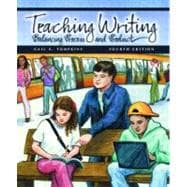
ISBN: 9780131121874 | 0131121871
Edition: 4th
Format: Paperback
Publisher: Prentice Hall
Pub. Date: 1/1/2008

Why Rent from Knetbooks?

Because Knetbooks knows college students. Our rental program is designed to save you time and money. Whether you need a textbook for a semester, quarter or even a summer session, we have an option for you. Simply select a rental period, enter your information and your book will be on its way!

Top 5 reasons to order all your textbooks from Knetbooks:

  • We have the lowest prices on thousands of popular textbooks
  • Free shipping both ways on ALL orders
  • Most orders ship within 48 hours
  • Need your book longer than expected? Extending your rental is simple
  • Our customer support team is always here to help
SummaryTable of ContentsAuthor Biography
For courses in which the focus is on language arts/writing or the teaching of writing. Accessible and reader-friendly, this is the definitive text on teaching writing to children in grades K-8, the only title on the market to thoroughly address both the process and the product of writing. The author covers strategies for teaching prewriting, drafting, revising, editing, and publishing through writing workshop, literature focus units, and thematic units; techniques for helping children develop ideas, organize writing, choose vocabulary, apply st... MORE
PART ONE Process and Product
1(184)
Teaching Children to Write
3(38)
Writing About Weather
... MORE4(5)
The Writing Process
9(19)
Stage 1: Prewriting
10(7)
Stage 2: Drafting
17(1)
Stage 3: Revising
18(4)
Stage 4: Editing
22(3)
Stage 5: Publishing
25(3)
Supporting Children As They Learn to Write
28(10)
Modeled Writing
29(2)
Shared Writing
31(1)
Interactive Writing
31(5)
Guided Writing
36(1)
Independent Writing
36(2)
Answering Teachers' Questions About . . . Teaching Children to Write
38(3)
Writing Workshop
41(34)
Reading and Writing About Families
42(5)
The Components of Writing Workshop
47(6)
Writing
49(1)
Sharing
50(1)
Minilessons
51(1)
Reading Aloud to Children
52(1)
Comparing Writing Workshop to Reading Workshop
52(1)
Implementing Writing Workshop
53(20)
Introducing the Writing Process
55(8)
Arranging the Classroom for Writing Workshop
63(1)
Adapting Writing Workshop for Emergent Writers
64(1)
Incorporating Writing Workshop into Units
65(5)
Monitoring Children's Progress
70(3)
Answering Teachers' Questions About . . . Writing Workshop
73(2)
Writing Strategies and Skills
75(32)
Working With Novice Writers
76(4)
Strategies and Skills
80(18)
Writing Strategies
82(5)
Writing Skills
87(11)
Teaching Strategies and Skills
98(6)
Minilessons
100(1)
Demonstrations and Other Teachable Moments
100(1)
Why Teach Strategies and Skills?
101(3)
Answering Teachers' Questions About . . . Writing Strategies and Skills
104(3)
Writers' Tools
107(42)
Writing Pen Pal Letters
108(5)
Spelling
113(21)
Invented Spelling
114(1)
Stages of Spelling Development
114(4)
Analyzing Children's Spelling Development
118(5)
Teaching Children to Spell Conventionally
123(11)
Handwriting
134(7)
The Goal of Handwriting
134(1)
Teaching Handwriting through Writing
134(4)
The Handwriting-Writing Connection
138(3)
Computers
141(5)
Word Processing and Other Computer Programs for Writers
141(4)
Using the Internet
145(1)
Answering Teachers' Questions About . . . Writers' Tools
146(3)
Assessing Students' Writing
149(36)
Using Portfolios
150(3)
Informal Monitoring of Student Writing
153(6)
Observing
154(1)
Conferencing
154(2)
Collecting Writing Samples
156(1)
Keeping Records
157(2)
Process Measures
159(9)
Writing Process Checklists
161(2)
Assessment Conferences
163(2)
Self-Assessment
165(3)
Product Measures
168(11)
Holistic Scoring
168(1)
Primary Trait Scoring
169(1)
Analytic Scoring
170(2)
Rubrics
172(5)
Responding to Student Writing
177(1)
Assigning Grades
178(1)
Reporting to Parents
179(3)
Explaining the Rationale
179(1)
Demonstrating the Program
180(1)
Displaying the Results
181(1)
Communicating Through Report Cards
181(1)
Answering Teachers' Questions About . . . Assessing Students' Writing
182(3)
PART TWO Writing Genres
185(268)
Journal Writing
187(38)
Responding in a Reading Log
189(3)
Types of Journals
192(19)
Personal Journals
194(1)
Dialogue Journals
195(4)
Reading Logs
199(2)
Learning Logs
201(5)
Double-Entry Journals
206(2)
Simulated Journals
208(3)
Young Children's Journals
211(1)
Teaching Students to Write in Journals
211(11)
Introducing Children to Journal Writing
213(1)
Instructional Procedures for Journal Writing
213(5)
Sustaining Journal Writing
218(3)
Assessing Children's Journals
221(1)
Answering Teachers' Questions About . . . Journal Writing
222(3)
Letter Writing
225(24)
Writing About Favorite Books
227(3)
Types of Letters
230(11)
Friendly Letters
230(9)
Business Letters
239(1)
Simulated Letters
240(1)
Teaching Students to Write Letters
241(6)
Introducing Letter Writing
241(1)
Writing Letters
242(1)
Assessing Students' Letters
242(5)
Answering Teachers' Questions About . . . Letter Writing
247(2)
Descriptive Writing
249(28)
Writing Vivid Descriptions
251(3)
Descriptive Techniques
254(6)
Specific Information
255(1)
Word Choice
255(2)
Sensory Images
257(1)
Comparisons
258(2)
Dialogue
260(1)
Teaching Students to Write Descriptively
260(14)
Teaching Minilessons
261(9)
Using the Writing Process
270(1)
In Theme Studies
270(2)
In Writing Workshop
272(1)
Assessing Students' Writing
272(2)
Answering Teachers' Questions About . . . Descriptive Writing
274(3)
Biographical Writing
277(26)
Writing a Class Biography
279(3)
Types of Biographical Writing
282(14)
Personal Narratives
282(3)
Autobiographies
285(4)
Biographies
289(7)
Teaching Children to Write Biographies
296(6)
Introducing Biography with Personal Narratives
297(1)
Writing Biographies and Autobiographies
297(1)
Assessing Students' Biographies
297(5)
Answering Teachers' Questions About . . . Biographical Writing
302(1)
Expository Writing
303(36)
Traveling the Oregon Trail
305(5)
Expository Text Structures
310(4)
Description
310(1)
Sequence
311(1)
Comparison
311(1)
Cause and Effect
311(1)
Problem and Solution
311(3)
How Children Apply the Patterns
314(1)
Types of Expository Writing
314(16)
``All About . . .'' Books
314(5)
Collaborative Reports
319(1)
Individual Reports
320(3)
Abc Books
323(1)
Riddles
323(1)
Posters, Diagrams, and Charts
323(2)
Cubes
325(1)
Multigenre Projects
325(5)
Teaching Children About Expository Writing
330(7)
Introducing the Expository Text Structures
330(1)
Writing Collaborative Reports
330(4)
Writing Individual Reports
334(1)
Assessing Children's Expository Writing
334(3)
Answering Teachers' Questions About . . . Expository Writing
337(2)
Narrative Writing
339(38)
Retelling and Writing Stories
342(6)
Elements of Story Structure
348(15)
Plot
348(5)
Setting
353(1)
Characters
354(5)
Theme
359(1)
Point of View
359(3)
Literary Devices
362(1)
Teaching Children to Write Stories
363(11)
Teaching an Element of Story Structure
364(1)
Exploration Activities
364(7)
Assessing Stories That Children Write
371(3)
Answering Teachers' Questions About . . . Narrative Writing
374(3)
Poetry Writing
377(44)
Reading and Writing Poetry
380(4)
Wordplay
384(11)
Learning the Meaning of Words
384(6)
Laughing with Language
390(1)
Creating Word Pictures
391(2)
Playing with Rhyme
393(2)
Poetic Forms
395(19)
Formula Poems
396(4)
Free-Form Poems
400(4)
Syllable and Word-Count Poems
404(2)
Rhymed Verse Poems
406(1)
Model Poems
407(2)
Poetic Devices
409(5)
Teaching Children to Write Poems
414(4)
Introducing Children to Poetry
414(2)
Teaching Children to Write Poems Using a Poetic Form
416(2)
Assessing Children's Poems
418(1)
Answering Teachers' Questions About . . . Poetry Writing
418(3)
Persuasive Writing
421(32)
Writing Mother's Day Cards
423(3)
Persuasion
426(6)
Three Ways to Persuade
427(1)
Propaganda
428(2)
Organization of an Argument
430(2)
Types of Persuasive Writing
432(6)
Persuasive Posters
432(2)
Persuasive Letters
434(2)
Persuasive Essays
436(2)
Advertisements and Commercials
438(1)
Teaching Children to Write Persuasively
438(12)
Introducing Persuasive Writing
439(2)
Writing Persuasive Letters and Essays
441(1)
Writing Advertisements
441(7)
Assessing Children's Persuasive Writing
448(2)
Answering Teachers' Questions About . . . Persuasive Writing
450(3)
References453(14)
Author Index467(4)
Subject Index471
Gail E. Tompkins is a Professor at California State University, Fresno, in the Department of Literacy and Early Education.

Related Products


  • Teaching Writing : Balancing Process and Product
    Teaching Writing : Balancing P...
  • Teaching Writing : Balancing Process and Product
    Teaching Writing : Balancing P...
  • Teaching Writing : Balancing Process and Product
    Teaching Writing : Balancing P...
  • Teaching Writing : Balancing Process and Product
    Teaching Writing : Balancing P...
  • Teaching Writing: Balancing Process and Product
    Teaching Writing: Balancing Pr...


Please wait while this item is added to your cart...