 Free Shipping On Every Order



Amazon no longer offers textbook rentals. We do!
Why Smart People Make Big Money Mistakes and How to Correct Them Lessons from the Life-Changing Science of Behavioral Economics
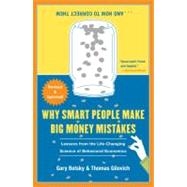
Why Smart People Make Big Money Mistakes and How to Correct Them Lessons from the Life-Changing Science of Behavioral Economics
- ISBN 13:
9781439163368
- ISBN 10:
1439163367
- Format: Paperback
- Copyright: 01/12/2010
- Publisher: Simon & Schuster
.svg) Rent
From $11.58
Rent
From $11.58
List Price $18.00 Save
| TERM | PRICE | DUE |
|---|---|---|
 Free Shipping Both Ways
Highlight/Take Notes Like You Own It
Purchase/Extend Before Due Date
 Free Shipping On Every Order
List Price $18.00 Save $3.15
Usually Ships in 24-48 Hours
 We Buy This Book Back!
.svg "Free Shipping On Every Order") Free Shipping On Every Order
Free Shipping On Every Order
List Price $18.00 Save $0.63
Usually Ships in 2-3 Business Days
We Buy This Book Back!
Free Shipping On Every Order
Note: Supplemental materials are not guaranteed with Rental or Used book purchases.
Extend or Purchase Your Rental at Any Time
Need to keep your rental past your due date? At any time before your due date you can extend or purchase your rental through your account.
Summary
THIS REVISED AND UPDATED EDITION OF THE CLASSIC WHY SMART PEOPLE MAKE BIG MONEY MISTAKES AND HOW TO CORRECT THEM GIVES YOU THE LATEST RESEARCH IN THE EXCITING FIELD OF BEHAVIORAL ECONOMICS.
In their fascinating investigation of the ways we handle money, Gary Belsky and Thomas Gilovich reveal the psychological forces -- the patterns of thinking and decision making -- behind seemingly irrational behavior. They explain why so many otherwise savvy people make foolish financial choices: why investors are too quick to sell winning stocks and too slow to sell losing shares, why home sellers leave money on the table and home buyers don't get the biggest bang for their buck, why borrowers pay too much credit card interest and savers can't sock away as much as they'd like, and why so many of us can't control our spending. Focusing on the decisions we make every day, Belsky and Gilovich provide invaluable guidance for avoiding the financial faux pas that can cost thousands of dollars each year.
Filled with fresh insight; practical advice; and lively, illustrative anecdotes, this book gives you the tools you need to harness the powerful science of behavioral economics in any financial environment.
"A terrific introduction to the emerging science of behavioral finance." - Money magazine
"Great stuff. Fresh and helpful." - BusinessWeek
"This very helpful book is aimed at the novice and the expert, and you come away from it somewhat chastened by your own financial mistakes, but hopeful that you might learn a thing or two about holding onto your hard-earned cash. The authors don't offer simplistic solutions, but hard facts and sound advice."-Robert J. Hughes, SmartMoney


