FREE SHIPPING BOTH WAYS
ON EVERY ORDER!
LIST PRICE:
$79.70

Sorry, this item is currently unavailable.

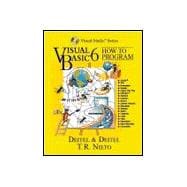
Visual Basic 6 How to Program

ISBN: 9780134569550 | 0134569555
Edition: 1st
Format: Paperback
Publisher: PRENTICE HALL
Pub. Date: 1/1/1999

Why Rent from Knetbooks?

Because Knetbooks knows college students. Our rental program is designed to save you time and money. Whether you need a textbook for a semester, quarter or even a summer session, we have an option for you. Simply select a rental period, enter your information and your book will be on its way!

Top 5 reasons to order all your textbooks from Knetbooks:

  • We have the lowest prices on thousands of popular textbooks
  • Free shipping both ways on ALL orders
  • Most orders ship within 48 hours
  • Need your book longer than expected? Extending your rental is simple
  • Our customer support team is always here to help
SummaryTable of Contents
This complete course in Visual Basic 6 comes straight from the world's leading programming trainers, Deitel & Associates. Whether you're a novice or experienced developer, here's your single source for learning both fundamental concepts and the realities of VB development for maximum performance and reliability. Start with a high-level overview of programming concepts and the VB6 Integrated Development Environment. Learn control structures, procedures, functions, arrays, string processing and basic graphics techniques. Discover VB6's powerful tools for GUI development; manage error handling and debugging; understand sequential and random access file processing; and integrate VB6 with business databases. The book includes detailed coverage of VB6 object techniques, Web development, and distributing applications with COM, COM+ and DCOM.
Prefacexxx
Computing Concepts
1(24)
Introduction
2(1)
... MORE
3(1)
Computer Organization
4(1)
Evolution of Operating Systems
4(1)
Personal Computing, Distributed Computing, and Client/Server Computing
5(1)
Machine Languages, Assembly Languages, and High-Level Languages
6(1)
History of Visual Basic
7(1)
Other High-level Languages
7(1)
Structured Programming
8(1)
What is Visual Basic?
9(1)
General Notes About Visual Basic and This Book
10(1)
A Tour of the Book
11(14)
Integrated Development Environment
25(25)
Introduction
26(1)
Integrated Development Environment Overview
26(2)
Project Window
28(1)
Toolbox
29(2)
Form Layout Window
31(1)
Properties Window
31(1)
Menu Bar and Tool Bar
32(1)
A Simple Program: Displaying a Line of Text
33(17)
Introduction to Visual Basic Programming
50(38)
Introduction
51(1)
Visual Programming and Event-Driven Programming
51(1)
A Simple Program: Printing a Line of Text on the Form
52(8)
Another Simple Program: Adding Integers
60(4)
Memory Concepts
64(1)
Arithmetic
64(2)
Operator Precedence
66(3)
Decision Making: Comparison Operators
69(19)
Control Structures: Part I
88(41)
Introduction
89(1)
Algorithms
89(1)
Pseudocode
90(1)
Introduction to Control Structures
91(2)
If/Then Selection Structure
93(1)
If/Then/Else Selection Structure
94(4)
While Repetition Structure
98(1)
Do While Repetition Structure
99(1)
Do Until Repetition Structure
100(1)
Formulating Algorithms: Case Study 1 (Counter-Controlled Repetition)
101(2)
Formulating Algorithms with Top-down, Stepwise Refinement: Case Study 2 (Sentinel-Controlled Repetition)
103(7)
Formulating Algorithms with Top-down, Stepwise Refinement: Case Study 3 (Nested Control Structures)
110(19)
Control Structures: Part II
129(48)
Introduction
130(1)
Essentials of Counter-Controlled Repetition
130(2)
For Repetition Structure
132(2)
Examples Using the For/Next Repetition Structure
134(6)
Select Case Multiple-Selection Structure
140(7)
Do/Loop While Repetition Structure
147(2)
Do/Loop Until Repetition Structure
149(2)
Exit Do and Exit For Statements
151(2)
Data Type Boolean
153(1)
Constant Variables
154(2)
Logical Operators
156(3)
Structured Programming Summary
159(5)
Visual Basic Data Types
164(13)
Sub Procedures and Function Procedures
177(70)
Introduction
178(1)
Form Modules
178(2)
Sub Procedures
180(6)
Function Procedures
186(4)
Call-by-Value vs. Call-by-Reference
190(4)
Exit Sub and Exit Function
194(3)
Storage Classes
197(1)
Scope Rules
198(3)
Random Number Generation
201(7)
Example: A Game of Chance
208(6)
Recursion and the Factorial Function
214(3)
Another Recursion Example: The Fibonacci Series
217(3)
Recursion vs. Iteration
220(1)
Optional Arguments
221(2)
Named Arguments
223(2)
Visual Basic Math Functions
225(1)
Code Modules
226(21)
Arrays
247(55)
Introduction
248(1)
Arrays
248(1)
Declaring Arrays
249(2)
Examples Using Arrays
251(7)
Passing Arrays to Procedures
258(5)
Sorting Arrays
263(3)
Searching Arrays: Linear Search and Binary Search
266(5)
Multidimensional Arrays
271(3)
Control Arrays
274(4)
Dynamic Arrays
278(7)
Variable Arguments: ParamArray
285(1)
Function Array
286(16)
Strings, Dates and Times
302(69)
Introduction
303(1)
Fundamentals of Characters and Strings
304(1)
String Data Type
305(1)
String Concatenation with & and +
305(1)
Comparing Character Strings
306(3)
Operator Like
309(2)
Manipulating the Individual Characters in a String: Mid$
311(1)
Left$, Right$, and InStr
312(3)
Searching for Substrings in Strings using InStr and InStrRev
315(2)
LTrim$, RTrim$ and Trim$
317(1)
String$ and Spaces$
317(2)
Replacing Substrings in a String with Function Replace
319(1)
Reversing Strings with Function StrReverse
319(1)
Converting Strings to Uppercase and Lowercase
320(1)
Conversion Functions
321(6)
Asc and Chr$
321(1)
IsNumeric, Val and Str$
322(1)
Hex$ and Oct$
323(1)
The Type Conversion Functions
324(3)
String Formatting
327(13)
Function Format$ and Named Numeric Formats
327(2)
Function Format$ and User-Defined Numeric Formats
329(4)
Function FormatNumber
333(2)
Function FormatCurrency
335(3)
Function FormatPercent
338(2)
Date and Time Processing
340(8)
Date and Time Formatting
348(5)
String Arrays
353(18)
A Card Shuffling and Dealing Simulation
356(15)
Graphics
371(37)
Introduction
372(1)
Coordinate Systems
372(2)
Drawing Methods
374(8)
Drawing Properties
382(5)
Line Control and Shape Control
387(3)
Colors
390(8)
Images
398(2)
Printer Object
400(8)
Basic Graphical User Interface Concepts
408(50)
Introduction
409(1)
Controls
409(3)
TextBox Control
412(2)
MaskEdit Control
414(5)
ComboBox Control
419(4)
ListBox Control
423(4)
Scrollbars
427(4)
Slider Control
431(2)
Menus
433(4)
Pop-up Menus
437(1)
Function MsgBox
438(20)
Advanced Graphical User Interface Concepts
458(50)
Introduction
459(1)
Multiple Document Interface (MDI)
459(10)
Multiple Forms
469(6)
Template Forms
475(5)
Rich TextBox Control
480(5)
UpDown Control
485(4)
ImageList Control
489(3)
ImageCombo Control
492(3)
FlatScrollBar Control (Professional and Enterprise Editions)
495(3)
Native Code Compilation (Professional and Enterprise Editions)
498(10)
Mouse and Keyboard
508(29)
Introduction
509(1)
Changing the Shape of the Mouse Pointer
509(3)
Mouse Events
512(3)
Mouse Buttons
515(2)
Shift, Ctrl and Alt Keys
517(3)
Drag-and-Drop
520(6)
Key Events
526(3)
KeyPreview Property
529(8)
Error Handling and Debugging
537(41)
Introduction
538(1)
When Error Handling Should Be Used
539(1)
A Simple Error-Handling Example: Divide by Zero
539(3)
Nested on Error Statements
542(2)
Err Object
544(3)
Resume Statement
547(3)
Error Handlers and the Call Stack
550(5)
Rethrowing Errors
555(1)
Break Mode, the Immediate Window, and the Debug Object
556(3)
First Steps in Bug Prevention
559(1)
Debugging Strategies
560(2)
Debugger
562(9)
Debug Menu and Debug Tool Bar
562(5)
Locals Window
567(1)
Watch Window
568(2)
Call Stack Window
570(1)
Debugger and Error Handlers
571(7)
Sequential File Processing
578(37)
Introduction
579(1)
DirListBox, FileListBox, and DriveListBox Controls
579(4)
Data Hierarchy
583(1)
File System Objects
584(15)
Creating a Sequential Access File
599(4)
Reading Data from a Sequential Access File
603(5)
Updating Sequential Access Files
608(7)
Records and Random-Access Files
615(30)
Introduction
616(1)
Random-Access Files
616(1)
Records as User-Defined Types
617(2)
User-Defined Type Definitions
617(1)
Manipulating Members of User-Defined Types
618(1)
Creating a Random-Access File
619(5)
Writing Data Randomly to a Random-Access File
624(3)
Reading Data Sequentially from a Random-Access File
627(3)
Reading Randomly from a Random-Access File
630(3)
Example: A Transaction Processing Program
633(12)
Object-Oriented Programming
645(63)
Introduction
646(2)
Data Abstraction and Information Hiding
648(1)
Implementing a Time Abstract Data Type with a Class
649(4)
Class Members
653(7)
Composition: Objects as Instance Variables of Other Classes
660(6)
Introduction to Object-Oriented Programming
666(3)
Software Engineering with Components
669(1)
Type Fields and Select Case Statements
669(1)
Polymorphism
670(1)
Visual Basic Interfaces
671(1)
Polymorphism Examples
671(2)
Case Study: IShape, CPoint, CCircle
673(4)
Case Study: A Payroll System Using Polymorphism
677(7)
Case Study: Polymorphic Processing of Shapes
684(4)
Simulating Implementation Inheritance with Interface Inheritance and Delegation
688(6)
Object Browser
694(1)
Events and Classes
695(13)
ActiveX
708(58)
Introduction
709(1)
Components, COM and DCOM
709(4)
ActiveX Control Types
713(2)
ActiveX Control Lifetime and Events
715(1)
UserControl Object
716(1)
Creating an ActiveX Control That Contains Constituent Controls
717(7)
ActiveX Control Example: Clock Control
724(7)
ActiveX Control Interface Wizard
731(10)
Property Pages and the Property Page Wizard
741(5)
ActiveX DLLs
746(4)
ActiveX EXEs
750(5)
Friend Access
755(11)
Database Management
766(42)
Introduction
767(1)
Database Systems
768(1)
Advantages of Database Systems
768(1)
Data Independence
768(1)
Database Languages
769(1)
Distributed Database
769(1)
Relational Database Model
769(2)
Relational Database
769(2)
Introducing the Microsoft ADO Data Control 6.0 and Microsoft DataGrid Control 6.0
771(5)
Relational Database Overview: The Biblio.mdb Database
776(3)
Structured Query Language
779(5)
Basic Select Query
780(1)
Where Clause
780(1)
Order By Clause
781(1)
Using Inner Join to Merge Data from Multiple Tables
782(1)
All Titles Query from Biblio.mdb
783(1)
Revisiting the ADO Data Control and DataGrid Control
784(4)
Hierarchical FlexGrid Control
788(1)
DataList and DataCombo Controls
789(7)
Example: Using the DataCombo and DataList Controls
790(4)
Using the BoundColumn Property
794(2)
Using the Data Environment Designer
796(5)
Other Programmatic Capabilities of Recordsets
801(1)
Transaction Processing
801(7)
Networking, the Internet and the World Wide Web
808(52)
Introduction
809(1)
Visual Basic Internet Controls
810(1)
WebBrowser Control
811(5)
Internet Transfer Control
816(6)
Hypertext Transfer Protocol (HTTP) Connections
816(2)
File Transfer Protocol (FTP) Connections
818(4)
Other Properties, Methods and Events of the Internet Transfer Control
822(1)
Winsock Control
823(3)
Establishing a Simple Server (Using TCP Protocol)
823(2)
Establishing a Simple Client (Using TCP Protocol)
825(1)
Example: Client/Server Interaction with the Winsock Control
826(8)
A Simple TCP-Based Server
826(3)
A Simple TCP-Based Client
829(3)
Outputs of the Client/Server Interactions
832(2)
Winsock Control and UDP-Based Client/Server Computing
834(5)
A Simple UDP-Based Server
834(2)
A Simple UDP-Based Client
836(2)
Outputs of the Client/Server Interactions
838(1)
Other Properties, Methods and Events of the Winsock Control
839(1)
Visual Basic Script (VBScript®): An Overview
840(20)
Multimedia: Images, Animation, Audio
860(36)
Introduction
861(1)
Microsoft Agent Control
862(8)
Multimedia MCI Control
870(6)
A Multimedia MCI Control CD Player
872(2)
A Multimedia MCI Control AVI File Player
874(2)
Animation Control
876(4)
RealAudio ActiveX Control Library
880(2)
Marquee Control Library
882(3)
Microsoft ActiveMovie Control
885(11)
Data Structures, Collections and Dictionaries
896(48)
Introduction
897(1)
Type Variant
897(2)
Self-Referential Classes
899(1)
Dynamic Memory Allocation
900(1)
Linked Lists
900(12)
Stacks
912(3)
Queues
915(2)
Trees
917(7)
Collection Object
924(4)
Dictionary Object
928(16)
Appendix A Operator Precedence Chart944(2)
Appendix B ANSI Character Set946(1)
Appendix C Visual Basic Internet and World Wide Web Resources947(6)
C.1 Visual Basic Web Resources
947(1)
C.2 Microsoft Visual Basic Web Sites
947(1)
C.3 Visual Basic Resources
948(1)
C.4 FAQs
949(1)
C.5 Tutorials for Learning VB
950(1)
C.6 VB Newsgroups and Mailing lists
950(1)
C.7 VB Books and Magazines
951(1)
C.8 VB Products
952(1)
Appendix D Number Systems953(14)
D.1 Introduction
954(3)
D.2 Abbreviating Binary Numbers as Octal Numbers and Hexadecimal Numbers
957(1)
D.3 Converting Octal Numbers and Hexadecimal Numbers to Binary Numbers
958(1)
D.4 Converting from Binary, Octal, or Hexadecimal to Decimal
958(1)
D.5 Converting from Decimal to Binary, Octal, or Hexadecimal
959(2)
D.6 Negative Binary Numbers: Two's Complement Notation
961(6)
Bibliography967(4)
Index971

Related Products


  • Visual Basic 2005 : How to Program
    Visual Basic 2005 : How to Pro...
  • Visual Basic .Net: How to Program
    Visual Basic .Net: How to Prog...
  • Visual Basic 2008 How to Program
    Visual Basic 2008 How to Program
  • Visual Basic.Net: How to Program
    Visual Basic.Net: How to Program
  • Visual Basic. NET How to Program
    Visual Basic. NET How to Program
  • Visual Basic 2010 How to Program
    Visual Basic 2010 How to Program
  • Visual Basic 2012 How to Program
    Visual Basic 2012 How to Program


Please wait while this item is added to your cart...