FREE SHIPPING BOTH WAYS
ON EVERY ORDER!
LIST PRICE:
$132.33

Sorry, this item is currently unavailable.

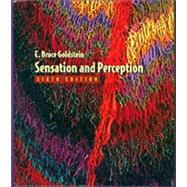
Sensation and Perception : Media Edition

ISBN: 9780534639914 | 0534639917
Edition: 6th
Format: Paperback
Publisher: Wadsworth Publishing
Pub. Date: 7/14/2003

Why Rent from Knetbooks?

Because Knetbooks knows college students. Our rental program is designed to save you time and money. Whether you need a textbook for a semester, quarter or even a summer session, we have an option for you. Simply select a rental period, enter your information and your book will be on its way!

Top 5 reasons to order all your textbooks from Knetbooks:

  • We have the lowest prices on thousands of popular textbooks
  • Free shipping both ways on ALL orders
  • Most orders ship within 48 hours
  • Need your book longer than expected? Extending your rental is simple
  • Our customer support team is always here to help
SummaryTable of Contents
Long regarded as the gold standard in sensation and perception texts, E. Bruce Goldstein's SENSATION AND PERCEPTION has helped more than 100,000 students make the connection between perception and physiology. Goldstein has crafted an easier-to-understand, and more student-friendly book, without sacrificing the text's comprehensive examination of sensation and perception. Goldstein takes readers on an intriguing journey through their senses, and chronicles scientists' efforts to understand the fascinating behind the scenes activity that allows u... MORE
Introduction to Perception
1(34)
The Importance of Perception
2(2)
The Perceptual Process
... MORE4(4)
The Environmental Stimulus and the Attended Stimulus
4(1)
The Stimulus on the Receptors
4(1)
Transduction
5(1)
Neural Processing
5(1)
Perception
6(1)
Recognition
6(1)
Action
6(1)
Knowledge
7(1)
Top-Down and Bottom-Up Processing
8(1)
Studying the Perceptual Process
8(3)
Levels of Analysis
8(1)
Cognitive Influences on Perception
9(2)
Cross-Talk Between the Levels of Analysis
11(1)
The Psychophysical Approach: Linking Stimulation and Perception
11(2)
Description: The Phenomenological Method
12(1)
Recognition: Categorizing a Stimulus
12(1)
Detection
12(1)
Summary Table 1.1
13(5)
Perceiving Magnitude: Magnitude Estimation
16(2)
Searching
18(1)
Other Methods
18(1)
The Physiological Approach: Linking Stimulation and Neural Firing
18(10)
The Physiological Approach: Early History
18(1)
Neurons and Electrical Signals
19(1)
Recording Electrical Signals in Neurons
20(2)
Basic Properties of Action Potentials
22(1)
Chemical and Electrical Events at the Synapse
23(1)
Basic Structure of the Brain
24(2)
Studying Brain Activity in Humans
26(2)
The Approach in This Book
28(2)
Studying Perception at the Psychophysical and Physiological Levels
28(1)
Going Beyond Perception to Study Recognition and Action
28(1)
Considering Perception Across the Senses
28(1)
Focusing on Cutting-Edge Research on Plasticity and Brain Imaging
28(1)
How to Get the Most Out of This Book
29(1)
Summary Table 1.2
30(1)
Study Questions
31(4)
Receptors and Neural Processing
35(42)
The Stimulus for Vision and the Structure of the Visual System
37(3)
Light: The Stimulus for Vision
37(2)
The Visual System
39(1)
The First Transformations: Light, Receptors, and Electricity
40(8)
Light Is Reflected into the Eye and Focused on the Retina
40(3)
Light Stimulates the Rod and Cone Receptors
43(5)
Visual Pigments and Perception
48(6)
Dark Adaptation of the Rods and Cones
49(3)
Spectral Sensitivity of the Rods and Cones
52(2)
Neural Processing by Convergence
54(1)
The Convergence of Rod and Cone Signals
54(1)
Summary Table 2.1
55(3)
The Rods Are More Sensitive in the Dark than the Cones
55(2)
The Cones Result in Better Detail Vision than the Rods
57(1)
Neural Processing by Excitation and Inhibition
58(6)
Introduction to Neural Circuits
58(2)
Introduction to Receptive Fields
60(3)
Lateral Inhibition
63(1)
Neural Processing and Perception
64(7)
Lateral Inhibition and the Hermann Grid
64(2)
Lateral Inhibition and Mach Bands
66(2)
Lateral Inhibition and Simultaneous Contrast
68(3)
Brain Scan: Going Beyond the Information on the Retina
71(1)
Across the Senses: The Indirectness of Perception
72(1)
Summary Table 2.2
73(1)
Study Questions
74(3)
The Lateral Geniculate Nucleus and Striate Cortex
77(32)
Information Flow and Organization in the Lateral Geniculate Nucleus
78(3)
Information Flow in the Lateral Geniculate Nucleus
78(1)
Organization by Left and Right Eyes
79(1)
Organization as a Retinotopic Map
80(1)
Organization by Types of Ganglion Cells Arriving at the LGN
80(1)
Information Processing in the Striate Cortex (V1)
81(8)
The Physiology of Neurons That Respond to Orientation, Length, and Movement
82(3)
The Psychophysics of Orientation Detectors
85(3)
The Physiology of Neurons That Respond to Spatial Frequency
88(4)
The Psychophysics of Spatial Frequency Analyzers
92
Brain Scan: The Oblique Effect in the Striate Cortex
89(5)
Summary Table 3.1
94(1)
Organization of the Striate Cortex
95(5)
The Retinotopic Map on the Cortex
95(1)
Location Columns
96(1)
Orientation Columns
96(2)
Ocular Dominance Columns
98(1)
Hypercolumns
98(1)
Representation of an Object in the Striate Cortex
99(1)
The Plasticity of Perception: Selective Rearing for Orientation
100(3)
Across the Senses: Maps and Columns
103(1)
Summary Table 3.2
104(1)
Study Questions
105(4)
Higher-Level Visual Processing
109(36)
Higher-Level Processing in the Striate Cortex (V1)
110(2)
Processing Streams in the Extrastriate Cortex
112(5)
Streams for Information About ``What'' and ``Where''
112(3)
Streams for Information About ``What'' and ``How''
115(2)
Modularity in the Extrastriate Cortex
117(6)
Middle Temporal Cortex (MT): A Module for Movement
118(1)
Inferotemporal Cortex (IT): A Module for Form
118(5)
Brain Scan: The Human Face Area
123(1)
Summary Table 4.1
124
The Sensory Code: How Objects Are Represented in the Visual System
123(4)
Specificity Coding
124(1)
Distributed Coding
124(3)
How Do Neurons Become Specialized?
127(2)
Is Neural Selectivity Shaped by Evolution?
127(1)
Evidence That Neural Selectivity Is Shaped by Experience
127(2)
Connecting Physiology and Perception
129(1)
Visual Attention: Visual and Neural Selectivity
130(4)
The Selectivity of Attention
130(1)
Can We See Without Attention?
131(2)
Attention Affects Neural Responding
133(1)
The Binding Problem: Combining Information from Different Areas
134(3)
The Plasticity of Perception: Improved Neural Response Leads to Improved Perception
137(1)
Across the Senses: Neurons That Respond to Vision and Touch
138(2)
Summary Table 4.2
140(1)
Study Questions
141(4)
Perceiving Objects
145(40)
The Gestalt Approach to Perceptual Organization: How Elements Are Grouped
146(10)
The Beginnings of Gestalt Psychology
146(2)
The Gestalt Laws of Perceptual Organization
148(5)
The Gestalt ``Laws'' Are Really Heuristics
153(2)
More Principles of Perceptual Organization
155(1)
Quantitative Measurement of the Grouping Effects
155(1)
Perceptual Segregation: How Objects Are Separated
156(5)
The Gestalt Approach to Figure-Ground Segregation
156(2)
Modern Ideas About Figure-Ground Segregation
158(3)
Summary Table 5.1
161
How Objects Are Constructed
160(10)
Marr's Computational Approach to Object Perception
160(3)
Feature Integration Theory
163(5)
The Recognition-by-Components Approach
168(2)
Brain Scan: Representation of Global Three-Dimensional Structure
170(2)
Why Are There So Many Approaches to Object Perception?
171(1)
The Intelligence of Object Perception
172(6)
Why Computers Have Trouble Perceiving Objects
172(3)
Heuristics: ``Best Guesses'' for Perception
175(2)
Top-Down Processing and Object Perception
177(1)
The Plasticity of Perception: The Co-Occurrence Effect
178(1)
Across the Senses: Object Perception Across the Senses
179(2)
Summary Table 5.2
181(1)
Study Questions
182(3)
Perceiving Color
185(40)
Four Questions About Color
186(4)
What Are Some Functions of Color Vision?
186(1)
What Physical Attributes Are Associated with Color?
187(2)
How Can We Describe Color Experience?
189(1)
What Is the Neural Code for Color?
189(1)
The Trichromatic Theory of Color Vision
190(5)
Color-Matching Experiments
190(1)
Trichromatic Theory
190(1)
Physiology of Trichromatic Theory
191(4)
Opponent-Process Theory of Color Vision
195(5)
The Phenomenological Observations
195(2)
Opponent-Process Theory
197(1)
The Physiology of Opponent-Process Theory
197(3)
What We Still Don't Know About the Code for Color
200(1)
Brain Scan: Distributed Nature of Color Representation in the Human Cortex
201(1)
Summary Table 6.1
201
Color Deficiency
200(4)
Monochromatism
202(1)
Dichromatism
203(1)
Physiological Mechanisms of Receptor-Based Color Deficiency
203(1)
Cortical Color Blindness
204(1)
Creating Color Experience
204(2)
Color Constancy
206(3)
Chromatic Adaptation
207(2)
The Effect of Surroundings
209(1)
Memory and Color
209(1)
Lightness Constancy
209(7)
Intensity Relationships: The Ratio Principle
210(1)
Lightness Perception in Three-Dimensional Scenes
210(6)
The Plasticity of Perception: Color Vision as an Adaptation to the Environment
216(2)
Across the Senses: How Color Affects Taste and Smell
218(1)
Summary Table 6.2
219(1)
Study Questions
220(5)
Perceiving Depth and Size
225(44)
Oculomotor Cues
226(1)
Monocular Cues
227(6)
Pictorial Cues
227(4)
Movement-Produced Cues
231(2)
Binocular Depth Cues
233(9)
Binocular Disparity and Stereopsis
233(4)
Corresponding Retinal Points
237(2)
Random-Dot Stereogram
239(1)
Disparity Information in the Brain
240(3)
The Correspondence Problem
243
Brain Scan: Stereopsis in the Brain
242(2)
Depth Information Across Species
244(3)
Summary Table 7.1
247(1)
Perceiving Size
248(6)
The Holway and Boring Experiment
248(2)
Size Constancy
250(4)
Visual Illusions
254(7)
The Muller-Lyer Illusion
254(3)
The Ponzo Illusion
257(1)
The Ames Room
258(1)
The Moon Illusion
259(2)
The Plasticity of Perception: Sensitive Periods in the Development of Binocular Vision
261(3)
Across the Senses: Visual and Auditory Space
264(1)
Summary Table 7.2
265(1)
Study Questions
266(3)
Perceiving Movement
269(32)
Four Ways to Create Perception of Movement
272(4)
Real Movement
272(1)
Apparent Movement
272(1)
Induced Movement
273(2)
Movement Aftereffect
275(1)
Studying Movement Perception
275(1)
Neural Feature Detectors and Movement Perception
276(3)
A Neural Circuit for a Directionally Selective Neuron
277(1)
Neural Firing and Judging the Direction of Movement
277(2)
Corollary Discharge Theory: Taking Eye Movements into Account
279(4)
Information for Movement in the Optic Array
283(1)
Local Disturbances in the Optic Array
283(1)
Global Optical Flow
283(1)
Summary Table 8.1
284(1)
Perceptual Organization and Movement Perception
285(5)
Movement Creates Perceptual Organization
285(5)
The Intelligence of Movement Perception
290(4)
Heuristics and Movement Perception
290(2)
Meaning and Movement Perception
292(2)
Brain Scan: Brain Activity During Apparent Movement by the Human Body
294(1)
The Plasticity of Perception: Selective Rearing and Movement Perception
294(1)
Across the Senses: Movement Perception Across the Senses
295(2)
Summary Table 8.2
297(1)
Study Questions
298(3)
Perception and Action
301(30)
Perception and the Moving Observer
302(5)
Gibson's Ecological Approach to Perception
302(1)
Environmental Information and Perception: Ecological Optics
303(2)
Optic Flow: Self-Produced Information for Perception
305(2)
Visual Control of Action
307(9)
Moving Through the Environment
308(2)
Posture and Balance
310(2)
Colliding
312(2)
Catching a Fly Ball
314(1)
Somersaulting
315(1)
Summary Table 9.1
316(4)
Neural Mechanisms for the Visual Control of Action
315(3)
Judging Slant Based on the Potential for Action
318(2)
Grasping Objects: Where Perception Meets the Motor System
320(4)
The Neural Pathway for Perception and Action
321(1)
Mixing Vision and Action in the Parietal Lobe
321(1)
Neurons for Recognizing the Actions of Others
321(2)
What Are Mirror Neurons For?
323(1)
Brain Scan: The Magnetoencephalogram (MEG): A Way to Measure Rapid Activity in Humans
324(1)
Across the Senses: Action, Hearing, and Vision
325(1)
Summary Table 9.2
326(1)
Study Questions
327(4)
Sound, the Auditory System, and Pitch Perception
331(44)
The Functions of Hearing
332(2)
The Sound Stimulus: Pressure Changes in the Air
334(5)
The Sound Stimulus Produced by a Loudspeaker
334(1)
Specifying the Amplitude of a Sound Stimulus
335(2)
Specifying the Frequencies of Complex Sound Stimuli
337(2)
Sound as a Perceptual Response: The Experience of Hearing
339(4)
The Range of Hearing
339(1)
Loudness
339(3)
Pitch
342(1)
Timbre
343(1)
Summary Table 10.1
343(1)
Auditory System: Structure and Function
343(8)
The Outer Ear
344(1)
The Middle Ear
345(2)
The Inner Ear
347(3)
The Auditory Pathways
350(1)
Frequency Analysis in the Cochlea and Auditory Nerve
351(10)
Bekesy's Place Theory of Hearing
351(3)
Physiological Evidence for Place Coding
354(1)
Psychophysical Masking and Place Coding
355(1)
The Basilar Membrane as a Frequency Analyzer
356(3)
Why Are the Tuning Curves So Narrow?
359(1)
Another Way to Signal Frequency: The Timing of Nerve Firing
359(2)
Summary Table 10.2
361(1)
Frequency Analysis in the Cortex
361(5)
Processing Simple Tones
361(1)
Processing Complex Sound Stimuli
362(4)
The Plasticity of Perception: Stimulation Changes in the Auditory Cortex
366(2)
Brain Scan: Musicians Have Larger Auditory Areas
368(1)
Across the Senses: Cross-Modality Experience: Bright Tones and Colored Words
368(2)
Summary Table 10.3
370(1)
Study Questions
371(4)
Auditory Localization, Sound Quality, and the Auditory Scene
375(34)
Auditory Localization: Locating Single Sounds in Space
376(10)
Information for Azimuth
377(3)
Information for Elevation
380(1)
Information for Distance
381(1)
The Precedence Effect
382(3)
The Physiological Basis for Localization
385(1)
Brain Scan: A Motion Area in the Auditory Cortex
386(4)
Summary Table 11.1
390(1)
Sound Quality: What a Stimulus Sounds Like
391(4)
Quality Determined by Characteristics of the Sound Source
391(1)
Quality Determined by Characteristics of Rooms: Architectural Acoustics
392(1)
Identifying Environmental Sounds
393(2)
Auditory Scene Analysis: Identifying Sound Sources
395(7)
The Problem of Auditory Scene Analysis Principles of Auditory Grouping
396(6)
Across the Senses and Plasticity: How Vision Can Affect Hearing
402(3)
Summary Table 11.2
405(1)
Study Questions
406(3)
Speech Perception
409(26)
The Speech Stimulus
410(3)
Phonemes: Sounds and Meanings
410(1)
The Acoustic Signal: Patterns of Pressure Changes
411(2)
Problems Posed by the Speech Stimulus
413(3)
The Segmentation Problem
413(1)
The Variability Problem
413(3)
Stimulus Dimensions of Speech Perception
416(4)
The Search for Invariant Acoustic Cues: Matching Physical Energy and Phonemes
416(1)
Categorical Perception: An Example of Constancy in Speech Perception
417(2)
The Multimodal Nature of Speech Perception: Information from Hearing and Vision
419(1)
Brain Scan: Activation of Auditory Cortex During Silent Lipreading
420(1)
Summary Table 12.1
421(1)
Cognitive Dimensions of Speech Perception
421(4)
Meaning and Segmentation
422(1)
Meaning and Phoneme Perception
423(1)
Meaning and Word Perception
423(1)
Speaker Characteristics
424(1)
The Physiology of Speech Perception
425(2)
Neural Responses to Speech and Complex Sounds
425(1)
Localization of Function
426(1)
Is Speech ``Special''?
427(2)
The Plasticity of Perception: Differences Between American and Japanese Listeners
429(1)
Across the Senses: Tadoma: ``Hearing'' with Touch
430(1)
Summary Table 12.2
431(1)
Study Questions
432(3)
The Cutaneous Senses
435(38)
The Skin and Its Receptors
437(7)
The Skin
437(1)
Mechanoreceptors in the Skin
437(6)
Thermoreceptors: The Neural Response to Temperature
443(1)
Neural Processing for Touch
444(7)
Mechanoreceptors and the Perception of Details
444(2)
Processing in the Cortex
446(5)
Summary Table 13.1
451(1)
Tactile Object Recognition
451(5)
Passive Touch and Active Touch
451(1)
Identifying Objects by Haptic Exploration
452(1)
The Physiology of Active Touch
453(3)
The Plasticity of Perception: Plasticity in the Cutaneous System
456(4)
Summary Table 13.2
460(1)
Pain Perception: Neural Firing and Cognitive Influences
460(2)
The Anatomy and Experience of Pain
461(1)
Cognitive and Experiential Aspects of Pain Perception
462(2)
Gate Control Theory
464(1)
Pain Control by Endorphins
465
Brain Scan: Where Is the Unpleasantness of Pain Signaled in the Brain?
462(5)
Across the Senses: Parallels Between Touch and Vision
467(1)
Summary Table 13.3
468(1)
Study Questions
469(4)
The Chemical Senses
473(36)
Olfaction: Uses and Facts
475(3)
The Olfactory System
478(4)
The Olfactory Mucosa
478(3)
The Brain
481(1)
The Neural Code for Odor Molecules
482(4)
The Response of ORNs
482(1)
The Response of Glomeruli
483(1)
The Olfactory Code Is a Pattern
484(1)
Central Processing of Olfactory Information
485(1)
Brain Scan: Sniff Responses in the Human Brain
486(1)
Summary Table 14.1
487(1)
The Taste System
487(3)
The Tongue and Transduction
487(2)
Central Destinations of Taste Signals
489(1)
Taste Quality
490(1)
The Four Basic Taste Qualities
490(1)
The Genetics of Taste Experience
491(1)
The Neural Code for Taste Quality
491(4)
Distributed Coding
492(1)
Specificity Coding
493(1)
Is Coding Distributed or Specific?
493(2)
The Perception of Flavor
495(7)
Flavor = Taste + Olfaction
496(2)
Changes in Flavor During a Meal
498(1)
The Physiology of Flavor Perception
499(3)
The Plasticity of Perception: Learning Smell-Taste Associations
502(1)
Across the Senses: Seeing a Smell: A Colorometric Electronic Nose
503(2)
Summary Table 14.2
505(1)
Study Questions
506(3)
Perceptual Development
509(36)
Measuring Infant Perception
510(3)
Problems in Measuring Infant Perception
510(1)
Preferential Looking
511(1)
Habituation
511(2)
Infant Perceptual Capacities: Vision
513(15)
Acuity and Contrast
513(3)
Perceiving Objects
516(5)
Perceiving Color
521(2)
Perceiving Depth
523(3)
Perceiving Movement
526(2)
Summary Table 15.1
528(1)
Infant Perceptual Capacities: Hearing and the Chemical Senses
528(10)
Hearing
529(2)
Speech Perception
531(3)
Olfaction and Taste
534(4)
The Plasticity of Perception: The Development of Myopia
538(2)
Across the Senses: Intermodal Perception in Infants
540(2)
Summary Table 15.2
542(1)
Study Questions
543(2)
Clinical Aspects of Vision and Hearing
545(19)
Visual Impairment
546(1)
How Can Vision Become Impaired?
546(1)
Focusing Problems
547(4)
Myopia
547(1)
Hyperopia
547(1)
Presbyopia
547(1)
Astigmatism
547(4)
Decreased Transmission of Light
551(3)
What Is Blindness?
551(1)
Corneal Disease and Injury
552(1)
Clouding of the Lens (Cataract)
553(1)
Damage to the Retina
554(3)
Diabetic Retinopathy
554(1)
Macular Degeneration
555(1)
Detached Retina
556(1)
Hereditary Retinal Degeneration
557(1)
Optic Nerve Damage: Glaucoma
557(1)
The Eye Examination
558(7)
Who Examines Eyes?
559(1)
What Happens During an Eye Exam?
559(6)
Summary Table 16.1
565
HEARING IMPAIRMENT
564(19)
How Can Hearing Become Impaired?
564(2)
Conductive Hearing Loss
566(1)
Outer-Ear Disorders
566(1)
Middle-Ear Disorders
567(1)
Sensorineural Hearing Loss
567(2)
Presbycusis
567(1)
Noise-Induced Hearing Loss
567(1)
Tinnitus
568(1)
Meniere's Disease
568(1)
Neural Hearing Loss
569(1)
The Ear Examination and Hearing Evaluation
569(3)
Who Examines Ears and Evaluates Hearing?
569(1)
What Happens During an Ear Examination and Hearing Evaluation?
569(3)
Managing Hearing Loss
572(5)
The Plasticity of Perception: Decrease in Cortical Function Due to Aging
577(1)
Across the Senses: Deafness and Visual Attention
578(1)
Summary Table 16.2
579(1)
Study Questions
580(3)
Appendix A: Signal Detection: Procedure and Theory
583(8)
Is There an Absolute Threshold?
583(1)
A Signal Detection Experiment
584(3)
Signal Detection Theory
587(4)
Signal and Noise
587(1)
Probability Distributions
587(1)
The Criterion
588(1)
The Effect of Sensitivity on the ROC Curve
589(2)
Appendix B: Determining Spatial Frequencies Using Fourier Analysis
591(4)
Glossary595(26)
References621(34)
Author Index655(8)
Subject Index663(16)
Credits679

Related Products


  • Outlines & Highlights for Contemporary Native American Political Issues
    Outlines & Highlights for Cont...
  • Outlines & Highlights for Sensation and Perception
    Outlines & Highlights for Sens...
  • Outlines and Highlights for Sensation and Perception by E Bruce Goldstein, Isbn : 9780495601494
    Outlines and Highlights for Se...
  • Outlines and Highlights for Sensation and Perception by Goldstein, Isbn : 0534558100
    Outlines and Highlights for Se...
  • Sensation and Perception
    Sensation and Perception
  • Sensation and Perception
    Sensation and Perception
  • Sensation and Perception
    Sensation and Perception
  • Sensation and Perception
    Sensation and Perception
  • Sensation and Perception
    Sensation and Perception
  • Sensation and Perception (Book Only)
    Sensation and Perception (Book...


Please wait while this item is added to your cart...