FREE SHIPPING BOTH WAYS
ON EVERY ORDER!
LIST PRICE:
$84.26

OUR PRICE:
$33.36

You may extend rentals at any time.


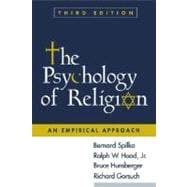
The Psychology of Religion, Third Edition; An Empirical Approach

ISBN: 9781572309012 | 1572309016
Edition: 3rd
Format: Trade Book
Publisher: The Guilford Press
Pub. Date: 8/6/2003

Why Rent from Knetbooks?

Because Knetbooks knows college students. Our rental program is designed to save you time and money. Whether you need a textbook for a semester, quarter or even a summer session, we have an option for you. Simply select a rental period, enter your information and your book will be on its way!

Top 5 reasons to order all your textbooks from Knetbooks:

  • We have the lowest prices on thousands of popular textbooks
  • Free shipping both ways on ALL orders
  • Most orders ship within 48 hours
  • Need your book longer than expected? Extending your rental is simple
  • Our customer support team is always here to help
SummaryTable of Contents
Richard Gorsuch is Professor of Psychology at Fuller Theological Seminary. Bruce Hunsberger is Professor of Psychology and former department chair at Wilfrid Laurier University. Ralph W. Hood, Jr. is Professor of Psychology at the University of Tennessee at Chattanooga. Bernard Spilka is Professor Emeritus of Psychology at the University of Denver.

Now in a fully revised and expanded third edition, this landmark text provides comprehensive, up-to-date coverage of an increasingly rich and varied field. The authors s... MORE
Chapter 1. The Psychological Nature and Functions of Religion1(23)
Why Should We Study Religion Psychologically?,
1(1)
What Is the Psychology of Religion?,
... MORE(3)
What Is Religion?,
5(9)
Perspectives on the Psychology of Religion,
14(1)
A Framework for Studying the Psychology of Religion,
15(4)
Overview,
19(1)
Appendix: Statistical Procedures and Considerations,
20(4)
Chapter 2. Foundations f or an Empirical Psychology of Religion24(30)
Examining Religion Empirically,
24(1)
Distinguishing Religion from Other Concepts,
25(3)
How Is Religiousness Defined in the Psychology of Religion?,
28(1)
Dimensional Approaches to Religiousness,
28(6)
A Perspective from Psychology: Social Psychology,
34(13)
Reductionism and the Idiographic-Nomothetic Controversy,
47(6)
Overview,
53(1)
Chapter 3. Religion and Biology54(19)
Religion and Biology: A Troubled Relationship,
54(3)
Religion, Genetics, and Evolution: A Theory,
57(2)
Some Alternative Perspectives,
59(2)
Religion and the Brain,
61(2)
The Biology of Religious Behavior,
63(3)
The Biology of Religious Experience,
66(1)
Biological Influence of Religious Teachings and Practices,
67(1)
Religion and Biology in Health and Illness,
68(3)
Overview,
71(2)
Chapter 4. Religion in Childhood73(33)
Born to Be Religious?,
73(2)
Theories of Religious Development,
75(11)
Concepts of God,
86(4)
Prayer,
90(3)
Religious Experience in Childhood,
93(1)
Attachment Theory and Related Research,
93(4)
Other Work on Religion in Childhood,
97(6)
Overview,
103(3)
Chapter 5. Religious Socialization and Thought in Adolescence and Young Adulthood106(42)
Religious Socialization,
106(2)
Influences on Religiousness in Childhood and Adolescence,
108(14)
How Religious Are Adolescents and Young Adults?,
122(2)
Does Religious Socialization Influence Adjustment and Nonreligious Behavior in Adolescence?,
124(1)
Religious Thinking and Reasoning in Adolescence and Young Adulthood,
125(4)
Religious Doubts,
129(5)
Apostasy,
134(9)
Religion and Identity Development in Adolescence,
143(3)
Overview,
146(2)
Chapter 6. The Form and Content of Adult Religion148(21)
Religion in Adult Life,
148(1)
The Collective Expression of Religion,
149(1)
Religious Affiliation and Behavior in the United States,
150(2)
Religious Beliefs in the United States,
152(1)
Gender and Religion,
153(3)
The Significance of Age,
156(3)
The Acceptance and Rejection of Institutionalized Religion,
159(6)
Religion and Elderly Individuals,
165(2)
Religious Purposes,
167(1)
Overview,
168(1)
Chapter 7. The Roles and Functions of Religion in Adult Life169(38)
How Adults Are Influenced by Religion,
169(1)
Religion and Social Relationships,
170(4)
Religion, Work, and Occupation,
174(9)
Religion in Love, Sex, and Marriage,
183(15)
Religion and Politics,
198(8)
Overview,
206(1)
Chapter 8. Religion and Death207(39)
Death and Religion: A Framework,
207(1)
Religion, Death, and Immortality,
208(8)
Religion, Death Anxiety, and Death Perspectives,
216(7)
Religion, Death, and Age,
223(4)
Religion and Euthanasia,
227(3)
Religion and Suicide,
230(2)
Religion, Grief, and Bereavement,
232(5)
Death and the Clergy,
237(4)
Death in the Religious-Social Context,
241(3)
Overview,
244(2)
Chapter 9. Religious Experience246(44)
Conceptual Considerations in Defining Religious Experience,
247(10)
The Body in Religious Experience,
257(12)
Religious Imagery: The Return of the Ostracized,
269(14)
Entheogens and Religious Experience,
283(5)
Overview,
288(2)
Chapter 10. Mysticism290(51)
Conceptual Issues in the Study of Mysticism,
291(4)
Representative Classical Views of Mysticism,
295(4)
The Empirical Study of Mysticism,
299(13)
A Cautionary Note: Mysticism and the Paranormal,
312(19)
Toward a Theory of Mysticism: Religious and Spiritual,
331(9)
Overview,
340(1)
Chapter 11. Conversion341(34)
The Classic Research Paradigm: Psychological Dominance,
343(8)
The Contemporary Research Paradigm: Sociological Dominance,
351(9)
Conversion Processes,
360(7)
Deconversion and Related Phenomena,
367(5)
The Complexity of Conversion,
372(1)
Overview,
373(2)
Chapter 12. The Social Psychology of Religious Organizations375(41)
The Classification of Religious Organizations,
376(1)
Church-Sect Theory,
377(9)
Organizational Dynamics,
386(8)
Cults,
394(7)
The Anti-Cult Movement,
401(10)
Social-Psychological Processes in Religious Participation,
411(4)
Overview,
415(1)
Chapter 13. Religion and Morality416(29)
Does Religion Dictate Morality?,
416(2)
Moral Attitudes,
418(1)
Moral Behavior,
419(24)
Overview,
443(2)
Chapter 14. Helping Behavior and Prejudice445(35)
Helping Behavior,
445(12)
Prejudice, Discrimination, and Stereotyping,
457(21)
Overview,
478(2)
Chapter 15. Religion, Coping, and Adjustment480(27)
Theoretical Approaches to Coping and Religion,
481(6)
Prayer and Forgiveness as Coping Methods,
487(6)
The State of Research on Religion and Coping,
493(1)
Contextual Coping Concerns,
494(3)
Religion and Coping with Major Stress,
497(9)
Overview,
506(1)
Chapter 16. Religion and Mental Disorder507(28)
Past and Present: Confusion, Conflict, Resolution,
507(1)
Concerns, Cautions, and Directions,
508(2)
Religion as an Expression of Mental Disorder,
510(6)
Religion as a Socializing and Suppressing Agent,
516(3)
Religion as a Haven,
519(4)
Religion as Therapy,
523(4)
Religion as a Hazard to Mental Health,
527(3)
Topics of Special Concern,
530(3)
Overview,
533(2)
Chapter 17. Epilogue535(10)
Research in the Psychology of Religion and Spirituality,
536(3)
The Need for Theory in the Psychology of Religion,
539(2)
Extremism, Conflict, and the Psychology of Religion,
541(1)
Final Thoughts: Needs for Today and the Future,
542(3)
References545(96)
Author Index641(16)
Subject Index657

Related Products


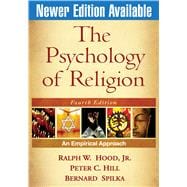
  • The Psychology of Religion, Fourth Edition; An Empirical Approach
    The Psychology of Religion, Fo...
  • The Psychology of Religion, Second Edition; An Empirical Approach
    The Psychology of Religion, Se...


Please wait while this item is added to your cart...