FREE SHIPPING BOTH WAYS
ON EVERY ORDER!
LIST PRICE:
$96.00

OUR PRICE:
$76.03

You may extend rentals at any time.


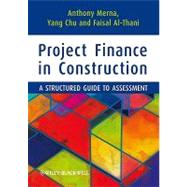
Project Finance in Construction : A Structured Guide to Assessment

ISBN: 9781444334777 | 1444334778
Edition: 1st
Format: Paperback
Publisher: Wiley-Blackwell
Pub. Date: 8/24/2010

Why Rent from Knetbooks?

Because Knetbooks knows college students. Our rental program is designed to save you time and money. Whether you need a textbook for a semester, quarter or even a summer session, we have an option for you. Simply select a rental period, enter your information and your book will be on its way!

Top 5 reasons to order all your textbooks from Knetbooks:

  • We have the lowest prices on thousands of popular textbooks
  • Free shipping both ways on ALL orders
  • Most orders ship within 48 hours
  • Need your book longer than expected? Extending your rental is simple
  • Our customer support team is always here to help
SummaryTable of ContentsAuthor Biography
Project finance in construction procurement has spread worldwide from power stations and waste-disposal plants to telecommunication facilities, bridges, tunnels, railway networks, and now also to the building of hospitals and schools.Despite a financial assessment of PF projects being fundamental to the lenderrs"s decision, there is little understanding of how the use of finance is perceived by individual stakeholders; why and how a financial assessment is performed; who should be involved; where and when it should take place; what data should ... MORE
List of illustrations
List of tables
About the Authors
Preface
Introduction
The development of project finance
Financial assessment
What is financial assessment?
Why perform a financial assessment?
Who is involved in the risk assessment process?
Where should a financial asse... MORE
When should a financial assessment be performed?
What data are to be used?
How should assessment outputs be presented?
Purpose of this guide
Scope of the guide
Project finance
Introduction
Definition of project finance
The key characteristics of project finance
Special project/purpose vehicle
Contractual arrangement
Non-/limited recourse
Off-balance sheet transaction
Robust income stream of the project as the basis for financing
Legal and financial considerations in project finance
Legal
Financial
Financial instruments and cash flow modelling
Introduction
Debt finance
Senior debt
Mezzanine finance
Subordinate debt
Bond finance
Equity finance
Sources of debt and equity
Cash flow modelling and project financing
Risk management
Introduction
Risk
Risk management process
Risk identification
Risk analysis
Risk response
Typical risks in project financing
The financial assessment process
Introduction
The financial assessment structure
SPV assessment
Lenders' assessment
SPV and lender final assessment
Case study
Introduction
Independent power project
Supply and offtake contracts
Supply contracts
Offtake contracts
Applications of supply and offtake contracts
Assumptions for initial assessment
Developing the base case model
Introduction
SPV's initial assessment
Identify the estimated activities, time, costs and revenues of the project
Development of the base case model
Identify major project risks
Assessment of base case model incorporating risks
Initial economic assessment by lenders
Introduction
Financial package assessment
Finance package (1)
Finance package (2)
Finance package (3)
Conclusions
Financial engineering
Introduction
Financial instruments used in financial engineering
Forward rates
Financial futures
Swaps
Options
Caps, floors, collars, swaptions and compound options
Asset-backed securities
Refinancing
Reappraising public-private partnerships
Techniques applied in the reappraisal of PPP concession agreement
Other financial engineering techniques
Final assessment to determine project commercial viability
Introduction
Detailed risk assessment
Financial engineering
Tax holiday
Financial collar
Extending the concession
Increasing debt
Grace period
Phasing construction and operation
Upfront payments
Existing concession revenues
Summary
Financial close
Introduction
Due diligence
Technical
Legal due diligence
Trigger step in rights
Model audit and sensitivity analysis
Risk valuation
Term sheet
Inter-creditor agreement
Hedge strategy
Letters of credit
Reserve account
Escrow and ring-fenced facilities
Economic indicators
Taxation
Insurance
Financial close
Credit committee approval process
Due diligence report
Technical closure
Financial close
Technical commencement
Execute interest rate swaps
Islamic finance and project finance
Introduction
Islamic finance
Shariah
Qiyas and Litihad
Core principles of Islamic finance
Sharing (profit/loss and risk)
No unfair gain
No speculation
No uncertainty
No investments that are not in the public interest
No hoarding of money
Deception
Islamic financial institutions
Shariah supervisory boards
Project finance
The Ijara principle
Ijara Mawsufah Fi Al Dhimmah (forward lease)
Istisna'a
Sukuk
Sukuk al Istisna'a
A typical SAI deal
Hedging
Swaps
Other Islamic finance techniques for projects
Musharaka (equity financing)
Bai salam (forward financing)
Risks and liabilities
Summary
Conclusions and recommendations
Review
Conclusions
Recommendations
Appendix
Glossary
References
Index
Table of Contents provided by Publisher. All Rights Reserved.
Anthony Merna is senior partner of Oriel Group Practice, a multidisciplinary research and consultancy practice based in Manchester and a visiting lecturer to Manchester Business School at the University of Manchester. He has been teaching Project Finance for the last 14 years to a number of UK and overseas universities, businesses and government agencies.

Yang Chu is a graduate of the School of Mechanical, Aerospace and Civil Engineering at the University of Manchester and a research consultant with Oriel Group Practice specialising in the areas of project finance and risk modelling. He is currently carrying out risk management research at Manchester Business School.

Faisal Al-Thani is Senior Development Manager, Middle East for Maersk Oil based in Doha and a board member of the Marsh International Risk Council.


Please wait while this item is added to your cart...