FREE SHIPPING BOTH WAYS
ON EVERY ORDER!
LIST PRICE:
$93.00

Sorry, this item is currently unavailable.

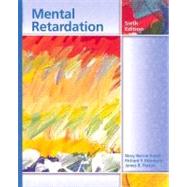
Mental Retardation

ISBN: 9780130329905 | 0130329908
Edition: 6th
Format: Paperback
Publisher: PRENTICE HALL
Pub. Date: 1/1/2002

Why Rent from Knetbooks?

Because Knetbooks knows college students. Our rental program is designed to save you time and money. Whether you need a textbook for a semester, quarter or even a summer session, we have an option for you. Simply select a rental period, enter your information and your book will be on its way!

Top 5 reasons to order all your textbooks from Knetbooks:

  • We have the lowest prices on thousands of popular textbooks
  • Free shipping both ways on ALL orders
  • Most orders ship within 48 hours
  • Need your book longer than expected? Extending your rental is simple
  • Our customer support team is always here to help
SummaryTable of Contents
For courses dealing with the Characteristics of Mental Retardation. As the market-leading text, this sixth edition continues the tradition of providing educators with timely information about the many facets of mental retardation from a life-cycle perspective. The introductory text, divided into four parts, concentrates on the basic concepts about mental retardation, the characteristics of individuals who have different levels of retardation, programming and issues across the lifespan of individuals who are retarded, and addresses ongoing family concerns, individual rights, legal issues, institutions and community living, and current and emerging issues.
PART I Basic Concepts1(148)
Historical Perspectives
2(36)
Historical Overview
4(1)
... MORE
Antiquity: Prior to 1700
5(1)
Emergence and Early Disillusionment of a Field: 1700-1890
6(5)
Itard and the Homme Sauvage
7(1)
Seguin's Moral and Physiological Training Methods
8(1)
Guggenbuhl and His Abendberg
8(1)
American Pioneers: Dix, Howe, and Wilbur
9(1)
From Optimism to Disillusionment
9(2)
Facilities-Based Orientation: 1890-1960
11(9)
The Eugenics Scare
12(2)
Immigration
14(1)
The Testing Movement
14(1)
Related Sociopolitical Influences
15(4)
Research and Programmatic Influences
19(1)
Services-Based Orientation: 1960-1985
20(6)
Sociopolitical Influences
20(4)
Trends in Service Delivery
24(2)
Supports-Based Orientation: 1985-Present
26(6)
Sociopolitical Influences
27(2)
Psychological, Medical, and Health Care Developments
29(2)
Trends in Service Delivery
31(1)
Final Reflections
32(1)
Summary
33(2)
References
35(3)
Terminology and Definition
38(40)
Mental Retardation in Context
40(3)
Alternative Perspectives
42(1)
Terminology
43(2)
Disablism and Mental Retardation
45(1)
Defining Mental Retardation
46(13)
Early Definitions
47(1)
The AAMDIAAMR Definitions
47(12)
Contemporary Definitional Perspectives
59(3)
The 1996 American Psychological Association Definition
59(1)
Greenspan's Definition
60(2)
Operationalizing Definitional Perspectives
62(5)
State Guidelines
63(1)
Two Educational Examples of Operationalization
64(1)
Practice Realities
65(2)
Incidence and Prevalence
67(5)
Terminology Defined
67(2)
Factors Associated with Prevalence Rates
69(3)
Final Considerations
72(1)
Summary
73(1)
References
74(4)
Assessment of Mental Retardation
78(36)
Theories of Intelligence
80(4)
Nature versus Nurture
82(1)
Intelligence Quotient
83(1)
Assessment of Intelligence
84(9)
The Influence of Alfred Binet
85(2)
The Influence of David Wechsler
87(3)
Other Influential Scales
90(2)
Criticisms of Intelligence Testing
92(1)
Theories of Adaptive Behavior
93(5)
Adaptive Behavior versus Intelligence
97(1)
Assessment of Adaptive Behavior
98(9)
The Influence of the American Association on Mental Retardation
100(3)
The Influence of Edgar Doll
103(1)
Other Influential Scales
104(2)
Criticisms of Adaptive Behavior Assessment
106(1)
Summary
107(1)
References
108(6)
Individual Rights and Legal Issues
114(35)
The Context for Securing Individuals' Rights
116(5)
Legal Bases for Establishing Rights
116(5)
Legal Precedents for Individual Rights
121(10)
Access to Education
121(4)
Appropriate Evaluation and Classification
125(2)
Free Appropriate Education
127(1)
Appropriate Placement
128(1)
Related Services
129(1)
Extended School Year
130(1)
Expulsion
130(1)
Institutional Rights
131(5)
Wyatt v. Stickney
131(2)
New York Association for Retarded Children v. Rockefeller
133(1)
O'Connor v. Donaldson
133(1)
Halderman v. Pennhurst
133(2)
Youngberg v. Romeo
135(1)
Olmstead v. L.C.
136(1)
Community Rights
136(1)
Issues That Span a Lifetime
137(6)
Withholding Treatment
138(1)
Sexual Abuse
138(1)
Domestic Violence
138(1)
Crime Victims
139(1)
Criminal Defendants
139(1)
Implications
140(3)
Persisting Problems
143(1)
Final Thoughts
143(1)
Summary
144(1)
References
144(5)
PART II Biology, Psychology, and Sociology of Mental Retardation149(162)
Biological Sources of Mental Retardation and Efforts for Prevention
150(46)
Terminology
153(3)
Genetic Disorders
156(1)
Genetic Transmission
156(9)
Dominant Transmission
157(1)
Recessive Transmission
158(4)
Sex-Linked Inheritance
162(2)
Polygenic Inheritance
164(1)
Chromosomal Deviations
165(7)
Down Syndrome
167(2)
Prader-Willi Syndrome
169(1)
Other Sex Chromosomal Anomalies
170(2)
Cranial Malformations
172(1)
Other Congenital Factors
173(3)
Maternal Disorders
173(1)
Substance Exposure
174(2)
Prematurity and Perinatal Concerns
176(2)
Postnatal Biological Concerns
178(1)
Prevention
179(8)
Preconception
180(3)
During Gestation
183(2)
At Delivery
185(1)
Early Childhood
186(1)
Perspective
186(1)
Ethical Issues
187(3)
Human Genome Project
187(3)
Final Thoughts
190(1)
Summary
190(1)
References
191(5)
Psychosocial Aspects of Mental Retardation
196(38)
Individual Aspects
198(9)
Personality
198(2)
Psychiatric Disorders
200(2)
Developmental Disabilities
202(5)
Environmental Aspects
207(9)
Family Environments
207(4)
Living Environments
211(3)
Lifestyle Considerations
214(2)
Interventions
216(13)
Educational Interventions
217(3)
Family Interventions
220(6)
Mental Health Interventions Specialized Therapies
226(3)
Summary
229(1)
References
229(5)
Characteristics of Individuals with Milder Forms of Mental Retardation
234(42)
Characteristics of Milder Retardation
236(5)
Demographic Characteristics
241(1)
Gender
241(1)
Ethnicity
241(1)
Socioeconomic and Family Patterns
242(1)
Motivational and Sociobehavioral Characteristics
242(6)
Motivational
243(3)
Self-Regulatory Behaviors
246(1)
Sociobehavioral
246(2)
Learning Characteristics
248(8)
Cognitive Development
249(2)
Processes Involved in Learning
251(5)
Observational Learning
256(1)
Speech and Language Characteristics
256(1)
Physical Health Characteristics
257(6)
Selected Conditions
258(4)
General Health Considerations
262(1)
Educational Characteristics
263(3)
Programmatic Realities
265(1)
Academic Achievement
266(1)
Summary
266(1)
References
267(9)
Characteristics of Persons with Severe Mental Retardation
276(35)
Characteristics of Severe Mental Retardation
278(4)
Today's Definitions
278(1)
Current Demographics
279(1)
Functional Characteristics
280(1)
Environmental Considerations
281(1)
Behavioral Characteristics
282(3)
Behavioral Issues
283(1)
Behavior Analysis
283(1)
Behavioral Interventions
284(1)
Communication Characteristics
285(2)
Speech and Language Development
285(1)
Assessment and Interventions
285(1)
Instructional Strategies
286(1)
Physical and Emotional Health Characteristics
287(1)
Medical Conditions
287(1)
Sensory and Motor Disorders
288(1)
Psychiatric Disorders
288(1)
Educational Concerns
288(6)
Institutional Model
289(1)
Developmental Model
290(1)
Ecological Model
291(1)
Curriculum and Teaching Strategies
292(2)
Appropriate Outcomes
294(3)
Educational Outcomes
295(1)
Quality-of-Life Outcomes
296(1)
Personal Outcomes
297(1)
Supports
297(5)
Supports Planning
299(1)
Natural Supports
299(1)
Supplementary Supports
300(2)
Summary
302(1)
References
303(8)
PART III Programming and Issues across the Life Span311(156)
Infancy and Early Childhood
312(46)
Rationale for Early Childhood Special Education
314(1)
Legislation Affecting Early Childhood Special Education Programs
315(9)
Preschool Components
316(1)
Infant Component (Part C, Formerly Part H)
317(7)
DEC-Recommended Practices
324(4)
Referral
324(1)
Evaluation and Assessment
325(1)
Evaluation
326(1)
Assessment
327(1)
Measures of Early Childhood Development
328(6)
Socioemotional Assessment
328(3)
Cognitive Assessment
331(1)
Speech and Language Assessment
331(3)
Adaptive Behavior Assessment
334(1)
Motor Assessment
334(1)
Issues in Early Childhood Assessment
334(3)
Personal
336(1)
Professional
336(1)
Procedural
337(1)
Programming for Young Children
337(4)
Service Delivery Models
338(3)
Curriculum
341(7)
Program Implementation
343(1)
Classroom Accommodations and Adaptations
343(3)
Scheduling
346(2)
Family Involvement
348(3)
Transition
351(1)
Summary
351(2)
References
353(5)
School Years: Educational Programming
358(44)
Individuals with Disabilities Education Act (IDEA)
360(3)
Key Components of the IDEA
360(3)
Educational Environment Options
363(11)
Evolution of Service Delivery
363(1)
Setting Options
364(2)
Regular Class (General Education)
366(4)
Separate Class
370(1)
Separate Facilities
370(1)
Separate Residential Facilities
371(1)
Home/Hospital Environments
371(1)
Focus on Inclusion
372(2)
Final Thoughts on Placement
374(1)
Assessment and Program Planning
374(11)
Assessment
375(1)
The IEP Team
376(2)
The Individualized Education Program
378(1)
Components of the IEP
379(1)
Goals and Objectives
380(2)
Methods, Materials, and Activities
382(1)
Evaluation
382(3)
Final Thoughts on IEPs
385(1)
Programming for School-Age Learners
385(13)
Characteristics Revisited
386(1)
The Roles of the Teacher in a Collaborative World
387(4)
Curricular Considerations
391(1)
Curricular Orientations
391(4)
Instructional Considerations
395(3)
Summary
398(1)
References
399(3)
Transitional Years: Preparing for Adulthood
402(32)
Basic Concepts of Transition
404(5)
The Federal Mandate for Transition
405(2)
Adult Outcome Data
407(1)
Sense of Perspective
407(2)
Transition Education
409(8)
Career Development
410(3)
Life Skills Preparation
413(4)
Transition Planning
417(2)
Assessing Transition Needs
417(1)
Transition Planning
418(1)
Vocational Preparation
419(9)
Essential Elements of Vocational Preparation Programs
419(2)
Identifying Job Opportunities
421(1)
Traditional Vocational Training Options
421(1)
Contemporary Vocational Training Options
422(4)
Vocational Assessment
426(1)
Vocational Placement and Follow-up
427(1)
Programming Issues
428(1)
Summary
428(1)
References
429(5)
Adult Years: Life in the Community
434(33)
Adult Development
436(2)
Young Adulthood
436(1)
Middle Adulthood
437(1)
Older Adulthood
437(1)
Patterns of Residential and Community Living
438(4)
Institutional Settings
438(2)
Community Settings
440(2)
Adjusting to Life in the Community
442(15)
Social Integration
444(1)
Economic Integration
445(3)
Employment Integration
448(2)
Recreational/Leisure Integration
450(1)
Residential Integration
451(2)
Personal Satisfaction
453(1)
Community Acceptance
454(1)
Need for Support Services
455(2)
Issues of the Adult Years
457(3)
Advocacy
457(1)
Lifelong Learning
458(2)
Sexuality
460(1)
Summary
460(2)
References
462(5)
PART IV Future Issues467(57)
Family Considerations
468(30)
Organization of the Family
472(4)
Family Models
472(1)
Family Development
473(2)
The Family Personality
475(1)
Family Functioning
476(11)
Family Reactions
477(3)
Family Dynamics
480(3)
Support Services
483(1)
Consultation with Professionals
484(3)
Issues in Family Living
487(6)
Personal Safety
487(2)
Religion
489(2)
Planning for the Later Years
491(2)
Summary
493(1)
References
493(5)
Assistive Technology Applications
498(26)
Definition of Assistive Technology
500(4)
Benefits of Assistive Technology
504(1)
Policies and Legalities Surrounding Assistive Technology
505(7)
Individuals with Disabilities Education Act
505(2)
Technology-Related Assistance for Individuals with Disabilities Act
507(1)
Americans with Disabilities Act
508(1)
Teacher Role
508(4)
Barriers of Assistive Technology
512(1)
Modifications
513(8)
Early Childhood
514(2)
School Age
516(3)
Postschool Years
519(2)
Summary
521(1)
References
522(2)
Appendix524(7)
Glossary531(6)
Subject Index537(18)
Name Index555

Related Products


  • Mental Retardation
    Mental Retardation
  • MENTAL RETARDATION
    MENTAL RETARDATION
  • Mental Retardation : An Introduction to Intellectual Disability
    Mental Retardation : An Introd...


Please wait while this item is added to your cart...