FREE SHIPPING BOTH WAYS
ON EVERY ORDER!
LIST PRICE:
$181.80

OUR PRICE:
$45.00

You may extend rentals at any time.


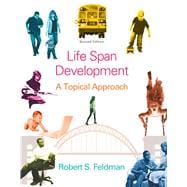
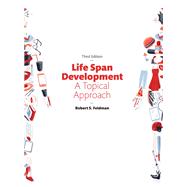
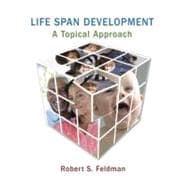
Life Span Development : A Topical Approach
ISBN: 9780205759569 | 0205759564
Edition: 1st
Format: Hardcover
Publisher: Pearson
Pub. Date: 6/29/2010

Why Rent from Knetbooks?

Because Knetbooks knows college students. Our rental program is designed to save you time and money. Whether you need a textbook for a semester, quarter or even a summer session, we have an option for you. Simply select a rental period, enter your information and your book will be on its way!

Top 5 reasons to order all your textbooks from Knetbooks:

  • We have the lowest prices on thousands of popular textbooks
  • Free shipping both ways on ALL orders
  • Most orders ship within 48 hours
  • Need your book longer than expected? Extending your rental is simple
  • Our customer support team is always here to help
SummaryTable of ContentsAuthor Biography
For Human Development/Lifespan Development courses organized topically.Life Span Development: A Topical Approach is based on the chronologically-organized, highly popular Development Across the Life Span, is be approximately 20% shorter than traditional lifespan books and organized topically .Life Span Development: A Topical Approach maintains the student friendliness that has been the hallmark of Feldman's other development textbooks. It is rich in examples and illustrates the applications that can be derived from the research and theory of li... MORE
PART I.  INTRODUCTION


Chapter 1.  An Orientation to Lifespan Development

Module 1.  Determining The Nature–And Nurture–Of Lifespan Development

Module 2.  Theoretical Perspectives

Module 3.  Research in Lifespan Development


PART II.  PHYSICAL DEVELOPMENT ... MORE


Chapter 2.  Genetics, Prenatal Development, and Birth

Module 4.  Foundations of Genetics

Module 5.  The Interaction of Heredity and Environment

Module 6.  Prenatal Growth and Birth


Chapter 3.  Physical Growth and Aging Across The Lifespan

Module 7.  Physical Growth and Change

Module 8.  Motor Development

Module 9.  Perceptual Development


Chapter 4.  Health and Wellness

Module 10.  Stress and Coping

Module 11.  Illness and Well-Being

Module 12.  Promoting Health and Wellness


PART III.  COGNITIVE DEVELOPMENT


Chapter 5.  Cognitive Growth: Piaget And Vygotsky

Module 13.  Principles of Cognitive Development

Module 14.  Piaget’s Approach to Cognitive Development

Module 15.  Vygotsky’s View of Cognitive Development


Chapter 6.  Cognitive Growth: Information Processing Approaches

Module 16.  The Basics of Information Processing

Module 17.  Memory

Module 18.  Applying Information Processing Approaches


Chapter 7.  Language Development

Module 19.  The Origins of Language

Module 20.  The Course of Language Development

Module 21.  Culture and Language


Chapter 8.  Intelligence

Module 22.  Intelligence: Determining Individual Strengths

Module 23. Controversies Involving Intelligence

Module 24. Intellectual Disabilities and the Intellectually Gifted


PART IV.  SOCIAL AND EMOTIONAL DEVELOPMENT

Chapter 9. Social and Emotional Development

Module 25. Forging Early Social Relationships

Module 26. Emotional Development

Module 27. Personality


Chapter 10.  Development of the Self

Module 28. The Development of the Self

Module 29. Evaluating the Self

Module 30. Picking An Occupation: Choosing Life’s Work


Chapter 11.  Moral Development and Aggression

Module 31. Developing Morality

Module 32. Spirituality and Religion

Module 33. Aggression and Violence


Chapter 12.  Gender and Sexuality

Module 34. Gender: Why Do Boys Wear Blue And Girls Wear Pink? 

Module 35. Sexual Maturation and Sexuality

Module 36.  Relationships


Chapter 13.  Friends and Family

Module 37. Social Relationships Across the Lifespan

Module 38 .Lifestyles

Module 39. Family Life


Chapter 14.  Schooling, Culture, and Society: Living in a Multicultural World

Module 40. Schooling and Lifetime Learning

Module 41. Leisure

Module 42. A Multicultural World


PART V.  THE END OF LIFE


Chapter 15.  Death and Grieving: The End of Life

Module 43. Dying and Death Across the Lifespan

Module 44. Confronting Death

Module 45. Grief and Bereavement

Robert S. Feldman is Professor of Psychology and Associate Dean of the College of Social and Behavioral Sciences at the University of Massachusetts at Amherst.  A recipient of the College Distinguished Teacher Award, he teaches psychology classes ranging in size from 15 to nearly 500 students.  During the course of more than two decades as a college instructor, he has taught both undergraduate and graduate courses at Mount Holyoke College, Wesleyan University, Virginia Commonwealth University, in addition to the University of Massachusetts.

    Professor Feldman, who initiated the Minority Mentoring Program at the University of Massachusetts, also has served as a Hewlett Teaching Fellow and Senior Online Teaching Fellow.  He initiated distance learning courses in psychology at the University of Massachusetts

    A Fellow of both the American Psychological Association and the Association for Psychological Science, Professor Feldman received a B.A. with High Honors from Wesleyan University and an M.S. and Ph.D. from the University of Wisconsin-Madison.  He is a winner of a Fulbright Senior Research Scholar and Lecturer award, and he has written more than 100 books, book chapters, and scientific articles. He has edited Development of Nonverbal Behavior in Children (Springer-Verlag), Applications of Nonverbal Behavioral Theory and Research (Erlbaum), and co-edited Fundamentals of Nonverbal Behavior (Cambridge University Press). He is also author of Child Development, Understanding Psychology, and P.O.W.E.R. Learning: Strategies for Success in College and Life.  His books have been translated into a number of languages, including Spanish, French, Portuguese, Dutch, Chinese, and Japanese.  His research interests include honesty and deception in everyday life and the use of nonverbal behavior in impression management, and his research has been supported by grants from the National Institute of Mental Health and the National Institute on Disabilities and Rehabilitation Research.

    Professor Feldman loves music, is an enthusiastic pianist, and enjoys cooking and traveling. He has three children, and he and his wife, a psychologist, live in Amherst, Massachusetts, in a home overlooking the Holyoke mountain range.

Related Products


  • Lifespan Development A Topical Approach Plus NEW MyDevelopmentLab with eText -- Access Card Package
    Lifespan Development A Topical...
  • Lifespan Development A Topical Approach Plus NEW MyPsychLab with eText -- Access Card Package
    Lifespan Development A Topical...
  • Outlines and Highlights for Prealgebra by Mckeague, Isbn : 0534378935
    Outlines and Highlights for Pr...


Please wait while this item is added to your cart...