FREE SHIPPING BOTH WAYS
ON EVERY ORDER!
LIST PRICE:
$110.00

Sorry, this item is currently unavailable.

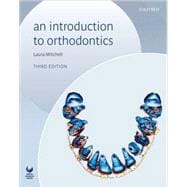
An Introduction to Orthodontics

ISBN: 9780198568124 | 0198568126
Edition: 3rd
Format: Paperback
Publisher: Oxford University Press, USA
Pub. Date: 9/27/2007

Why Rent from Knetbooks?

Because Knetbooks knows college students. Our rental program is designed to save you time and money. Whether you need a textbook for a semester, quarter or even a summer session, we have an option for you. Simply select a rental period, enter your information and your book will be on its way!

Top 5 reasons to order all your textbooks from Knetbooks:

  • We have the lowest prices on thousands of popular textbooks
  • Free shipping both ways on ALL orders
  • Most orders ship within 48 hours
  • Need your book longer than expected? Extending your rental is simple
  • Our customer support team is always here to help
SummaryTable of ContentsAuthor Biography
Popular with thousands of students and clinicians, this book is the established introduction to the study and practice of orthodontics. With the increased demand for, and expansion of orthodontic services, this third edition has been updated to provide a comprehensive orientation to current thinking and practice for dental students and dental care professionals. Coverage ranges from the anatomical features leading to assessment, through cephalometrics and treatment planning for all classes of patient. Modern appliance options are reflected, as ... MORE
... MORE
Preface for third editionv
Acknowledgementsvi
The rationale for orthodontic treatment
Definition
2(1)
Prevalence of malocclusion
2(1)
Need for treatment
2(1)
Dental health
2(1)
Psychosocial well-being
3(1)
Demand for treatment
3(1)
The disadvantages and potential risks of orthodontic treatment
4(1)
Root resorption
4(1)
Loss of periodontal support
4(1)
Decalcification
4(1)
Soft tissue damage
4(1)
The effectiveness of treatment
5(1)
The temporomandibular joint and orthodontics
5(3)
Orthodontic treatment as a contributory factor in TMD
5(1)
The role of orthodontic treatment in the prevention and management of TMD
5(1)
Principal sources and further reading
6(2)
The aetiology and classification of malocclusion
The aetiology of malocclusion
8(1)
Classifying malocclusion
8(1)
Qualitative assessment of malocclusion
8(1)
Quantitative assessment of malocclusion
9(1)
Commonly used classifications and indices
9(4)
Angle's classification
9(1)
British Standards Institute classification
9(1)
Summers occlusal index
10(1)
Index of Orthodontic Treatment Need (IOTN)
10(2)
Peer Assessment Rating (PAR)
12(1)
Index of Complexity Outcome and Need (ICON)
12(1)
Andrews' six keys
13(3)
Principal sources and further reading
13(3)
Management of the developing dentition
Normal dental development
16(2)
Calcification and eruption times
16(1)
The transition from primary to mixed dentition
16(1)
Development of the dental arches
17(1)
Abnormalities of eruption and exfoliation
18(1)
Screening
18(1)
Natal teeth
18(1)
Eruption cyst
18(1)
Failure of/delayed eruption
18(1)
Mixed dentition problems
19(8)
Premature loss of deciduous teeth
19(1)
Retained deciduous teeth
20(1)
Infra-occluded (submerged) primary molars
20(1)
Impacted first permanent molars
21(1)
Dilaceration
22(1)
Supernumerary teeth
22(3)
Habits
25(1)
First permanent molars of poor long-term prognosis
25(1)
Median diastema
26(1)
Planned extraction of deciduous teeth
27(3)
Serial extraction
27(1)
Indications for the extraction of deciduous canines
27(1)
Principal sources and further reading
28(2)
Craniofacial growth, the cellular basis of tooth movement and anchorage
Z. L. Nelson-Moon
Introduction
30(1)
Craniofacial embryology
30(3)
Neural crest
30(1)
Pharyngeal arches
30(1)
Facial development
31(1)
Formation of the palate
31(2)
Mechanisms of bone growth
33(1)
Postnatal craniofacial growth
34(3)
Growth patterns
34(1)
Calvarium
35(1)
Cranial base
35(1)
Maxillary complex
36(1)
Mandible
37(1)
Growth rotations
37(2)
Craniofacial growth in the adult
39(1)
Growth of the soft tissues
39(1)
Control of craniofacial growth
40(1)
Growth prediction
41(1)
Biology of tooth movement
41(4)
The periodontal ligament
41(1)
Cells involved in bone homeostasis
42(1)
Cellular events in response to mechanical loading
43(2)
Anchorage
45(2)
Cellular events associated with loss of anchorage
45(1)
Assessment of optimal force levels
45(2)
Cellular events during root resorption
47(1)
Summary
47(3)
Facial growth
47(1)
Cellular basis of tooth movement
48(1)
Anchorage
48(1)
Principal sources and further reading
48(2)
Orthodontic assessment
Purpose and aims of an orthodontic assessment
50(1)
Equipment
50(1)
Instruments
50(1)
Study models
50(1)
Radiographs
50(1)
Patient's concerns
50(2)
Dental history
52(1)
Medical history
52(1)
Extra-oral examination
52(4)
Skeletal pattern
52(2)
Soft tissues
54(2)
Temporomandibular joints
56(1)
Habits
56(1)
Intra-oral examination
56(3)
Dental examination
56(1)
Path of closure
56(1)
Lower arch
57(1)
Upper arch
57(1)
Teeth in occlusion
57(2)
Radiographic examination
59(3)
Principal sources and further reading
60(2)
Cephalometrics
The cephalostat
62(1)
Digital radiographs
62(1)
Indications for cephalometric evaluation
63(1)
An aid to diagnosis
63(1)
A pre-treatment record
63(1)
Monitoring the progress of treatment
63(1)
Research purposes
63(1)
Evaluating a cephalometric radiograph
63(1)
Hand tracing
63(1)
Digitizing
64(1)
Cephalometric analysis: general points
64(1)
Commonly used cephalometric points and reference lines
65(1)
Anteroposterior skeletal pattern
66(2)
Angle ANB
66(1)
Ballard conversion
67(1)
Wits analysis
67(1)
Vertical skeletal pattern
68(1)
Incisor position
68(1)
Prognosis tracing
69(1)
A-Pogonion line (APog)
69(1)
Soft tissue analysis
69(1)
The Holdaway line
69(1)
Rickett's E-plane
69(1)
Facial plane
69(1)
Assessing growth and treatment changes
70(1)
Cranial base
70(1)
The maxilla
70(1)
The mandible
70(1)
Cephalometric errors
70(4)
Projection errors
70(1)
Landmark identification
70(1)
Measurement errors
70(1)
Principal sources and further reading
71(3)
Treatment planning
S. J. Littlewood
Introduction
74(1)
General objectives of orthodontic treatment
74(1)
Forming an orthodontic problem list
74(2)
The patient's concerns
75(1)
Facial and smile aesthetics
75(1)
Alignment and symmetry in each arch
76(1)
Skeletal and dental relationships in all three dimensions
76(1)
Aims of orthodontic treatment
76(1)
Skeletal problems and treatment planning
77(1)
Orthodontic camouflage
77(1)
Growth modification
77(1)
Combined orthodontic and orthognathic surgical treatment
77(1)
Basic principles in orthodontic treatment planning
77(1)
Oral health
77(1)
The lower arch
77(1)
The upper arch
77(1)
Buccal segments
77(1)
Anchorage
78(1)
Retention
78(1)
Space analysis
78(5)
Calculating the space requirements
78(1)
Creating space
79(1)
Extractions
79(2)
Distal movement of molars
81(1)
Enamel stripping
82(1)
Expansion
82(1)
Proclination of incisors
83(1)
Informed consent and the orthodontic treatment plan
83(1)
Conclusions
83(7)
Principal sources and further reading
88(2)
Class I
Aetiology
90(1)
Skeletal
90(1)
Soft tissues
90(1)
Dental factors
90(1)
Crowding
90(3)
Late lower incisor crowding
92(1)
Spacing
93(3)
Median diastema
93(1)
Management of missing upper incisors
94(2)
Displaced teeth
96(1)
Vertical discrepancies
97(1)
Transverse discrepancies
97(1)
Bimaxillary proclination
97(3)
Principal sources and further reading
98(2)
Class II division 1
Aetiology
100(2)
Skeletal pattern
100(1)
Soft tissues
100(2)
Dental factors
102(1)
Habits
102(1)
Occlusal features
102(1)
Assessment of and treatment planning in Class II division 1 malocclusions
102(2)
Factors influencing a definitive treatment plan
102(2)
Practical treatment planning
104(1)
Early treatment
104(2)
Management of an increased overjet associated with a Class I or mild Class II skeletal pattern
106(1)
Management of an increased overjet associated with a moderate to severe Class II skeletal pattern
106(3)
Retention
109(3)
Principal sources and further reading
109(3)
Class II division 2
Aetiology
112(2)
Skeletal pattern
112(1)
Soft tissues
112(1)
Dental factors
113(1)
Occlusal features
114(1)
Management
114(8)
Approaches to the reduction of overbite
116(1)
Practical management
116(3)
Principal sources and further reading
119(3)
Class III
Aetiology
122(1)
Skeletal pattern
122(1)
Soft tissues
122(1)
Dental factors
122(1)
Occlusal features
122(1)
Treatment planning in Class III malocclusions
123(2)
Treatment options
125(7)
Accepting the incisor relationship
125(1)
Proclination of the upper labial segment
125(1)
Retroclination of the lower labial segment with or without proclination of the upper labial segment
126(1)
Surgery
127(2)
Principal sources and further reading
129(3)
Anterior open bite and posterior open bite
Definitions
132(1)
Aetiology of anterior open bite
132(2)
Skeletal pattern
132(1)
Soft tissue pattern
132(1)
Habits
133(1)
Localized failure of development
133(1)
Mouth breathing
133(1)
Management of anterior open bite
134(2)
Approaches to the management of anterior open bite
134(2)
Management of patients with increased vertical skeletal proportions and reduced overbite
136(1)
Posterior open bite
136(4)
Principal sources and further reading
138(2)
Crossbites
Definitions
140(1)
Aetiology
140(1)
Local causes
140(1)
Skeletal
140(1)
Soft tissues
141(1)
Rarer causes
141(1)
Types of crossbite
141(1)
Anterior crossbite
141(1)
Posterior crossbites
141(1)
Management
142(3)
Rationale for treatment
142(1)
Treatment of anterior crossbite
142(1)
Treatment of posterior crossbite
143(1)
The quadhelix appliance
144(1)
Rapid maxillary expansion (RME)
144(1)
Clinical effectiveness
145(3)
Principal sources and further reading
145(3)
Canines
Facts and figures
148(1)
Normal development
148(1)
Aetiology of maxillary canine displacement
148(1)
Interception of displaced canines
149(1)
Assessing maxillary canine position
150(1)
Clinically
150(1)
Radiographically
150(1)
Management of buccal displacement
151(1)
Management of palatal displacement
152(2)
Surgical removal of canine
152(1)
Surgical exposure and orthodontic alignment
153(1)
Transplantation
153(1)
Resorption
154(1)
Transposition
154(4)
Principal sources and further reading
155(3)
Planning anchorage
B. Doubleday
What is anchorage and why is it important?
158(1)
Assessing anchorage requirements
158(2)
The number of teeth to be moved
158(1)
The distance the teeth need to be moved
158(1)
The aims of treatment
158(1)
Type of tooth movement planned
158(1)
Root surface area of the teeth used for anchorage
159(1)
Skeletal pattern
159(1)
Occlusal interlock
159(1)
Tendency for tooth movement in the arch
159(1)
Summarizing anchorage requirements
159(1)
Types of anchorage
160(1)
Intra-oral anchorage
160(1)
Extra-oral anchorage
160(1)
Reinforcing anchorage
160(2)
Intra-oral reinforcement of anchorage
160(1)
Extra-oral reinforcement of anchorage
161(1)
Extra-oral anchorage and traction
162(2)
General principles
162(1)
Components of headgear
162(1)
Headgear safety
163(1)
Reverse headgear
164(1)
Monitoring anchorage during treatment
164(1)
Single-arch treatments
164(1)
Upper and lower fixed appliance treatments
164(1)
Common problems with anchorage
165(1)
Summary
165(3)
Principal sources and further reading
165(3)
Retention
S. J. Littlewood
Introduction
168(1)
Definition of relapse
168(1)
Aetiology of relapse
168(2)
Gingival and periodontal factors
168(1)
Occlusal factors
168(1)
Soft tissues
169(1)
Growth
169(1)
Orthodontic relapse and relapse due to age changes
170(1)
How common is relapse?
170(1)
Informed consent and relapse
170(1)
Retainers
170(5)
Removable or fixed retainers?
170(1)
Introduction to removable retainers
171(1)
Hawley retainer
171(1)
Vacuum-formed retainers
171(1)
Fixed retainers
172(1)
Care of retainers
173(2)
Adjunctive techniques used to reduce relapse
175(1)
Pericision
175(1)
Enamel interproximal stripping
175(1)
Conclusions about retention
175(3)
Principal sources and further reading
176(2)
Removable appliances
Mode of action of removable appliances
178(1)
Indications for the use of removable appliances
178(1)
Designing removable appliances
179(1)
General principles
179(1)
Steps in designing a removable appliance
179(1)
Active components
179(1)
Springs
179(1)
Screws
180(1)
Elastics
180(1)
Retaining the appliance
180(2)
Adams clasp
180(1)
Other methods of retention
181(1)
Baseplate
182(1)
Self-cure or heat-cure acrylic
182(1)
Anterior bite-plane
182(1)
Buccal capping
183(1)
Commonly used components and designs
183(2)
Z-spring or double-cantilever spring
183(1)
Palatal finger spring
183(1)
T-spring
184(1)
Buccal canine retractor
184(1)
Screw appliance
184(1)
Nudger appliance
184(1)
Fitting a removable appliance
185(1)
Monitoring progress
185(2)
At each visit
186(1)
Common problems during treatment
186(1)
Appliance repairs
187(3)
Principal sources and further reading
187(3)
Fixed appliances
Principles of fixed appliances
190(1)
Indications for the use of fixed appliances
191(1)
Components of fixed appliances
192(5)
Bands
192(1)
Bonds
193(1)
Orthodontic adhesives
193(1)
Auxiliaries
194(1)
Archwires
195(2)
Treatment planning for fixed appliances
197(1)
Practical procedures
197(1)
Fixed appliance systems
198(2)
Pre-adjusted appliances
198(1)
The Tip Edge appliance
199(1)
Self-ligating systems
199(1)
Decalcification and fixed appliances
200(1)
Starting with fixed appliances
200(4)
Principal sources and further reading
201(3)
Functional appliances
S. J. Littlewood
Definition
204(1)
History
204(1)
Overview
204(1)
Timing of treatment
204(4)
Dental development and timing of functional appliance treatment
204(1)
Psychological factors and timing of functional appliance treatment
204(4)
Types of malocclusion treated with functional appliances
208(1)
Treatment of Class II division 1 malocclusions
208(1)
Treatment of Class II division 2 malocclusions
208(1)
Types of functional appliance
208(6)
Twin-block appliance
208(1)
Herbst appliance
208(5)
Medium opening activator (MOA)
213(1)
Bionator
213(1)
Frankel appliance
213(1)
Clinical management of functional appliances
214(1)
Preparing for the functional appliance
214(1)
Fitting the functional appliance
214(1)
Reviewing the functional appliance
214(1)
End of functional appliance treatment
214(1)
How functional appliances work
215(3)
Principal sources and further reading
216(2)
Adult orthodontics
S. J. Littlewood
Introduction
218(1)
Specific problems in adult orthodontic treatment
218(1)
Lack of growth
218(1)
Periodontal disease
218(1)
Missing or heavily restored teeth
218(1)
Physiological factors affecting tooth movement
219(1)
Adult motivation and attitude towards treatment
219(1)
Orthodontics and periodontal disease
219(1)
Malalignment problems caused by periodontal disease
219(1)
Orthodontic treatment as an adjunct to restorative work
219(1)
Orthodontic management of patients with periodontal disease
220(1)
Aesthetic orthodontic appliances
220(8)
Aesthetic orthodontic brackets
220(3)
Lingual orthodontics
223(1)
Clear plastic appliances: the Invisalign® concept
223(2)
Principal sources and further reading
225(3)
Orthodontics and orthognathic surgery
S. J. Littlewood
Introduction
228(1)
Indications for treatment
228(1)
Objectives of combined orthodontics and orthognathic surgery
228(1)
Diagnosis and treatment plan
228(6)
History
228(4)
Clinical examination
232(2)
Radiographic examination
234(1)
Cephalometric assessment
234(1)
3-D imaging
234(1)
Planning
234(2)
Common surgical procedures
236(2)
Maxillary procedures
236(1)
Mandibular procedures
236(1)
Bimaxillary surgery
237(1)
Distraction osteogenesis
237(1)
Sequence of treatment
238(3)
Extractions
238(1)
Pre-surgical orthodontics
238(1)
Preparing for surgery
238(1)
Surgery
239(1)
Post-surgical orthodontics
239(2)
Retention and relapse
241(3)
Surgical factors
241(1)
Orthodontic factors
241(1)
Patient factors
241(1)
Principal sources and further reading
242(2)
Cleft lip and palate and other craniofacial anomalies
Prevalence
244(1)
Cleft lip and palate
244(1)
Isolated cleft of the secondary palate
244(1)
Aetiology
244(1)
Classification
244(1)
Problems in management
244(3)
Congenital anomalies
244(1)
Post-surgical distortions
245(1)
Hearing and speech
245(1)
Other congenital abnormalities
246(1)
Dental anomalies
246(1)
Co-ordination of care
247(1)
Management
247(4)
At birth
247(1)
Lip repair
247(1)
Palate repair
248(1)
Primary dentition
248(1)
Mixed dentition
248(3)
Permanent dentition
251(1)
Completion of growth
251(1)
Audit of cleft palate care
251(1)
Other craniofacial anomalies
251(12)
Hemifacial microsomia
251(1)
Treacher--Collins syndrome
252(1)
Pierre--Robin anomaly
252(1)
Craniosynostoses
252(1)
Principal sources and further reading
252(11)
Index263

Laura Mitchell is a Consultant Orthodontist and Speciality co-ordinator at St Lukes Hospital, Bradford and Airedale General Hospital.

Related Products


  • An Introduction to Orthodontics
    An Introduction to Orthodontics


Please wait while this item is added to your cart...