FREE SHIPPING BOTH WAYS
ON EVERY ORDER!
LIST PRICE:
$139.00

OUR PRICE:
$75.69

You may extend rentals at any time.


Introduction to Computer Science Using C++, Third Edition
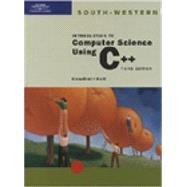
ISBN: 9780619034528 | 0619034521
Edition: 3rd
Format: Hardcover
Publisher: Cengage Learning
Pub. Date: 10/22/2001

Why Rent from Knetbooks?

Because Knetbooks knows college students. Our rental program is designed to save you time and money. Whether you need a textbook for a semester, quarter or even a summer session, we have an option for you. Simply select a rental period, enter your information and your book will be on its way!

Top 5 reasons to order all your textbooks from Knetbooks:

  • We have the lowest prices on thousands of popular textbooks
  • Free shipping both ways on ALL orders
  • Most orders ship within 48 hours
  • Need your book longer than expected? Extending your rental is simple
  • Our customer support team is always here to help
SummaryTable of Contents
This non-software specific textbook helps prepare students for the Advanced Placement Test for the C++ Exam A. The many hands-on exercises throughout the book provide immediate reinforcement of the concepts learned.
How to Use This Bookiv
Prefacevi
UNIT 1 The Fundamentals
The C++ Language
2(22)
Introducing Programming La... MORE
3(8)
What is a Computer Program?
3(1)
Operating Systems
4(1)
The Computer's Language
5(1)
Introduction to Programming Languages
6(3)
Choosing and Using a Language
9(2)
Entering, Compiling, and Running a C++ Program
11(13)
Using a C++ Compiler
11(1)
C++ Program Structure
11(4)
From Source Code to Finished Product
15(5)
Summary
20(4)
Variables and Constants
24(18)
Basics of Using Variables
25(7)
Understanding Variables
25(1)
Integer Data Types
25(2)
Declaring and Naming Variables
27(3)
Characters and the Char Data Type
30(2)
Floating Point Variables, Boolean Variables, and Constants
32(10)
Floating-Point Data Types
32(3)
Boolean Variables
35(1)
Constants
35(3)
Summary
38(4)
Math Operations
42(25)
The Fundamental Operators
43(7)
Assignment Operator
43(2)
Arithmetic Operators
45(3)
Using Operators in Output Statements
48(1)
Dividing by Zero
49(1)
Counting by One and the Order of Operations
50(4)
Counting by One
50(3)
Order of Operations
53(1)
How Data Types Affect Calculations
54(13)
Mixing Data Types
54(4)
Overflow
58(1)
Underflow
59(1)
Floating-Point Rounding Errors
60(2)
Summary
62(5)
Strings and Screen I/O
67(36)
Strings and the String Class
68(7)
Introduction to Strings and Literals
68(1)
Introduction to Classes and Objects
68(1)
Using the String Class
69(2)
String Operations
71(4)
Input and Output
75(28)
Using cin and cout
75(2)
New Line and Other Special Characters
77(3)
Using setf and unsetf
80(2)
Using the I/O Manipulators
82(3)
Inputting Characters
85(1)
Inputting Strings
85(4)
Clearing the Screen and Printing a Hard Copy
89(1)
Summary
90(5)
Unit Review
95(8)
Case Study I: Airline Flight Analysis103(83)
Overview
103(1)
Analyzing the Program
103(4)
Modifying the Program
107(4)
UNIT 2 Program Structure
Decision Making
111(25)
Building Blocks of Decision Making
111(8)
Decision Making in Programs
111(1)
Representing True and False in C++
112(1)
Relational Operators
113(1)
Logical Operators
114(4)
Short-Circuit Evaluation
118(1)
Selection Structures
119(17)
Introduction to Selection Structures
119(1)
Using if
119(3)
Using if/else
122(1)
Nested if Structures
123(4)
The switch Structure
127(4)
Summary
131(5)
Loops
136(17)
for Loops
136(5)
The for Loop
136(5)
while Loops
141(12)
The while Loop
141(2)
The do while Loop
143(1)
Stopping in the Middle of a Loop
144(2)
Nesting Loops
146(3)
Summary
149(4)
Functions
153(33)
Building Programs with Functions
153(10)
How to Build Programs with Functions
153(6)
Functions and Program Flow
159(1)
Scope of Variables
160(3)
Passing Data
163(6)
Getting Data to and from Functions
163(5)
Dividing the Series Program into Functions
168(1)
Using Library Functions
169(17)
Using Library Functions
169(1)
Popular Math Functions
170(2)
Functions for Working with Characters
172(2)
Summary
174(5)
Unit Review
179(7)
Case Study II: Compound Interest186(54)
Overview
186(1)
Defining the Problem
186(1)
Developing an Algorithm
187(1)
Coding the Program
188(4)
Testing and Debugging
192(1)
Documenting and Maintaining
193(1)
Modifying the Program
193(3)
UNIT 3 Arrays and Files
Data File Basics
196(19)
File Concepts
196(3)
Understanding Data Files
196(3)
Using Sequential-Access Files
199(7)
Opening and Closing Files
199(2)
Writing Data to Files
201(2)
Reading Data from Files
203(3)
Sequential File Techniques
206(9)
Summary
212(3)
Arrays
215(25)
Arrays and Vectors
215(8)
Understanding Arrays
215(1)
Declaring a Vector Object
216(2)
Indexing Elements in a Vector
218(1)
When Are Arrays Needed?
219(1)
Using Loops to Work with Vectors
219(2)
Other Vector Features
221(2)
Parallel Vectors
223(3)
Using Parallel Vectors
223(3)
The Matrix Class
226(14)
Two-Dimensional Arrays
226(1)
Declaring a Matrix
227(1)
Using a Matrix Object
228(3)
Summary
231(5)
Unit Review
236(4)
Case Study III: Mileage Look-Up Table240(75)
Overview
240(1)
Building the Look-Up Table
240(1)
Implementing the Look-Up Table
241(1)
The Completed Program
241(4)
Modifying the Program
245(3)
UNIT 4 Object-Oriented Programming and Linked Lists
Object-Oriented Programming
248(18)
Concepts of Object-Oriented Programming
249(4)
Procedural Programing vs. Object-Oriented Programming
249(2)
Resuability, Containment, and Inheritance
251(2)
The Circle Class
253(13)
Using a Simple Circle Class
253(3)
Designing and Implementing the Circle Class
256(8)
Summary
264(2)
Pointers, enum, and Structures
266(19)
Pointer Basics
267(6)
Referesh Your Memory about Memory
267(1)
What Is a Pointer?
268(1)
Declaring Pointers
268(2)
Using the * and & Operators
270(1)
Changing Values with *
271(2)
Using enum
273(3)
How to Use Enum
273(1)
How enum Works
274(1)
Using typedef
275(1)
Structures
276(9)
Structure Basics
276(1)
Declaring and Using Structures
277(1)
Nested Structures
278(4)
Summary
282(3)
Linked Lists
285(30)
Linked List Basics
286(4)
Using a Linked List
286(1)
Handling Memory with Dynamic Data
286(4)
Linked Lists in C++
290(10)
Advanced Linked List Operations
300(15)
Doubly-and Circularly-Linked Lists
305(3)
Summary
308(3)
Unit Review
311(4)
Case Study IV: Phone Database315(79)
Overview
315(1)
A Look at the Entire Program
315(11)
Global Structures and Variables
326(1)
The Main Function and Menu Processing
327(1)
Adding Records to the Database
327(3)
Displaying a List of Records
330(1)
Searching the Database
330(1)
Deleting Individual Records
331(3)
Saving and Retrieving the Data
334(3)
Modifying the Program
337(3)
UNIT 5 Common Data Structures and Algorithms
Stacks, Queues, and Trees
340(16)
Stacks
340(5)
Uses for a Stack
341(1)
Programming a Stack
342(3)
Queues
345(3)
Uses for a Quene
345(1)
Implementing a Queue
345(2)
Using a Queue Class
347(1)
Binary Trees
348(8)
Why Trees?
348(1)
Tree Terminology
348(1)
Tree Shape and Efficiency
349(2)
Deleting Nodes form a Tree
351(2)
Summary
353(3)
Recursion and Searching
356(17)
Recursion
356(6)
Why Recursion?
357(5)
Sequential and Binary Searching
362(4)
Sequential Search
362(1)
Binary Search
363(3)
Searching Binary Trees and Hashing
366(7)
Tree Traversals
367(1)
Hashing
368(2)
Summary
370(3)
Sorting
373(21)
Introduction to Sorting Algorithms
374(5)
Selection Sort
374(2)
Insertion Sort
376(3)
More Incremental Sorting Algorithms
379(4)
Bubble Sort
379(2)
Shell Sort
381(2)
Divide and Conquer Sorting Algorithms
383(11)
Quicksort
383(2)
Merge Sort
385(1)
Choosing a Sorting Algorithm
386(2)
Summary
388(4)
Unit Review
392(2)
Case Study V: Object-Oriented Program Design394(16)
Overview
394(1)
Designing the Objects
394(1)
Coding and Testing the Objects
395(14)
Modifying the Program
409(1)
Appendix A: Introduction to Computers and the Internet410(8)
Appendix B: ASCII Table418(5)
Appendix C: The Binary Number System423(4)
Appendix D: The Programming Process427(5)
Appendix E: Order of Operations432(2)
Appendix F: The bool Data Type434(1)
Appendix G: Using a Debugger When Programming435(1)
Appendix H: Numerical Approximations436(2)
Appendix I: C++ Compilers438(1)
Appendix J: AP Class Quick References439(7)
Appendix K: Analysis of Algorithms446(5)
Glossary451(7)
Index458

Related Products


  • PPKG TX/TD UPDT VER-INTR TO COMPUTER SCIENCE USING C++
    PPKG TX/TD UPDT VER-INTR TO CO...
  • Introduction to Computer Science Using C++
    Introduction to Computer Scien...


Please wait while this item is added to your cart...

