FREE SHIPPING BOTH WAYS
ON EVERY ORDER!
LIST PRICE:
$112.60

Sorry, this item is currently unavailable.

An Introduction to Computational Fluid Dynamics: The Finite Volume Method
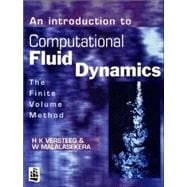
ISBN: 9780582218840 | 0582218845
Edition: 2nd
Format: Paperback
Publisher: Prentice Hall
Pub. Date: 1/1/2007

Why Rent from Knetbooks?

Because Knetbooks knows college students. Our rental program is designed to save you time and money. Whether you need a textbook for a semester, quarter or even a summer session, we have an option for you. Simply select a rental period, enter your information and your book will be on its way!

Top 5 reasons to order all your textbooks from Knetbooks:

  • We have the lowest prices on thousands of popular textbooks
  • Free shipping both ways on ALL orders
  • Most orders ship within 48 hours
  • Need your book longer than expected? Extending your rental is simple
  • Our customer support team is always here to help
SummaryTable of Contents
This book presents some of the fundamentals of computational fluid dynamics for the novice. It provides a thorough yet user-friendly introduction to the governing equations and boundary conditions of viscous fluid flows, turbulence and its modelling and the finite volume method of solving flow patters on a computer.
Prefaceix
Acknowledgementsxi
Introduction
1(9)
What is CFD?
1(1)... MORE
How does a CFD code work?
2(3)
Problem solving with CFD
5(3)
Scope of this book
8(2)
Conservation Laws of Fluid Motion and Boundary Conditions
10(31)
Governing equations of fluid flow and heat transfer
10(11)
Mass conservation in three dimensions
11(2)
Rates of change following a fluid particle and for a fluid element
13(1)
Momentum equation in three dimensions
14(3)
Energy equation in three dimensions
17(4)
Equations of state
21(1)
Navier-Stokes equations for a Newtonian fluid
21(3)
Conservative form of the governing equations of fluid flow
24(1)
Differential and integral forms of the general transport equations
25(2)
Classification of physical behaviour
27(3)
The role of characteristics in hyperbolic equations
30(2)
Classification method for simple partial differential equations
32(2)
Classification of fluid flow equations
34(1)
Auxiliary conditions for viscous fluid flow equations
35(1)
Problems in transonic and supersonic compressible flows
36(3)
Summary
39(2)
Turbulence and its Modelling
41(44)
What is turbulence?
41(3)
Transition from laminar to turbulent flow
44(5)
Effect of turbulence on time-averaged Navier-Stokes equations
49(5)
Characteristics of simple turbulent flows
54(8)
Free turbulent flows
54(3)
Flat plate boundary layer and pipe flow
57(5)
Summary
62(1)
Turbulence models
62(21)
Mixing length model
64(3)
The k-E model
67(8)
Reynolds stress equation models
75(4)
Algebraic stress equation models
79(1)
Some recent advances
80(3)
Final remarks
83(2)
The Finite Volume Method for Diffusion Problems
85(18)
Introduction
85(1)
Finite volume method for one-dimensional steady state diffusion
86(2)
Worked examples: one-dimensional steady state diffusion
88(11)
Finite volume method for two-dimensional diffusion problems
99(1)
Finite volume method for three-dimensional diffusion problems
100(2)
Summary of discretised equations for diffusion problems
102(1)
The Finite Volume Method for Convection-Diffusion Problems
103(32)
Introduction
103(1)
Steady one-dimensional convection and diffusion
104(1)
The central differencing scheme
105(5)
Properties of discretisation schemes
110(3)
Conservativeness
110(2)
Boundedness
112(1)
Transportiveness
112(1)
Assessment of the central differencing scheme for convection-diffusion problems
113(1)
The upwind differencing scheme
114(6)
Assessment of the upwind differencing scheme
118(2)
The hybrid differencing scheme
120(4)
Assessment of the hybrid differencing scheme
123(1)
Hybrid differencing scheme for multi-dimensional convection-diffusion
123(1)
The power-law scheme
124(1)
Higher order differencing schemes for convection-diffusion problems
125(8)
Quadratic upwind differencing scheme: the QUICK scheme
125(5)
Assessment of the QUICK scheme
130(1)
Stability problems of the QUICK scheme and remedies
130(2)
General comments on the QUICK differencing scheme
132(1)
Other higher order schemes
133(1)
Summary
133(2)
Solution Algorithms for Pressure-Velocity Coupling in Steady Flows
135(21)
Introduction
135(1)
The staggered grid
136(3)
The momentum equations
139(3)
The SIMPLE algorithm
142(4)
Assembly of a complete method
146(1)
The SIMPLER algorithm
146(2)
The SIMPLEC algorithm
148(2)
The PISO algorithm
150(2)
General comments on SIMPLE, SIMPLER, SIMPLEC and PISO
152(2)
Summary
154(2)
Solution of Discretised Equations
156(12)
Introduction
156(1)
The tri-diagonal matrix algorithm
157(2)
Application of TDMA to two-dimensional problems
159(1)
Application of the TDMA method to three-dimensional problems
159(1)
Examples
160(6)
Other solution techniques used in CFD
166(1)
Summary
167(1)
The Finite Volume Method for Unsteady Flows
168(24)
Introduction
168(1)
One-dimensional unsteady heat conduction
169(5)
Explicit scheme
171(1)
Crank-Nicolson scheme
172(1)
The fully implicit scheme
173(1)
Illustrative examples
174(6)
Implicit method for two- and three-dimensional problems
180(1)
Discretisation of transient convection-diffusion equation
181(1)
Worked example of transient convection-diffusion using QUICK differencing
182(4)
Solution procedures for unsteady flow calculations
186(3)
Transient SIMPLE
186(1)
The transient PISO algorithm
187(2)
Steady state calculations using the pseudo-transient approach
189(1)
A brief work on other transient schemes
189(1)
Summary
190(2)
Implementation of Boundary Conditions
192(18)
Introduction
192(2)
Inlet boundary conditions
194(2)
Outlet boundary conditions
196(2)
Wall boundary conditions
198(5)
The constant pressure boundary condition
203(2)
Symmetry boundary condition
205(1)
Periodic or cyclic boundary condition
205(1)
Potential pitfalls and final remarks
206(4)
Advanced Topics and Applications
210(30)
Introduction
210(1)
Combustion modelling
210(8)
The simple chemical reacting system (SCRS)
212(3)
Eddy break-up of model of combustion
215(1)
Laminar flamelet model
216(2)
Calculation of buoyant flows and flows inside buildings
218(1)
The use of body-fitted co-ordinate systems in CFD procedures
219(3)
Advanced applications
222(17)
Flow in a sudden pipe contraction
222(1)
Modelling of a fire in a test room
223(4)
Prediction of flow and heat transfer in a complex tube matrix
227(7)
Laminar flow in a circular pipe driven by periodic pressure variations
234(5)
Concluding remarks
239(1)
Appendix A Accuracy of a Flow Simulation240(3)
Appendix B Non-uniform Grids243(2)
Appendix C Calculation of Source Terms245(2)
References247(8)
Index255

Related Products


  • An Introduction to Computational Fluid Dynamics The Finite Volume Method
    An Introduction to Computation...
  • International Business : An Asian-Pacific Perspect
    International Business : An As...


Please wait while this item is added to your cart...

