FREE SHIPPING BOTH WAYS
ON EVERY ORDER!
LIST PRICE:
$95.00

OUR PRICE:
$18.74

You may extend rentals at any time.


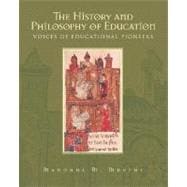
The History and Philosophy of Education Voices of Educational Pioneers
ISBN: 9780130955500 | 0130955507
Edition: 1st
Format: Paperback
Publisher: Pearson
Pub. Date: 8/11/2005

Why Rent from Knetbooks?

Because Knetbooks knows college students. Our rental program is designed to save you time and money. Whether you need a textbook for a semester, quarter or even a summer session, we have an option for you. Simply select a rental period, enter your information and your book will be on its way!

Top 5 reasons to order all your textbooks from Knetbooks:

  • We have the lowest prices on thousands of popular textbooks
  • Free shipping both ways on ALL orders
  • Most orders ship within 48 hours
  • Need your book longer than expected? Extending your rental is simple
  • Our customer support team is always here to help
SummaryTable of Contents
For courses in the Historical and Philosophical Foundations of Education. This foundations text offers both concepts and key writings from the major educational innovators throughout history, beginning with the ancient civilizations and proceeding to the current 21st century. The text is organized chronologically and takes a biographical approach, giving readers a wealth of primary source material by philosophers, classical to postmodern, whose ideas have helped shape educational practice. Each chapter has a brief biography of the educators lif... MORE
Maps
xxv
Picturesxxvi
Tables
xxvii
Figures and Timelines
... MORE
xxviii
Education in the Early Cultures
1(12)
Language: The Mark of Civilization
1(1)
Education in the Near East
2(1)
Earliest Written Literature
3(1)
Education in China
3(1)
The Chinese Curriculum
4(1)
Chinese Educational Institutions
4(1)
Section 1.1: Confucius (552--479 B.C.)
5(1)
Confucius' Life and Times
5(3)
His Education
5(1)
Confucius, the Great Teacher
6(1)
Confucius' Importance for Educational Thought
6(1)
Confucius' Philosophy of Education
7(1)
Question to Guide Your Reading
7(1)
Reading 1.1: Confucius, The Master Teacher
8(2)
Discussion Questions
9(1)
Chapter Activities
10(3)
Linking the Past to the Present
10(1)
Developing Your Philosophy of Education
11(1)
Connecting Theory to Practice
11(1)
Educators' Philosophies and Contribution to Education
11(2)
Education in Ancient Greece
13(36)
Education in Sparta
13(2)
Education in Athens
15(1)
The Greek School System
15(1)
Education of Athenian Women
15(1)
Sophism, Stoicism, and Epicureanism
16(1)
A Greek Philosophy of Education
16(1)
Section 2.1: Sappho (630?--572? B.C.)
17(1)
Sappho's Life and Times
17(2)
Her Family and Friends
17(1)
Seventh-Century Greece
17(1)
Sappho's School for Girls
18(1)
Sappho's Poetry
18(1)
Legends about Sappho
19(1)
Sappho's Importance for Educational Thought
19(2)
Sappho, the Music Teacher
19(1)
Sappho, the Dance Teacher
20(1)
Sappho, the Reading Teacher
20(1)
Sappho's Philosophy of Education
20(1)
Questions to Guide Your Reading
21(1)
Reading 2.1: The Songs of Sappho
22(1)
Discussion Questions
23(1)
Section 2.2: Socrates (470--399 B.C.)
24(1)
Socrates' Life and Times
24(1)
Socrates, the Philosopher
24(1)
Socrates' Apology and Death
25(1)
Socrates' Importance for Education
25(1)
Socrates' Philosophy of Education
25(1)
Questions to Guide Your Reading
26(1)
Reading 2.2: Meno
27(3)
Discussion Questions
30(1)
Section 2.3: Plato (427--347 B.C.)
31(1)
Plato's Life and Family
31(2)
The Academy
31(1)
Plato, the Philosopher
32(1)
Later Life
32(1)
Plato's Contribution to Educational Thought
33(1)
The Republic
33(1)
Plato's Philosophy of Education
33(1)
Questions to Guide Your Reading
34(1)
Reading 2.3: The Republic
34(3)
Discussion Questions
37(2)
Section 2.4: Aristotle (384--322 B.C.)
39(1)
Aristotle's Life and Times
39(1)
Aristotle Studies with Plato
39(1)
Aristotle, the Teacher
40(1)
Aristotle's Contributions to Educational Theory
40(2)
Aristotle's Philosophy of Education
41(1)
Questions to Guide Your Reading
42(1)
Reading 2.4: The Politics
42(3)
Discussion Questions -- The Politics
44(1)
Questions to Guide Your Reading
44(1)
Reading 2.5: Nicomachean Ethics
45(2)
Discussion Questions -- Nicomachean Ethics
46(1)
Chapter Activities
47(2)
Linking the Past to the Present
47(1)
Developing Your Philosophy of Education
47(1)
Connecting Theory to Practice
47(1)
Educators' Philosophies and Contribution to Education
47(2)
Roman Educational Contributions
49(20)
Historical Developments
49(1)
Roman Life
49(1)
Roman Education
50(1)
Mother as Teacher
51(1)
Father as Teacher
51(1)
The Roman School System
51(1)
The Education of Women
52
The Education of Men
00(52)
The Orator
52(1)
Section 3.1: Marcus Tullius Cicero (106--43 B.C.)
53(1)
Cicero's Life and Times
53(2)
Cicero's Education and Training
54(1)
Cicero, the Politician
54(1)
Cicero's Importance for Educational Thought
55(1)
De Oratore
55(1)
Cicero's Philosophy of Education
55(1)
Questions to Guide Your Reading
56(1)
Reading 3.1: Oratory as the Aim of Education
57(1)
Discussion Questions
58(1)
Section 3.2: Marcus Fabius Quintilian (35--95 A.D.)
59(1)
Quintilian's Life and Family
59(1)
Quintilian, the Educator
60(1)
Quintilian's Importance for Educational Thought
60(1)
Quintilian's Philosophy of Education
61(1)
Questions to Guide Your Reading
61(1)
Reading 3.2: On Education
62(3)
Discussion Questions
65(1)
Chapter Activities
66(3)
Linking the Past to the Present
66(1)
Developing Your Philosophy of Education
66(1)
Connecting Theory to Practice
66(1)
Educators' Philosophies and Contribution to Education
67(2)
Christian Education
69(20)
The Rise of Christianity
69(1)
Teaching Catechumens
70(1)
The First Christian Teachers
70(1)
A Christian School System
70(2)
Section 4.1: Jesus Christ (4 B.C.--29 A.D.)
72(1)
Jesus' Life and Times
72(1)
Jesus' Education
73(1)
Jesus' the Teacher
73(1)
Jesus' Importance for Education
73(2)
Jesus' Philosophy of Education
74(1)
Questions to Guide Your Reading
75(1)
Reading 4.1: Matthew Chapter 13, The Parables of the Kingdom
76(2)
Discussion Questions
78(1)
Section 4.2: St. Augustine (Aurelius Augustine) (354--430 A.D.)
79(1)
Augustine's Life and Family
79(1)
Augustine's Education
79(1)
Augustine the Orator, Philosopher, and Rhetorician
79(1)
Augustine, the Bishop and Preacher
80(1)
Augustine's Contribution to Educational Philosophy
80(2)
Augustine's Philosophy of Education
81(1)
Questions to Guide Your Reading
82(1)
Reading 4.2: Augustine, From the Teacher
83(2)
Discussion Questions
85(1)
Chapter Activities
86(3)
Linking the Past to the Present
86(1)
Developing Your Philosophy of Education
86(1)
Connecting Theory to Practice
86(1)
Educators' Philosophies and Contribution to Education
87(2)
Medieval Educational Contributions
89(32)
The Medieval Times as a Historical Period
89(1)
Educational Institutions during the Middle Ages
90(1)
Monasteries as Cultural Centers
91(1)
The Education of Women during the Middle Ages
91(1)
Schools Run by the Church
91(1)
Palace Schools
92(1)
Guild Schools
92(1)
Arabic Influence on Education
92(2)
The Rise of the University
94(1)
The Life of a University Student
94(2)
Becoming a University Professor
96(1)
Women in Universities
96(1)
A Medieval Philosophy of Education
96(2)
Section 5.1: Charlemagne (742--814) and Alcuin
98(1)
Charlemagne's Life and Times
98(2)
Emperor
98(1)
Reformer
99(1)
Alcuin
99(1)
The Palace School
99(1)
Charlemagne's Contribution to Education
100(2)
Education of Women
100(1)
Education of the Clergy
100(1)
The Capitularies
101(1)
Charlemagne and Alcuin's Philosophy of Education
101(1)
Questions to Guide Your Reading
102(1)
Reading 5.1: Charlemagne's Capitularies
102(1)
Discussion Questions
103(1)
Section 5.2: Hildegard of Bingen (1098--1179)
104(1)
Hildegard's Life and Times
104(3)
Hildegard's Education
104(1)
Hildegard, the Infirmarian
105(1)
Abbess
105(1)
``Write What You See''
105(1)
Founding an Independent Community for Nuns
105(1)
First Woman Doctor
105(1)
Linguist and Musician
106(1)
Hildegard, the Preacher
106(1)
Life of Hildegard
106(1)
Hildegard's Importance for Education
107(2)
Education of Women in the Twelfth Century
107(1)
Hildegard, the Teacher
108(1)
Hildegard's Philosophy of Education
108(1)
Questions to Guide Your Reading
109(1)
Reading 5.2: The Action of the Will
110(1)
Discussion Questions
111(1)
Section 5.3: St. Thomas Aquinas (1125--1274)
112(1)
Thomas Aquinas' Life and Times
112(1)
Thomas' Education
112(1)
Friar Thomas
113(1)
University Professor
113(1)
St. Thomas' Importance for Educational Thought
113(3)
The Scholastic Method
114(1)
Aquinas' Philosophy of Education
114(2)
Questions to Guide Your Reading
116(1)
Reading 5.3: The Teacher on Truth
116(2)
Discussion Questions
118(1)
Chapter Activities
119(2)
Linking the Past to the Present
119(1)
Developing Your Philosophy of Education
119(1)
Connecting Theory to Practice
119(1)
Educators' Philosophies and Contribution to Education
119(2)
Education in the Renaissance and the Reformation
121(38)
The Renaissance or ``Re-Birth''
121(1)
Life in the Renaissance
122(1)
Renaissance Education
122(1)
The Education of Women during the Renaissance
123(1)
A Renaissance Philosophy of Education
124(1)
The Reformation
124(1)
Daily Life in the Time of the Reformation
125(1)
Education during the Reformation
126(1)
The Counter-Reformation
126(1)
A Reformation Philosophy of Education
127(1)
Section 6.1: Christine de Pizan (1364?--1430?)
128(1)
Christine's Life and Times
128(3)
Christine's Education
128(1)
Wife and Mother
128(1)
Head of the Household
129(1)
Poet
129(1)
First Feminist
130(1)
Moral Educator
130(1)
Biographer
130(1)
Famous Author of Women's Contributions
130(1)
Christine's Importance for Education
131(2)
Ideas on Moral Education
131(1)
Advocate of Education for Women
131(1)
Christine's Philosophy of Education
132(1)
Questions to Guide Your Reading
133(1)
Reading 6.1a: ``The Third Teaching of Prudence Which Is How the Wise Princess Will Carefully Watch Over the Welfare and Upbringing of Her Children
133(2)
Reading 6.1b: Christine's Teachings for Her Son, Jean Du Castel
135(1)
Discussion Questions
135(2)
Section 6.2: Erasmus (1466--1536) Erasmus' Life and Times
137(2)
Erasmus' Education
137(1)
The Scholar--Priest
137(1)
Erasmus, the Author
138(1)
The Humanist
138(1)
Erasmus' Educational Contributions
139(1)
Erasmus' Philosophy of Education
139(1)
Questions to Guide Your Reading
140(1)
Reading 6.2: The Treatise of Erasmus, De Ratione Studii, That Is, Upon the Right Method of Instruction
140(2)
Discussion Questions
142(1)
Section 6.3: Martin Luther (1483--1546)
143(1)
Martin Luther's Life and Times
143(2)
His Family
143(1)
Martin's Education
143(1)
Luther, the Monk
144(1)
95 Theses
144(1)
Luther's Reform
145(1)
Luther's Contribution to Educational History
145(1)
Luther Encourages Mass Literacy
145(1)
Luther's Philosophy of Education
145(1)
Questions to Guide Your Reading
146(1)
Reading 6.3: Letter to the Mayors and Alderman of All the Cities of Germany on Behalf of Christian Schools
147(1)
Discussion Questions
148(2)
Section 6.4: Johann Amos Comenius (1592--1670)
150(1)
Life and Times of Johann Comenius
150(2)
Jan's Education
150(1)
The Teacher and Pastor
150(1)
Author, Educator, and Reformer
151(1)
Comenius' Contribution to Educational Thought
152(1)
Comenius' Philosophy of Education
152(1)
Questions to Guide Your Reading
153(1)
Reading 6.4: The Great Didactic
154(2)
Discussion Questions
156(1)
Chapter Activities
157(2)
Linking the Past to the Present
157(1)
Developing Your Philosophy of Education
157(1)
Connecting Theory to Practice
157(1)
Educators' Philosophies and Contribution to Education
158(1)
New Educational Ideas in the Enlightenment
159(52)
Life during the Enlightenment
159(1)
Education in the Enlightenment Period
160(1)
Education of Women
161(1)
An Enlightenment Philosophy of Education
162(1)
Section 7.1: John Locke (1632--1704)
163(1)
John Locke's Life and Times
163(2)
John's Education
163(1)
University Lecturer
164(1)
Locke, the Medical Doctor
164(1)
Some Thoughts Concerning Education
164(1)
Locke, the Political Philosopher
164(1)
Locke's Contribution to Educational Thought
165(2)
Locke's Philosophic Principles of Liberalism and Empiricism
166(1)
Locke's Philosophy of Education
166(1)
Questions to Guide Your Reading
167(1)
Reading 7.1: Some Thoughts Concerning Education
168(2)
Discussion Questions
170(1)
Section 7.2: Jean-Jacques Rousseau (1712--1778)
171(1)
Rousseau's Life and Times
171(2)
Jean-Jacques' Education
171(1)
Settling Down in Paris
171(1)
The Author
172(1)
Rousseau's Importance for Educational Thought
173(2)
Emile
173(1)
Rousseau's Philosophy of Education
173(2)
Questions to Guide Your Reading
175(1)
Reading 7.2: On Keeping Education Natural
175(2)
Discussion Questions
177(2)
Section 7.3: Johann Heinrich Pestalozzi (1746--1827)
179(1)
Johann Heinrich Pestalozzi's Life and Times
179(2)
Heinrich's Education
179(1)
Educator and Headmaster
180(1)
Yverdon
180(1)
Pestalozzi's Educational Contributions
181(2)
Pestalozzi's Philosophy of Education
182(1)
Questions to Guide Your Reading
183(1)
Reading 7.3: Pestalozzi's Ideas: Selections From His Writings
183(2)
Discussion Questions
185(1)
Section 7.4: Mary Wollstonecraft (1759--1797)
186(1)
Mary Wollstonecraft's Life and Times
186(3)
Mary's Education
187(1)
Helping Others
187(1)
A School for Girls
187(1)
The First Self-Supporting Woman Author
187(1)
A Vindication of the Rights of Women
188(1)
A Stay in Revolutionary France
188(1)
An Affair and a Child
188(1)
A Married Woman
189(1)
Wollstonecraft's Importance for Education
189(2)
The Education of Women in the Eighteenth Century
189(1)
Wollstonecraft's Philosophy of Education
190(1)
Questions to Guide Your Reading
191(1)
Reading 7.4: Chapter XII: On National Education
191(2)
Discussion Questions
193(1)
Section 7.5: Johann Friedrich Herbart (1776--1841)
194(1)
Johann Friedrich Herbart's Life and Times
194(2)
Johann's Education
195(1)
Tutor and Educator
195(1)
Author
195(1)
Professor of Philosophy, Pedagogy, and Psychology
196(1)
Herbart's Importance for Educational Thought
196(2)
Herbart's Philosophy of Education
197(1)
Questions to Guide Your Reading
198(1)
Reading 7.5: The Education of Moral Character
199(1)
Discussion Questions
200(1)
Section 7.6: Friedrich Froebel (1782--1852)
201(1)
Friedrich Froebel's Life and Times
201(3)
Friederich's Education
202(1)
Teacher
202(1)
Schoolmaster and Educator
202(1)
The Kindergarten
203(1)
Training Women to Be Kindergarten Teachers
204(1)
Froebel's Educational Contributions
204(1)
Froebel's Philosophy of Education
204(1)
Questions to Guide Your Reading
205(1)
Reading 7.6: The Education of Man
206(2)
Discussion Questions
208(1)
Chapter Activities
209(2)
Linking the Past to the Present
209(1)
Developing Your Philosophy of Education
209(1)
Connecting Theory to Practice
209(1)
Educators' Philosophies and Contribution to Education
210(1)
Education in the New World
211(40)
Native American Civilization and Education
211(1)
Mayan Indians
211(1)
The Incas and the Aztecs
211(1)
The Cherokees
212(1)
Native American Informal Education
212(1)
The Explorers and the ``Indians''
212(2)
Colonial Education in America
214(1)
Education in the Southern Colonies
215(1)
Education in the Middle Colonies
215(1)
Education in the New England Colonies
216(2)
Summary of Colonial Education
218(1)
Section 8.1: Charles Eastman (Hakadah) (1858--1939) and Elaine Goodale Eastman (1863--1953)
219(1)
Their Lives and Times
220(3)
Informal Education: Learning the Indian's Ways
220(1)
Formal Education: Learning the White Man's Ways
220(1)
Elaine Goodale's Life
220(1)
Elaine Learns About the Indian Culture
221(1)
Mr. and Mrs. Eastman
221(1)
Indian Boyhood
222(1)
Their Importance for Educational History
223(1)
Native American Philosophy of Education
223(1)
Questions to Guide Your Reading
224(1)
Reading 8.1: An Indian Boy's Training
224(2)
Discussion Questions
226(1)
Section 8.2: Benjamin Franklin (1706--1790)
227(1)
His Life and Family
227(2)
Franklin's Education
227(1)
Franklin, the Printer
228(1)
Franklin's Philosophy of Life
228(1)
Franklin's Publications
229(1)
Franklin, the Statesman
229(1)
Franklin's Contributions to Educational Thought
229(2)
Franklin's Academy
230(1)
Franklin's Philosophy of Education
230(1)
Questions to Guide Your Reading
231(1)
Reading 8.2a: From The Autobiography of Benjamin Franklin
231(1)
Reading 8.2b: Proposals Relating to the Education of Youth in Pennsilvania-Philadelphia
232(2)
Discussion Questions
234(1)
Section 8.3: Thomas Jefferson (1743--1826)
235(1)
Jefferson's Life and Family
235(2)
Tom's Education
235(1)
Jefferson, the Stateman
235(1)
President Jefferson
236(1)
The University of Virginia
237(1)
Jefferson's Contribution to Education
237(1)
Jefferon's Philosophy of Education
238(1)
Questions to Guide Your Reading
238(1)
Reading 8.3: A Bill for More General Diffusion of Knowledge, 1779
239(2)
Discussion Questions
241(1)
Section 8.4: Noah Webster (1758--1843)
242(1)
Webster's Life and Times
242(2)
Noah's Education
242(1)
Webster, the Teacher
242(1)
Webster's American Speller
243(1)
The Webster Dictionary
244(1)
Noah Webster's Importance for Educational Thought
244(1)
Webster's Philosophy of Education
245(1)
Questions to Guide Your Reading
245(1)
Reading 8.4: ``The Chief Glory to the Nation. . .''
246(2)
Discussion Questions
248(1)
Chapter Activities
249(2)
Linking the Past to the Present
249(1)
Developing Your Philosophy of Education
249(1)
Connecting Theory to Practice
249(1)
Educators' Philosophies and Contribution to Education
250(1)
Developing an American Educational System: Education in the New Nation
251(32)
Education as a State Responsibility
251(1)
Importance of Schools for the National Welfare
252(1)
The Common School
252(2)
The One-Room School
254(1)
Origins of the High School
255(1)
Education of Women
255(2)
Origins of the College and University
257(1)
Morrill Act
257(1)
Junior Colleges
258(1)
Section 9.1: Horace Mann (1796--1859)
259(1)
Mann's Life and Times
259(2)
Horace's Education
259(1)
The Lawyer and Legislator
260(1)
Secretary of the Board of Education
260(1)
Mann's Contribution to Educational Thought
261(1)
Mann's Philosophy of Education
261(1)
Questions to Guide Your Reading
262(1)
Reading 9.1: Report No. 12 of the Massachusetts School Board (1848)
263(2)
Discussion Questions
265(1)
Section 9.2: Emma Willard (1787--1870)
266(1)
Emma Willard's Life and Times
266(2)
Emma's Education
266(1)
Emma, the Teacher
266(1)
Emma, Wife, Mother, and Teacher
267(1)
Troy Female Academy
268(1)
Willard's Influence on Educational Thought
268(2)
Emma Willard's Philosophy of Education
269(1)
Questions to Guide Your Reading
270(1)
Reading 9.2: Sketch of a Female Seminary
271(2)
Discussion Questions
273(1)
Section 9.3: Catharine Beecher (1800--1878)
274(1)
Beecher's Life and Times
274(2)
Her Education
274(1)
The Hartford Female Seminary
274(1)
Teacher of Teachers
275(1)
Authority on Home Economics
276(1)
Catharine's Beecher's Importance for Educational History
276(2)
Beecher's Philosophy of Education
277(1)
Questions to Guide Your Reading
278(1)
Reading 9.3: Essay on the Education of Female Teachers
278(2)
Discussion Questions
280(1)
Chapter Activities
281(2)
Linking the Past to the Present
281(1)
Developing Your Philosophy of Education
281(1)
Connecting Theory to Practice
282(1)
Educators' Philosophies and Contribution to Education
282(1)
Education for All?
283(38)
Public Support for Religion in the Schools
283(1)
The Establishment of Parochial School Systems
283(1)
Education of Students with Special Needs
284(1)
Teaching the Deaf
285(1)
Teaching the Blind
285(1)
Special Education Laws
285(1)
Education of African Americans
286(1)
Education for Blacks after the Civil War
286(1)
Vocational Education or Professional Education?
286(1)
Is ``Separate But Equal'' Ever Really Equal?
286(2)
Growth in Number of Schools
288(1)
Education for Immigrants
288(2)
Section 10.1: Elizabeth Ann Seton (1774--1821)
290(1)
Elizabeth Seton's Life and Times
290(2)
Wife and Mother
290(1)
Converted to Catholicism
291(1)
Teacher and School Foundress
291(1)
Mother Seton
292(1)
Her Contribution to Education
292(1)
Seton's Philosophy of Education
292(1)
Questions to Guide Your Reading
293(1)
Reading 10.1: Letter to Antonio Filicchi
294(1)
Discussion Questions
295(1)
Section 10.2: Thomas Hopkins Gallaudet (1787--1851)
296(1)
Thomas Gallaudet's Life and Times
296(2)
His Education
296(1)
Thomas, the Tutor
296(1)
Teaching a Deaf Child
296(1)
A School for the Deaf
297(1)
Gallaudet's Contributions to Educational Thought
298(2)
Gallaudet's Philosophy of Education
299(1)
Questions to Guide Your Reading
300(1)
Reading 10.2: A Sermon
300(2)
Discussion Questions
302(1)
Section 10.3: Booker T. Washington (1856--1915)
303(1)
Booker T. Washington's Life and Times
303(3)
His Education
304(1)
Founding Tuskegee Institute
304(1)
Public Speaker
304(1)
Up from Slavery
305(1)
Washington's Contribution to Educational Thought
306(1)
Washington's Philosophy of Education
306(1)
Questions to Guide Your Reading
307(1)
Reading 10.3: On Achieving Social Equality
307(2)
Discussion Questions
309(1)
Section 10.4: W. E. B. DuBois (1868--1964)
310(1)
Life and Times of William Edward Burghardt DuBois
310(3)
DuBois' Education
310(1)
Professor
311(1)
The Philadelphia Negro Study
311(1)
The Souls of Black Folk
312(1)
Civil Rights Advocate
312(1)
DuBois' Contribution to Education
313(2)
DuBois' Philosophy of Education
313(2)
Questions to Guide Your Reading
315(1)
Reading 10.4: Of the Training of Black Men
315(3)
Discussion Questions
318(1)
Chapter Activities
319(2)
Linking the Past to the Present
319(1)
Developing Your Philosophy of Education
319(1)
Connecting Theory to Practice
319(1)
Educators' Philosophies and Contribution to Education
320(1)
Education for Democracy
321(42)
The Twentieth Century
321(2)
The Progressive Movement
323(1)
Education during the Depression
323(1)
World War II and After
324(1)
Back to Basics
324(1)
Civil Rights Movement
324(1)
War on Poverty
325(1)
Federal Involvement in Education
325(1)
A Nation at Risk
326(2)
Section 11.1: John Dewey (1858--1952)
328(1)
John Dewey's Life and Times
328(2)
His Education
328(1)
College Professor
329(1)
His Family
329(1)
The University of Chicago
329(1)
Flourishing at Columbia University
329(1)
Dewey's Contributions to Educational Thought
330(2)
His Philosophic Ideas
330(1)
Dewey's Philosophy of Education
331(1)
Questions to Guide Your Reading
332(1)
Reading 11.1: My Pedagogic Creed
333(2)
Discussion Questions
335(1)
Section 11.2: Mary McLeod Bethune (1875--1955)
336(1)
Mary McLeod Bethune's Life and Times
336(3)
Mary's Education
337(1)
Teacher and School Founder
337(1)
College President
337(1)
National Leader
338(1)
International Leader
338(1)
Mary McLeod Bethune's Contribution to Education
339(2)
Bethune's Philosophy of Education
340(1)
Questions to Guide Your Reading
341(1)
Reading 11.2: A Philosophy of Education for Negro Girls (1926)
342(1)
Discussion Questions
343(2)
Section 11.3: George S. Counts (1889--1974)
345(1)
George Counts' Life and Times
345(2)
His Education
345(1)
Teacher, Principal, and Then College Professor
345(1)
Studying the Soviet Union
346(1)
Dare the Schools Build a New Social Order?
346(1)
Counts' Contribution to Educational Thought and History
347(2)
Count's Philosophy of Education
348(1)
Questions to Guide Your Reading
349(1)
Reading 11.3: Dare the Schools Build a New Social Order?
350(1)
Discussion Questions
351(1)
Section 11.4: Ralph W. Tyler (1902--1994)
352(1)
Ralph Tyler's Life and Times
352(3)
Ralph's Education
353(1)
Science Teacher and Teacher of Teachers
353(1)
Evaluator
353(1)
At the University of Chicago
354(1)
Center for Advanced Study in the Behavioral Sciences
354(1)
Tyler's Contribution to Educational Thought
355(1)
Tyler's Philosophy of Education
355(1)
Questions to Guide Your Reading
356(1)
Reading 11.4: The Basic Principles of Curriculum and Instruction
357(2)
Discussion Questions
359(1)
Chapter Activities
360(3)
Linking the Past to the Present
360(1)
Developing Your Philosophy of Education
360(1)
Connecting Theory to Practice
360(1)
Educators' Philosophies and Contribution to Education
361(2)
Education for a Global World
363(30)
International Historical Events
363(1)
The Need for International Education
364(1)
International Studies of the Young Child
364(1)
Curriculum for a Global World
364(2)
Global Problem Solving
366(1)
Education for Underdeveloped Countries
366(1)
Education for Social Reconstruction
366(1)
Futuristic Trends
367(1)
Section 12.1: Maria Montessori (1870--1952)
368(1)
Maria Montessori's Life and Times
368(2)
Her Education
368(1)
Dr. Montessori
368(1)
Casa del Bambini
369(1)
The Montessori Method
369(1)
Montessori's Contribution to Educational Thought
370(2)
Stage of the Absorbent Mind
370(1)
Montessori's Philosophy of Education
371(1)
Questions to Guide Your Reading
372(1)
Reading 12.1: My System of Education
373(1)
Discussion Questions
374(1)
Section 12.2: Jean Piaget (1896--1980)
375(1)
Jean Piaget's Life and Times
375(2)
Jean's Education and Research
376(1)
Dr. Piaget's Study of Children
376(1)
Author of Books on Child Psychology
376(1)
International Educator
377(1)
Piaget's Importance for Educational Thought
377(2)
Assimilation, Accommodation, Equilibration
378(1)
Stages of Cognitive Development
378(1)
Theory of Moral Development
378(1)
Piaget's Philosophy of Education
378(1)
Questions to Guide Your Reading
379(1)
Reading 12.2: The Intellectual Development of the Child
380(2)
Discussion Questions
382(1)
Section 12.3: Paulo Freire (1921--1997)
383(1)
Paulo Freire's Life and Times
383(2)
Paulo's Education
383(1)
Teacher
384(1)
Family Man
384(1)
Circles of Culture
384(1)
Adult Literacy Teacher
384(1)
Pedagogy of the Oppressed
384(1)
Freire's Contribution to Educational Thought
385(3)
Freire's Philosophy of Education
386(2)
Questions to Guide Your Reading
388(1)
Reading 12.3: Pedagogy of the Oppressed, Excerpts From Chapter 2
388(1)
Discussion Questions
388(2)
Chapter Activities
390(3)
Linking the Past to the Present
391(1)
Developing Your Philosophy of Education
391(1)
Connecting Theory to Practice
392(1)
Educators' Philosophies and Contribution to Education
392(1)
Index393


Please wait while this item is added to your cart...

