FREE SHIPPING BOTH WAYS
ON EVERY ORDER!
LIST PRICE:
$83.80

OUR PRICE:
$24.49

You may extend rentals at any time.


A Guide to Writing as an Engineer, 3rd Edition
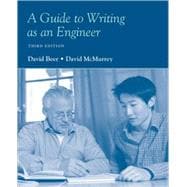
ISBN: 9780470417010 | 0470417013
Edition: 3rd
Format: Paperback
Publisher: Wiley
Pub. Date: 3/1/2009

Why Rent from Knetbooks?

Because Knetbooks knows college students. Our rental program is designed to save you time and money. Whether you need a textbook for a semester, quarter or even a summer session, we have an option for you. Simply select a rental period, enter your information and your book will be on its way!

Top 5 reasons to order all your textbooks from Knetbooks:

  • We have the lowest prices on thousands of popular textbooks
  • Free shipping both ways on ALL orders
  • Most orders ship within 48 hours
  • Need your book longer than expected? Extending your rental is simple
  • Our customer support team is always here to help
SummaryTable of ContentsAuthor Biography
What's the signal-to-noise ratio in your communication?To succeed as an engineer, you need more than technical know-how. You need to be an effective communicator. Eliminate the glitches that trip up the busy reader or listener, causing annoyance, confusion, or misunderstanding-so that your writing and speech are crystal clear.Written for engineers and students of engineering, A Guide to Writing as an Engineer, Third Edition focuses on the technical writing and speaking issues you will face in your day-to-day work such as reports, business lette... MORE
... MORE
Engineers and Writingp. 1
Engineers Write a Lotp. 2
Engineers Write Many Kinds of Documentsp. 4
A Successful Engineering Career Requires Strong Writing Skillsp. 5
Engineers Can Learn to Write Wellp. 6
Noise and the Communication Processp. 7
Controlling the Writing Systemp. 9
Exercisesp. 11
Bibliographyp. 11
Eliminating Sporadic Noise in Engineering Writingp. 13
Spelling and Spell Checkersp. 14
Punctuationp. 15
Sentence Sensep. 23
Technical Usagep. 35
Edit, Edit, Editp. 42
Exercisesp. 43
Bibliographyp. 44
Guidelines for Writing Noise-Free Engineering Documentsp. 45
Focus on Why You Are Writingp. 46
Focus on Your Readersp. 47
Satisfy Document Specificationsp. 49
Get to the Pointp. 50
Provide Accurate Informationp. 51
Present your Material Logicallyp. 52
Make Your Ideas Accessiblep. 52
Use Lists for Some Informationp. 55
Format Your Pages Carefullyp. 58
Express Yourself Clearlyp. 60
Use Efficient Wordingp. 64
Manage Your Time Efficientlyp. 68
Edit at Different Levelsp. 69
Share the Load: Write as a Teamp. 70
Exercisesp. 73
Bibliographyp. 74
Letters, Memoranda, Email, and Other Media for Engineersp. 75
Which to Use?p. 76
Business Lettersp. 78
Business Memorandap. 83
Emailp. 86
New Internet Mediap. 89
Writing Styles for Business Correspondencep. 93
Exercisesp. 94
Bibliographyp. 95
Writing Common Engineering Documentsp. 97
Some Preliminariesp. 98
Inspection and Trip Reportsp. 99
Laboratory and Field Reportsp. 102
Specificationsp. 104
Proposalsp. 107
Progress Reportsp. 113
Instructionsp. 116
Recommendation Reportsp. 120
Exercisesp. 126
Bibliographyp. 126
Writing an Engineering Reportp. 129
Letter of Transmittalp. 130
Cover and Labelp. 132
Page Numberingp. 133
Abstract and Executive Summaryp. 133
Table of Contentsp. 135
List of Figures and Tablesp. 135
Introductionp. 135
Body of the Reportp. 137
Conclusionsp. 143
Appendixesp. 143
Documentationp. 144
Generating Portable Document Filesp. 145
Using Wikis and Other Applications for Team Reportsp. 145
Exercisesp. 147
Bibliographyp. 148
Constructing Engineering Tables and Graphicsp. 151
Tablesp. 152
Charts and Graphsp. 155
Illustrationsp. 157
Graphics and Tables: Guidelinesp. 160
Exercisesp. 162
Bibliographyp. 163
Accessing Engineering Informationp. 165
Basic Search Strategiesp. 166
Sources of Engineering Informationp. 170
Internet Engineering Information Resourcesp. 190
Internet Search Toolsp. 194
Exercisesp. 197
Bibliographyp. 197
Engineering Your Speakingp. 199
Preparing the Presentationp. 200
Delivering the Presentationp. 211
Team Presentationsp. 217
Checklist for an Oral Presentationp. 218
Listening to a Presentationp. 218
The Importance of Informal Communicationp. 219
Exercisesp. 220
Bibliographyp. 221
Writing to Get an Engineering Jobp. 223
How to Write an Engineering Resumep. 224
How to Write an Application Letterp. 237
How to Write a Follow-Up Letterp. 248
Exercisesp. 249
Bibliographyp. 249
Ethics and Documentation in Engineering Writingp. 251
Engineering Ethicsp. 251
The Ethics of Honest Researchp. 257
Exercisesp. 265
Bibliographyp. 266
Indexp. 267
Table of Contents provided by Ingram. All Rights Reserved.
DAVID BEER is professor of Electrical Engineering at the University of Texas Austin.

DAVID McMURREY is a technical writer from industry, most recently with IBM.  This combination of academic and industry perspective gives this book its broad perspective covering all aspects of writing, from academic research to effective corporate communication.


Please wait while this item is added to your cart...