FREE SHIPPING BOTH WAYS
ON EVERY ORDER!
LIST PRICE:
$217.99

Sorry, this item is currently unavailable.

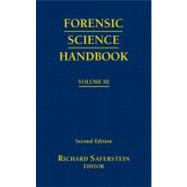
Forensic Science Handbook, Volume 3

ISBN: 9780132207157 | 013220715X
Edition: 2nd
Format: Paperback
Publisher: Prentice Hall
Pub. Date: 2/23/2009

Why Rent from Knetbooks?

Because Knetbooks knows college students. Our rental program is designed to save you time and money. Whether you need a textbook for a semester, quarter or even a summer session, we have an option for you. Simply select a rental period, enter your information and your book will be on its way!

Top 5 reasons to order all your textbooks from Knetbooks:

  • We have the lowest prices on thousands of popular textbooks
  • Free shipping both ways on ALL orders
  • Most orders ship within 48 hours
  • Need your book longer than expected? Extending your rental is simple
  • Our customer support team is always here to help
SummaryTable of Contents
Updated in a new edition, this book contains a collection of articles written by experts in the forensic science area. Volume III has an emphasis on DNA research. Book is intended for the professional or graduate audience.

Rich in content, this handbook describes theories and practices of forensic science to both practitioners and students of the subject. Beginning with a strategic orientation, it identifies the processes needed to make scientifically and legally reliable decisions about the focus, priority and seq... MORE
Prefacep. xii
Forensic Casework from Start to Finishp. 1
Introductionp. 1
Science Applied to the Lawp. 1
Casework Decisions and the Analytical Planp. 2
Relevant, Significant, and Specificp. 3
Responsibility, Accountability, and Controlp. 3
Doing the Right Thing and Doing It Right: Impact-Based Decisionsp. 4
Preliminary Case A... MOREp. 5
What We Know and What We Don't Knowp. 5
Framing the Case Questions: Who, What, When, Where, and Howp. 6
Hierarchy of Hypothesis-Forming Propositions: Origin, Activity and Offensep. 6
Developing and Assessing Case Hypothesesp. 8
Multiple Hypotheses at the Outsetp. 8
Devising an Analytical Planp. 9
Stage of the Case or the Projectp. 9
Tools for Deciding Where to Begin: Priorities and Impactp. 9
Modifying the Analytical Plan during the Testing Processp. 12
Defensible Criteria for Sampling Decisionsp. 13
Criteria for Samplingp. 13
Types of Samplesp. 14
Interpreting The Results: Defensible Work, Records, Conclusions, and Testimonyp. 15
Deciding When You Are Donep. 15
Levels of Information: Incorporating New Information into an Interpretation of Resultsp. 16
Formal Mutually Exclusive Hypothesesp. 17
Evaluating Associative Evidencep. 18
The Asymmetry of Positive and Negative Resultsp. 19
Failure to Exclude versus No Information; Weak Exclusion versus No Informationp. 20
Communications: Making Your Work Understandable and Defensiblep. 22
Resolving Technical Disagreementsp. 23
Conclusionsp. 25
Acknowledgmentsp. 25
Referencesp. 26
A Guide to The Analysis of Forensic Dust Specimensp. 31
Occurrence, Collection, and Preservation of Dust Specimensp. 32
Initial Examinationp. 36
Characterization and Identification Proceduresp. 38
Human Hairp. 38
Animal Hairp. 42
Synthetic Fibersp. 50
Minerals, Glass, and Related Materialsp. 56
Miscellaneous Substancesp. 65
Dust Comparisonp. 68
Conclusionp. 68
Referencesp. 70
Forensic Applications of Infrared Spectroscopyp. 75
Theoryp. 77
The Electromagnetic Spectrump. 77
Vibration of Diatomic Moleculesp. 78
Vibration Transitions of Diatomic Moleculesp. 83
Vibration of Polyatomic Moleculesp. 89
Factors Affecting Infrared Spectrap. 96
Specificity and Limitations of Infrared Spectroscopyp. 101
Vapor Spectra of Small Moleculesp. 101
Organic Compoundsp. 103
Inorganic Compoundsp. 105
Instrumentationp. 110
The Michelson Interferometerp. 111
Detectorsp. 118
Analysis Techniques and Accessoriesp. 120
Diamond Anvil Cellp. 120
Infrared Microscopep. 128
Attenuated Total Reflectancep. 130
Diffuse Reflectance (DRIFTS)p. 139
Vapor Cellsp. 153
Gas Chromatography/Fourier Transform Infrared (GC/FT-IR) Spectroscopyp. 154
Gas Chromatography/Cryogenic Trapping Infrared Analysisp. 155
Photoacoustic Spectroscopyp. 157
Spectral Data Evaluation and Interpretationp. 160
Atmospheric Absorptionsp. 160
Sample Effectsp. 160
Sample Preparation Effectsp. 161
Nonlinear Scale Effectsp. 165
Low-Frequency Absorptionsp. 166
Absorptions of Organic and Inorganic Compounds: A Comparisonp. 173
Absorptions of Talc, Kaolin, and Calcium Carbonatep. 175
Infrared Analysis of Evidencep. 176
Controlled Substancesp. 176
Toxicologyp. 184
Paintp. 185
Fibersp. 197
Explosivesp. 199
Synthetic Polymersp. 201
Document Examinationsp. 204
Miscellaneous Evidencep. 207
Contaminantsp. 210
Acknowledgmentsp. 211
Referencesp. 212
Infrared Microscopy and Its Forensic Applicationsp. 252
Introductionp. 252
Optical Designp. 254
Componentsp. 254
Featuresp. 260
Spectral Measurement Methods and Sample Preparationp. 269
Transmissionp. 269
External Reflectionp. 271
Reflection-Absorptionp. 271
Specular Reflectionp. 272
Diffuse Reflectionp. 273
Diffuse Transmittancep. 274
Internal Reflectionp. 275
Applicationsp. 276
Synthetic Polymersp. 276
Fibersp. 276
Controlled Substancesp. 291
Explosivesp. 291
Art Forgeriesp. 291
Inorganic Samplesp. 293
Contaminantsp. 294
Spectral Imagingp. 297
The Futurep. 299
Acknowledgmentp. 299
Referencesp. 299
Forensic Pharmacologyp. 307
Basic Principles of Pharmacologyp. 308
Absorption, Distribution, Metabolism, and Excretionp. 312
Drug Action and Pharmacodynamicsp. 319
Heroin and Morphinep. 326
Cocainep. 330
Marijuana (tetrahydrocannabinol, THC)p. 332
Other Factors That Must Be Considered in the Interpretation of Drug Blood Levelsp. 335
Post-Mortem Redistribution and Sampling Site Issuesp. 335
Sample Stabilityp. 336
Ethanol Absorption, Distribution, Metabolism, and Excretionp. 336
Absorptionp. 337
Distributionp. 337
Metabolismp. 338
Excretion (Burn-Off Rate)p. 339
Interpreting Serum Ethanol Concentrations and Post-Mortem Ethanol Concentrationsp. 339
Widmark Calculationsp. 340
Tolerance to Ethanolp. 341
The Ethical Duties of The Forensic Toxicologistp. 343
Referencesp. 344
Drug Interactionsp. 346
Introductionp. 346
Types of Drug Interactionsp. 347
Stages of Pharmacokineticsp. 347
Pharmacokinetic Drug Interactionsp. 350
Pharmacodynamic Drug Interactionsp. 354
Pharmacogenomics and Drug Interactionsp. 354
Drug Interactions in Forensic Toxicologyp. 355
Alcoholp. 355
Cannabinoidsp. 357
Opioidsp. 357
Herb-Drug Interactionsp. 364
Mechanisms of Herb-Drug Interactionsp. 366
Conclusionp. 366
Referencesp. 367
Deoxyribonucleic Acid Structure and Function-A Reviewp. 372
Chemical Compositionp. 374
The Watson-Crick Model of DNAp. 379
Stabilityp. 382
Central Dogmap. 384
The Genetic Codep. 385
Methylation of Bases in DNAp. 389
Transcription and Translationp. 389
Intronsp. 392
Chromosome Structurep. 394
DNA Synthesis in the Cell Cyclep. 396
DNA Polymerasep. 398
Okazaki Fragmentsp. 401
Repetitious DNAp. 404
Palindromic DNAp. 407
Mitochondrial DNAp. 408
Plasmids as Gene-Cloning Vectorsp. 410
Polymerase Chain Reactionp. 411
PCR Inhibitionp. 414
PCR of Short Tandem Repeatsp. 414
MiniSTRsp. 416
Polymerase Chain Reaction Y-Chromosome STR Analysisp. 417
Low Copy Number DNA Analysisp. 418
Single Nucleotide Polymorphismsp. 419
Real-Time PCRp. 420
DNA Sequencingp. 422
Enzymatic Sequencingp. 422
Chemical Sequencingp. 425
Referencesp. 428
The Forensic Application of Y-Chromosome Short-Tandem Repeatsp. 436
Introductionp. 436
Biology of the Y Chromosomep. 437
Y-Chromosome Markersp. 440
Forensic Usefulness of the Y-STR Analysisp. 441
Extending the Post-Coital Intervalp. 444
Characterization of the Y-STR Locip. 447
Single and Multi-Copy Locip. 448
Nomenclaturep. 450
Mutation Ratesp. 450
Commonly Used Y-STR Locip. 451
Commercial Y-STR Multiplex Systemsp. 451
Statistical Interpretation of A Y-STR Matchp. 453
Databasesp. 454
Future Directionsp. 455
Novel Y-STR Markersp. 455
Y-Chromosome Markers and Bio-Geographic Ancestryp. 457
Referencesp. 459
Forensic Aspects of Firearms Discharge Residue (FDR) Analysisp. 467
Introductionp. 467
The Chemistry of Firearms Ammunitionp. 468
Cartridge Casesp. 468
Projectilesp. 469
Primersp. 469
Propellantsp. 470
The Mechanism of FDR Formationp. 471
Detection and Analysis of GSR (Primer Residues)p. 471
Color Testsp. 472
Bulk Analytical Methodsp. 473
GSR Particle Analysis by SEM/EDXp. 475
Other Instructional Methodsp. 489
Detection and Analysis of Gunpowder Residuesp. 489
Estimation of Shooting Distancep. 492
Visual/Microscopic and Color Testsp. 493
Chemical Analysis for Associating Firearms and Ammunition with Gunshot Entriesp. 500
Estimation of Time Since Dischargep. 503
Referencesp. 504
Indexp. 513
Table of Contents provided by Ingram. All Rights Reserved.

Related Products


  • Forensic Science Handbook Volume III
    Forensic Science Handbook Volu...


Please wait while this item is added to your cart...