Because Knetbooks knows college students. Our rental program is designed to save you time and money. Whether you need a textbook for a semester, quarter or even a summer session, we have an option for you. Simply select a rental period, enter your information and your book will be on its way!
'Glen Arnold makes complex investment concepts understandable. He explains what the masters of the investment world have done to achieve their status.'
David Shapiro, Stamford Associates
'An excellent intorduction to value investing, some of its most famous practitioners and the investments that made them rich.'
Mark Wallace, Rothschild
'In an age of turbulence, reading this book is... MORE
Robin Woodbine Parish, Chairman of the El Oro and Exploration company.plc
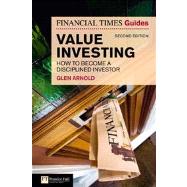
What are the key principles that have served great investors for over half a century?
Is there anything that we can learn from those investors who have displayed an enviable performance on the world?s stock markets?
In this groundbreaking book, bestselling author Glen Arnold addresses just these questions. He provides a set of guidelines which join value principles and growth attributes with the philosophies of the world's most famous investors.
Originally published as Valuegrowth Investing, this new edition has been updated throughout. The Financial Times Guide to Value Investing conveys fundamental concepts, provides practical methods and soffers sound reasoning to guide investment selections.
The Financial Times Guide to Value Investing:
| Preface | p. xi |
| Introduction - A Challenge | p. xiii |
| Investment Philosophies | p. 1 |
| Peter Lynch's niche investing | p. 3 |
| The private investor versus the professional fund manager | |
| The Characteristics of good niche stocks | |
| Other factors in managing a portfolio | |
| What he avoids | |
| When to sell | |
| Difficulties and drawbacks ... MORE | |
| Summary of Peter Lynch's approach | |
| John Neff's sophisticated low price-earnings ratio investing | p. 28 |
| Principles | |
| Finding valuable low P/E ratio stocks | |
| What he avoids | |
| Selling policy | |
| Difficulties and drawbacks of this approach | |
| Key principles of Neff's approach | |
| Benjamin Graham - the father of modern security analysis | p. 49 |
| Early influences | |
| Key elements of his philosophy | |
| Three types of share buyers | |
| Make market fluctuations your friend | |
| What he avoids | |
| Benjamin Graham's three forms of value investing | p. 71 |
| Current asset value investing | |
| Defensive value investing | |
| Enterprising value investing | |
| When to sell | |
| Difficulties and drawbacks of Graham's approach | |
| Key principles of Graham's approaches | |
| Philip Fisher's bonanza investing | p. 94 |
| Key elements of Fisher's approach | |
| What he avoids | |
| When to Sell | |
| Difficulties and drawbacks of this approach | |
| Summary of Fisher's approach | |
| Warren Buffett's and Charles Munger's business perspective investing - part 1 | p. 132 |
| The investment record | |
| Warren Buffett - the road to being a billionaire | |
| GEICO | |
| A 'peasant' at Graham-Newman | |
| The Buffett partnerships | |
| Amex and Disney | |
| Bull market | |
| Berkshire Hathaway | |
| The Washington Post Company | |
| Return to GEICO | |
| Non-quoted businesses | |
| See's Candy | |
| Nebraska Furniture Mart | |
| Charles Munger - from store assistant to billionaire | |
| The evolution of an investment philosophy | |
| Investment principles | |
| Warren Buffett's and Charles Munger's business perspective investing - part 2 | p. 175 |
| Economic franchise | |
| Indications of honest and competent managers | |
| What to avoid | |
| When to sell | |
| Difficulties and drawbacks of this approach | |
| Key principles of Buffett's and Munger's approach | |
| The Valuegrowth Method | p. 213 |
| The Valuegrowth investor | p. 215 |
| Expensive distractions | |
| The Valuegrowth model | |
| Growth of owner earnings | |
| Margin of safety | |
| Low diversification | |
| Holding for the very long term | |
| Character traits and personal qualities | |
| Key principles of Valuegrowth investing | |
| Appendix 8.1 - a discussion on the effect of taxation on the discount rate | p. 246 |
| The analysis of industries | p. 247 |
| The competitive floor | |
| The five competitive forces | |
| Threat of entry | |
| Intensity of rivalry of existing companies | |
| The threat from substitutes | |
| Buyer (customer) power | |
| Supplier Power | |
| Industry evolution | |
| Key elements of industry analysis | |
| Competitive resource analysis | p. 277 |
| The TRRACK system | |
| What makes resources extraordinary? | |
| Investment in resources | |
| Leveraging resources | |
| Key elements of competitive resource analysis | |
| Glossary | p. 309 |
| References | p. 319 |
| Bibliography | p. 350 |
| Index | p. 359 |
| Table of Contents provided by Ingram. All Rights Reserved. |