FREE SHIPPING BOTH WAYS
ON EVERY ORDER!
LIST PRICE:
$44.75

OUR PRICE:
$12.85

You may extend rentals at any time.


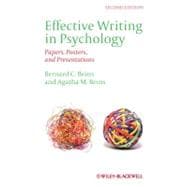
Effective Writing in Psychology : Papers, Posters, and Presentations

ISBN: 9780470672440 | 0470672447
Edition: 2nd
Format: Paperback
Publisher: Wiley-Blackwell
Pub. Date: 5/15/2012

Why Rent from Knetbooks?

Because Knetbooks knows college students. Our rental program is designed to save you time and money. Whether you need a textbook for a semester, quarter or even a summer session, we have an option for you. Simply select a rental period, enter your information and your book will be on its way!

Top 5 reasons to order all your textbooks from Knetbooks:

  • We have the lowest prices on thousands of popular textbooks
  • Free shipping both ways on ALL orders
  • Most orders ship within 48 hours
  • Need your book longer than expected? Extending your rental is simple
  • Our customer support team is always here to help
SummaryTable of ContentsAuthor Biography
The second edition of Effective Writing in Psychology helps users produce crisp scientific communication, form concise unambiguous arguments, and render technical information clear and comprehensible. The new edition incorporates the latest guidelines contained within the 6th edition of the APA Publication Manual. Clear guidelines on effective writing illustrate how to generate strong and compelling prose, even when the writing is not aimed at a research audience Incorporates changes to the guidelines contained in the 6th edition of the APA pub... MORE
... MORE
Preface to the Second Editionp. ix
Preface to the First Editionp. xi
Writing in Psychologyp. 1
Writing in Psychologyp. 2
How Does Psychological Writing Differ from Other Kinds of Writing?p. 3
Using APA Stylep. 4
Making a Credible Argumentp. 5
Different Types of Communicationp. 6
Effective Communicationp. 8
How to Beginp. 9
Organizing and Developing Your Ideas and Writingp. 11
Formulating Your Ideasp. 13
Identifying Your Focal Questionp. 13
Locating Relevant Sourcesp. 16
Recognizing Multiple Viewpointsp. 19
Ethical Writingp. 21
Assessing Your Sourcesp. 27
The Difference between Primary and Secondary Literaturep. 28
The Difference between Popular and Scholarly Sourcesp. 28
Evaluating Sourcesp. 31
Evaluating Internet Sourcesp. 33
How to Conduct a Literature Searchp. 41
Understanding Library Resourcesp. 43
Using Article Databasesp. 49
Using the Internetp. 51
Using Sources to Find Sourcesp. 53
How to Read and Summarize a Journal Articlep. 55
An Overview of the Research-the Abstractp. 56
Identifying the Issues-the Introductionp. 57
Understanding What Was Done-the Method Sectionp. 57
What Happened-the Results Sectionp. 60
What It Means-the Discussion Sectionp. 62
Where the Ideas Originated-the References Sectionp. 65
Figuring Out What It Meansp. 65
Organizing a Paperp. 67
Organizationp. 68
Using the Work of Others to Support Your Argumentp. 70
Editing and Revisingp. 75
Mechanicsp. 77
Elements of Stylep. 79
Recognizing the Importance of Grammar and Stylep. 80
Choosing Effective Wordingp. 81
Using Inclusive and Appropriate Languagep. 82
Deciding on the Use of Technical Languagep. 85
Avoiding Common Problemsp. 85
Verb Formsp. 88
Spellingp. 89
Specific Word Usep. 95
Communicating Statisticsp. 97
Why Do We Use Statistics?p. 98
What Point Are You Trying to Make?p. 99
Understanding Your Numbersp. 101
Helping Readers Understand Your Statisticsp. 103
Differentiating Results and Interpretationsp. 106
Preparing APA Format Papersp. 107
Writing a Thesis or a Term Paperp. 109
Developing Your Ideap. 111
Organizing Your Paper Around the Central Questionsp. 114
Finding Different Perspectives About Your Ideap. 116
Developing the Logic of Your Argumentp. 119
The Introduction Sectionp. 123
Introducing the Topicp. 124
Different Approaches to Starting the Introductionp. 124
How to Beginp. 127
Reviewing the Literaturep. 128
Reasons for Reviewing the Literaturep. 128
Clarifying Terms in the Researchp. 129
Introducing Your Research: Generating a Hypothesisp. 130
The Method Sectionp. 133
Participants and Subjectsp. 134
Materials and Apparatusp. 141
Procedurep. 143
Designp. 144
The Results Sectionp. 147
Your Hypothesesp. 148
Deciding What to Presentp. 149
Reporting Significant and Nonsignificant Resultsp. 150
Marginally Significant Effectsp. 151
APA Style and Presentation of Your Resultsp. 152
Creating Tablesp. 155
Creating Figuresp. 160
The Connection between the Text and the Tables and Figuresp. 164
The Difference between Results and Discussion Sectionsp. 166
Some Final Points About Presenting Resultsp. 169
The Discussion Sectionp. 171
Summarizing Your Resultsp. 172
Connecting Different Aspects of Your Resultsp. 173
Dealing with Nonsignificant Resultsp. 174
Comparing Your Results with Those of Othersp. 175
Stating the Importance and Implications of Your Resultsp. 176
Acknowledging the Limitations of Your Studyp. 177
References Citations in the Text and the Reference Listp. 179
Citing References in the Textp. 180
Citing Sources with Three to Five Authorsp. 182
Citing Sources with Six or More Authorsp. 182
Citing Personal Communicationsp. 183
Citing Multiple Sources within Parenthesesp. 183
Order of Citations in the Reference Listp. 184
Using Your Word Processing Program to Create the Citationp. 184
Examples of How Different Types of References Should Be Laid Outp. 185
Final Touches: The Abstract and Formatting Detailsp. 193
The Abstractp. 194
Formatting Detailsp. 195
Communicating Beyond the Research Paperp. 215
Creating Poster Presentationsp. 217
Differentiating Visual and Written Communicationp. 218
Reducing the Amount of Informationp. 218
Visual Stylep. 219
Your Behavior: The Ethic of a Poster Sessionp. 222
Creating Your Poster Using PowerPoint(r)p. 224
Giving Oral Presentationsp. 231
The Difference between Oral and Written Englishp. 231
Adapting APA Style to Oral Presentationsp. 236
Preparing for Your Talkp. 236
Creating Graphics for Your Presentationp. 238
Giving the Presentationp. 239
Presenting Your Work on the Internetp. 243
New Capabilities with Internet Publicationp. 244
Using a Word Processor to Create Manuscripts for the Internetp. 245
Advantages of Internet Publishing Softwarep. 247
Publishing Your Poster on the Webp. 249
Uploading Your Manuscript to the Internetp. 249
Submitting Your Plan to an Ethics Committeep. 251
Ethical Standards in Researchp. 251
Writing a Proposal for an Institutional Review Board for Research with Human Subjectsp. 253
Writing a Proposal for the Institutional Animal Care and Use Committee (IACUC) for Animal Researchp. 258
Example of APA-Style Manuscript with Common Errorsp. 261
Corrected APA-Style Manuscriptp. 269
Referencesp. 277
Author Indexp. 285
Subject Indexp. 288
Table of Contents provided by Ingram. All Rights Reserved.
Bernard C. Benis, PhD, is Professor and Chair of Psychology at Ithaca College, New York. He recently received the Charles L. Brewer Distinguished Teaching of Psychology Award from the American Psychological Foundation. He is also the author of Research Methods: A Tool for Life (2009) and co-author with Maureen McCarthy of Research Methods and Statistics (2012). He is a Fellow of the American Psychological Association, the Association for Psychological Science, and the Eastern Psychological Association. Agatha M. Beins is Assistant Professor of Women's Studies at Texas Woman's University. She co-edited Women's Studies for the Future: Foundations, Interrogations, Politics with Elizabeth Lapovsky Kennedy (2005), and has published articles in Women: A Cultural Review and Sinister Wisdom. She is also part of the editorial collective for the journal Films for the Feminist Classroom.


Please wait while this item is added to your cart...