FREE SHIPPING BOTH WAYS
ON EVERY ORDER!
LIST PRICE:
$149.13

OUR PRICE:
$24.74

You may extend rentals at any time.


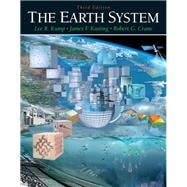
The Earth System

ISBN: 9780321597793 | 0321597796
Edition: 3rd
Format: Paperback
Publisher: Prentice Hall
Pub. Date: 7/31/2009

Why Rent from Knetbooks?

Because Knetbooks knows college students. Our rental program is designed to save you time and money. Whether you need a textbook for a semester, quarter or even a summer session, we have an option for you. Simply select a rental period, enter your information and your book will be on its way!

Top 5 reasons to order all your textbooks from Knetbooks:

  • We have the lowest prices on thousands of popular textbooks
  • Free shipping both ways on ALL orders
  • Most orders ship within 48 hours
  • Need your book longer than expected? Extending your rental is simple
  • Our customer support team is always here to help
SummaryTable of ContentsAuthor Biography
For courses in Earth Systems Science offered in departments of Geology, Earth Science, Geography and Environmental Science. The first textbook of its kind that addresses the issues of global change from a true Earth systems perspective, The Earth System offers a solid emphasis on lessons from Earth's history that may guide decision-making in the future. It is more rigorous and quantitative than traditional Earth science books, while remaining appropriate for non-science majors.

The first book of its kind to address... MORE
About the Authorsp. viii
Prefacep. ix
Global Changep. 1
Introductionp. 1
Global Change on Short Time Scalesp. 3
A Closer Look: Are Hurricanes Getting Stronger with Time?p. 9
A Closer Look: The Discovery of the Antarctic Ozone Holep. 12
Global Change on Long Time Scalesp. 13
Daisyworld: An Introduction to Systemsp. 21... MORE
The Systems Approachp. 21
Thinking Quantitatively: Stability of Positive Feedback Loopsp. 25
The Daisyworld Climate Systemp. 26
Useful Concepts: Graphs and Graph Makingp. 28
External Forcing: The Response of Daisyworld to Increasing Solar Luminosityp. 30
Global Energy Balance: The Greenhouse Effectp. 36
Introductionp. 36
Electromagnetic Radiationp. 37
Temperature Scalesp. 40
Blackbody Radiationp. 41
Planetary Energy Balancep. 43
A Closer Look: Planetary Energy Balancep. 44
Atmospheric Composition and Structurep. 44
Thinking Quantitatively: How the Greenhouse Effect Works: The One-Layer Atmospherep. 45
Physical Causes of the Greenhouse Effectp. 48
Effect of Clouds on the Atmospheric Radiation Budgetp. 50
Introduction to Climate Modelingp. 52
Climate Feedbacksp. 53
The Atmospheric Circulation Systemp. 57
The Global Circulatory Subsystemsp. 57
The Atmospheric Circulationp. 58
A Closer Look: The Relationships between Temperature, Pressure, and Volumes-The Ideal Gas Lawp. 59
A Closer Look: How Hurricanes (Tropical Cyclones) Workp. 67
Global Distributions of Temperature and Rainfallp. 70
The Circulation of the Oceansp. 84
Winds and Surface Currentsp. 84
A Closer Look: Vorticityp. 90
A Closer Look: The 1982-1983 and 1997-1998 ENSO Eventsp. 95
The Circulation of the Deep Oceanp. 96
A Closer Look: The Salt Content of the Oceans and the Age of Earthp. 97
Useful Concepts: Isotopes and Their Usesp. 102
A Closer Look: Carbon-14-A Radioactive Clockp. 103
The Cryospherep. 108
Introductionp. 108
River and Lake Ice, Seasonal Snow Cover, and Permafrostp. 110
Glaciers and Ice Sheetsp. 113
Thinking Quantitatively: Movement of Glaciersp. 115
Sea Ice and Climatep. 117
Circulation of the Solid Earth: Plate Tectonicsp. 122
Introductionp. 122
Anatomy of Earthp. 123
A Closer Look: The Principle of the Seismographp. 126
The Theory of Plate Tectonicsp. 130
Plates and Plate Boundariesp. 135
A Closer Look: Deep-Sea Life at Mid-Ocean Ridge Ventsp. 139
The Physiology of the Solid Earth: What Drives Plate Tectonics?p. 142
A Closer Look: Radiometric Age Dating of Geological Materialsp. 142
Recycling of the Lithosphere: The Rock Cyclep. 144
Plate Tectonics through Earth Historyp. 146
Recycling of the Elements: Carbon and Nutrient Cyclesp. 149
Systems Approach to the Carbon Cyclep. 149
Useful Concepts: The Concept of the Molep. 153
The Short-Term Organic Carbon Cyclep. 154
A Closer Look: Oxygen Minimum Zonep. 156
The Long-Term Organic Carbon Cyclep. 159
The Inorganic Carbon Cyclep. 162
Useful Concepts: pHp. 164
The Carbonate-Silicate Geochemical Cyclep. 168
A Closer Look: Biological Enhancement of Chemical Weatheringp. 169
Links between the Organic and Inoganic Carbon Cyclep. 170
Phosphorus and Nitrogen Cyclesp. 170
Focus on the Biota: Metabolism, Ecosystems, and Biodiversityp. 176
Life on Earthp. 176
Structure of the Biospherep. 178
Ecosystemsp. 178
A Closer Look: Physiological versus Ecological Optima for Growthp. 181
Biodiversityp. 186
Diversity of Interactionsp. 187
Origin of Earth and of Lifep. 190
Introductionp. 190
A Closer Look: Determining the Age of Earthp. 191
Formation of the Solar Systemp. 192
A Closer Look: Main-Sequence Stars and the Hertzsprung-Russell Diagramp. 195
Formation of the Atmosphere and Oceanp. 197
A Closer Look: The Nice Model of Solar System Formationp. 198
The Origin of Lifep. 199
A Closer Look: Oxidation of the Atmosphere by Escape of Hydrogenp. 200
A Closer Look: Probiotic O2 Concentrationsp. 201
A Closer Look: What Does It Mean to Be Alive?p. 202
A Closer Look: The Compounds of Lifep. 203
Effect of Life on the Atmosphere: The Rise of Oxygen and Ozonep. 210
Introductionp. 210
Effect of Life on the Early Atmospherep. 211
The Rise of Oxygenp. 214
Useful Concepts: Oxidations States of Ironp. 217
A Closer Look: Mass-Independent Sulfur Isotope Ratios and What They Tell US about the Rise of Atmospheric O2p. 220
The Rise of Ozonep. 222
Variations in Atmospheric O2 Over the Last 2 Billion Yearsp. 223
Thinking Quantitatively: Carbon Isotopes and Organic Carbon Burialp. 226
Modern Controls on Atmospheric O2p. 228
Long-Term Climate Regulationp. 233
Introductionp. 233
The Faint Young Sun Paradox Revisitedp. 234
The Long-Term Climate Recordp. 240
Thinking Quantitatively: Energy Balance Modeling of the Snowball Earthp. 246
A Closer Look: How Did Life Survive the Snowball Earth?p. 247
Variations in Atmospheric CO2 and Climate During the Phanerozoicp. 248
Biodiversity through Earth Historyp. 255
The Fossil Record of Biodiversityp. 255
Useful Concepts: Taxonomyp. 257
The Creataceous-Tertiary Mass Extinctionp. 261
A Closer Look: The K-T Strangelove Oceanp. 267
Extraterrestrial Influences and Extinctionp. 268
Pleistocene Glaciationsp. 272
Geologic Evidence of Pleistocene Glaciationp. 273
Milankovitch Cyclesp. 276
Thinking Quantitatively: Kepler's Lawsp. 277
Thinking Quantitatively: Effect of the Sun and Moon on Earth's Obliquity and Precessionp. 279
Glacial Climate Feedbacksp. 281
A Closer Look: Stochastic Resonance and Rapid Climate Changep. 291
Global Warming, Part 1: Recent and Future Climatep. 295
Introductionp. 295
Holocene Climate Changep. 296
Carbon Reservoirs and Fluxesp. 303
CO2 Removal Processes and Time Scalesp. 306
A Closer Look: The Chemistry of CO2 Uptakep. 308
Projections of Future Atmospheric CO2 Concentrations and Climatep. 309
A Closer Look: Three-Dimensional General Circulation Models (GCMs)p. 314
A Closer Look: Long-Term CO2 Projectionsp. 317
Global Warming, Part 2: Impacts, Adaptation, and Mitigationp. 321
Introductionp. 321
Changes in Sea Levelp. 322
Effects on Ecosystemsp. 325
Human Impacts of Global Warmingp. 326
Adapting to Global Warmingp. 327
Policies to Slow Global Warmingp. 329
Economic Consequences of Global Warmingp. 333
Oxone Depletionp. 340
Introductionp. 340
Ultraviolet Radiation and Its Biological Effectsp. 340
Ozone Vertical Distribution and Column Depthp. 343
The Chapman Mechanismp. 344
Catalytic Cycles of Nitrogen, Chlorine, and Brominep. 346
Sources and Sinks of Ozone-Depleting Compoundsp. 347
The Antarctic Ozone Holep. 350
A Closer Look: How the Link between Freons and Ozone Depletion Was Discoveredp. 351
Evidence of Midlatitude Ozone Depletionp. 354
Mechanisms for Halting Ozone Depltionp. 356
Human Threats to Biodiversityp. 361
Introductionp. 361
The Modern Extinctionp. 363
A Closer Look: Other Consequences of Tropical Deforestationp. 367
Why We Should Care about Biodiversityp. 373
Climate Stability on Earth and Earthlike Planetsp. 379
Introductionp. 379
Climate Evolution in the Distant Futurep. 380
Climate Evolution on Venus and Marsp. 381
A Closer Look: A Geoengineering Solution to Earth's Future Climate Problemsp. 382
Habitable Planets around Other Starsp. 384
The Drake Equationp. 387
Ensuring Our Long-Term Survivalp. 392
p. 395
p. 396
p. 397
p. 398
Glossaryp. 399
Indexp. 409
Table of Contents provided by Ingram. All Rights Reserved.
Lee R. Kump is a Professor in the Department of Geosciences, and an associate of the Earth System Science Center and Astrobiology Research Center at the Pennsylvania State University. A native of Minnesota, he received his bachelor's degree in geophysical sciences from the University of Chicago in 1981, and his Ph.D. in marine sciences from the University of South Florida in 1986. While in Florida he spent two summers as a geologist with the United States Geological Survey's Fisher Island Station. In August of 1986 he joined the faculty at Penn State.

Dr. Kump is a Fellow of the Geological Societies of America and London, and a member of the American Geophysical Union, the Geochemical Society, and the Geochemistry Division of the American Chemical Society. His research has been funded by the Environmental Protection Agency, the National Science Foundation, NASA, the Gas Research Institute, the Petroleum Research Fund of the American Chemical Society, and Texaco. Dr. Kump became Associate Director of the CIAR Earth System Evolution Program in 2004. Dr. Kump's primary research effort is in the development of numerical models of global biogeochemical cycles. His early work focussed on the carbon and sulfur cycles, and on the feedbacks that regulate atmospheric oxygen levels. More recently his emphasis has shifted to the study of the dynamic coupling between global climate and biogeochemical cycles. He studies the long-term evolution of the oceans and atmosphere, using a combination of field work, laboratory analysis, and numerical modeling.

James Kasting is a Distinguished Professor of Geosciences at Penn State University. He received his undergraduate degree from Harvard University in Chemistry and Physics and did his Ph.D. at the University of Michigan in Atmospheric Sciences. Prior to coming to Penn State in 1988, he spent 7 years in the Space Science Division at NASA Ames Research Center. His research focuses on the evolution of planetary atmospheres, particularly the question of why the atmospheres of Mars and Venus are so different from that of Earth. He is also interested in the question of whether habitable planets exist around other stars and is involved with NASA’s proposed Terrestrial Planet Finder Mission(s), which will try to answer that question over the next 15-20 years.
ACADEMIC HONORS AND AWARDS
Summa Cum Laude - Harvard (1975)
Atmospheric, Oceanic, and Space Sciences Department (University of Michigan) Distinguished Alumni Award (1992)
American Geophysical Union (Fellow, 2004)
American Association for the Advancement of Science (Fellow, 1995)
International Society for the Study of the Origin of Life (Fellow, 2002)
Geochemical Society (Fellow, 2008)
Faculty Scholar Award, Penn State University (2005)

Dr. Robert Crane
received his bachelor's degree in physical geography from the University of Reading, England, in 1976. He did graduate work in polar climatology, microwave remote sensing, and sea ice-atmosphere interactions at the University of Colorado's Institute for Arctic and Alpine Research (INSTAAR) and the National Snow and Ice Data Center, receiving a Master's degree in 1978 and a Ph.D. in 1981. As a Research Associate in the Cooperative Institute for Research in Environmental Sciences (CIRES), he continued his work on the microwave remote sensing of sea ice. Subsequently, Dr. Crane spent a year as a visiting professor at the University of Saskatchewan.

He joined the faculty of the Pennsylvania State University in 1985. Dr. Crane held a joint appointment in the Department of Geography and in the Earth System Science Center from 1985 to 1993, serving as Associate Director of the Center from 1990 to 1993. He was appointed Associate Dean for Education in the College of Earth and Mineral Sciences in 1993, and currently holds the position of Associate Dean and Professor of Geography. His areas of specialization include sea ice-atmosphere interactions, synoptic climatology, and regional-scale climate change.

Related Products


  • Earth System : An Introduction to Earth Systems Science
    Earth System : An Introduction...
  • Outlines & Highlights for The Earth System
    Outlines & Highlights for The ...
  • Outlines and Highlights for Earth System, the by Lee R Kump, Isbn : 9780321597793
    Outlines and Highlights for Ea...
  • The Earth System
    The Earth System


Please wait while this item is added to your cart...