Free Shipping On Every Order



Amazon no longer offers textbook rentals. We do!
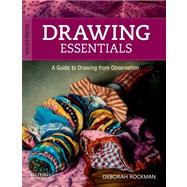
Drawing Essentials A Guide to Drawing from Observation
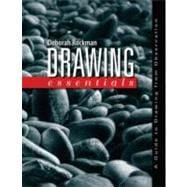
Drawing Essentials A Guide to Drawing from Observation
- ISBN 13:
9780195314328
- ISBN 10:
0195314328
- Format: Paperback
- Copyright: 03/28/2008
- Publisher: Oxford University Press
- Newer Edition
Rent
Sorry, this item is currently unavailable.
 Free Shipping On Every Order
Note: Supplemental materials are not guaranteed with Rental or Used book purchases.
Extend or Purchase Your Rental at Any Time
Need to keep your rental past your due date? At any time before your due date you can extend or purchase your rental through your account.
Summary
Ideal for introductory studio art courses in drawing, Drawing Essentials: A Guide to Drawing from Observation thoroughly covers the three drawing subcategories that are most important at the foundation level--basic drawing (non-subject specific), figure drawing, and perspective drawing--explaining clearly and in depth the elements that are essential to depicting form and space on a two-dimensional surface. Addressing and illustrating studio experiences that are not effectively dealt with in other drawing books, this unique text elucidates such fundamental (yet challenging) concepts and methods as the process of sighting; scaling techniques; meaningful and descriptive line variation; observation and development of tonal structure; creation of interesting and instructive still lifes; the conceptual impact of still-life objects; the unique challenges of the human figure and portraiture; basic and advanced perspective systems; brainstorming and the generation of ideas; and the use of photographs as reference. Throughout, award-winning artist, teacher, and author Deborah Rockman focuses on the cultivation of observational skills, increased sensitivity, critical thinking, technical refinement, and knowledge of materials. Drawing Essentials further distinguishes itself from other texts on the market by including many high-quality student works drawn from Rockman's twenty-seven years of teaching experience, as well as carefully selected works from historical masters and numerous contemporary artists for whom drawing is a primary studio practice. In addition, Rockman provides students with invaluable practical material, including coverage of various traditional and nontraditional drawing media and surfaces and information on alternative processes that can be combined with drawing. Drawing Essentials also provides powerful examples of what more advanced students can accomplish with a strong foundation drawing background. An exceptional, all-in-one, and affordable resource on drawing, figure drawing, and perspective, Drawing Essentials helps students to develop a thorough understanding of drawing fundamentals, which in turn will prepare them for more advanced experiences with drawing and the myriad possibilities that it offers.