FREE SHIPPING BOTH WAYS
ON EVERY ORDER!
LIST PRICE:
$138.20

OUR PRICE:
$28.75

You may extend rentals at any time.


Contemporary Human Behavior Theory : A Critical Perspective for Social Work
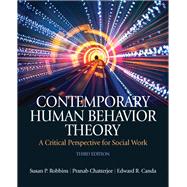
ISBN: 9780205033126 | 0205033121
Edition: 3rd
Format: Paperback
Publisher: Pearson
Pub. Date: 2/23/2011

Why Rent from Knetbooks?

Because Knetbooks knows college students. Our rental program is designed to save you time and money. Whether you need a textbook for a semester, quarter or even a summer session, we have an option for you. Simply select a rental period, enter your information and your book will be on its way!

Top 5 reasons to order all your textbooks from Knetbooks:

  • We have the lowest prices on thousands of popular textbooks
  • Free shipping both ways on ALL orders
  • Most orders ship within 48 hours
  • Need your book longer than expected? Extending your rental is simple
  • Our customer support team is always here to help
SummaryTable of ContentsAuthor Biography
Contemporary Human Behavior Theory: A Critical Perspective for Social Work, 3e approaches HBSE from a comparative theory perspective, providing coverage of the most current and contemporary theories as well as traditional theories.

Chapter 1: The Nature of Theories

Organization of the Book and Rationale for Selection of Theories.

Why Study Theories of Human Behavior?  

Theories: What Are They?  

The Social Construction of Theories  

Ideology, Scientific Theory, and Social Work Practice 

Determinism and Reductionism: A Problem of Soci... MORE

Theories: Application to Practice

Critical Analysis of Theory: The Missing Dimension 

An Afterthough: Paths to Human Knowledge


Chapter 2: Systems Theory

Historical Context

Key Concepts

Structural Functionalism

The Ecological Perspective  

Dynamic Systems Theory

Deep Ecology

Ecofeminism

Contemporary Issues 

Application to Social Work Practice

Critical Analysis

Consistency with Social Work Values

Philosophical Underpinnings

Methodological Issues and Empirical Support


Chapter 3: Conflict Theories

Historical Context

Key Concepts

Class Conflict

Roads from Marx

Contemporary Issues

Application to Social Work Practice

Critical Analysis

Consistency with Social Work Values and Ethics

Philosophical Underpinnings

Methodological Issues and Empirical Support


Chapter 4: Theories of Empowerment

Historical Context

Key Concepts

Stratification, Oppression, and Inequality:
The Sociopolitical Context of Empowerment Theories.

Lesbian, Gay, Bisexual, Transgender, Queer and Intersexed Empowerment Theories

Social Work Empowerment Theories

Contemporary Issues

Application to Social Work Practice

Critical Analysis

Consistency with Social Work Values and Ethics

Philosophical Underpinnings

Methodological Issues and Empirical Support


Chapter 5: Feminist Theory

Historical Context

Key Concepts

Feminist Theories

Contemproary Thought in Feminist Theory

Contemporary Issues

Application to Social Work Practice

Critical Analysis

Consistency with Social Work Values and Ethics

Philosophical Underpinnings

Methodological Issues and Empirical Support


Chapter 6: Theories of Assimilation, Acculturation, and Bicultural Socialization and Ethnic Minority Identity

Historical Context

Key Concepts

Deficiency Theory

The Dual Perspective

Bicultural Socialization

Ethnic, Racial/Cultural and Minority Identity

A Multidimensional Transactional Model of Bicultural Identity

Transculturality

Cultural Competence

Contemporary Issues

Application to Social Work Practice

Critical Analysis

Consistency with Social Work Values and Ethics

Philosophical Underpinnings

Methodological Issues and Empirical Support


Chapter 7: Psychodynamic Theory

Historical Context

Key Concepts

Sigmund Freud: Psychoanalysis

Roads from Freud

The Freudian Mainstream

The Freudian Left

Contemporary Issues

Application to Social Work Practice

Critical Analysis

Consistency with Social Work Values and Ethics

Philosophical Underpinnings

Methodological Issues and Empirical Support


Chapter 8: Theories of Life Span Development

Historical Context

Key Concepts

Theoretical Knowledge about Physical Development

Theoretical Knowledge about Sexual Development

Theoretical Knowledge about Neurobiology and Neurotransmission

Theories of Psychosocial Development: The Life Span Approach

Roads from Erikson

Theories of Midlife Development

Life Span Development and Late Adulthood

Life Span Development of Women

Shame Resilience Theory

Lesbian, Gay, Bisexual, Transgender, Queer, Questioning and Intersexed Identity Development

Stage Theories: Popularity versus Validity

Contemporary Issues

Application to Social Work Practice

Critical Analysis

Consistency with Social Work Values and Ethics

Philosophical Underpinnings

Methodological Issues and Empirical Support


Chapter 9: Theories of Cognitive and Moral Development

Historical Context

Cognitive Development

Moral Development

Contemporary Issues

Application to Social Work Practice

Critical Analysis

Consistency with Social Work Values and Ethics

Philosophical Underpinnings

Methodological Issues and Empirical Support


Chapter 10: Symbolic Interaction

Historical Context

Key Concepts

The Chicago School and Early Interactionism

Roads from Mead

Role Theory, Reference Groups, and Socialization through the Life Cycle

Contemporary Issues

Application to Social Work Practice

Critical Analysis

Consistency with Social Work Values and Ethics

Philosophical Underpinnings

Methodological Issues and Empirical Support


Chapter 11: Phenomenology, Social Constructionism, and Hermeneutics

Historical Context

Key Concepts

Roads from Schutz

Contemporary Issues

Application to Social Work Practice

Critical Analysis

Consistency with Social Work Values and Ethics

Philosophical Underpinnings

Methodological Issues and Empirical Support


Chapter 12: Behaviorism, Social Learning, and Exchange Theory

Behaviorism

Social Learning Theory

Exchange Theory

Contemporary Issues

Application to Social Work Practice

Critical Analysis

Consistency with Social Work Values and Ethics

Philosophical Underpinnings

Methodological Issues and Empirical Support


Chapter 13: Transpersonal Theory

Historical Context

Key Concepts

Transpersonal Theories

Contemporary Issues

Application to Social Work Practice

Critical Analysis

Consistency with Social Work Values and Ethics

Philosophical Underpinnings

Methodological Issues and Empirical Support


Chapter 14: Application of Theories

Alternative Approaches to Theory Selection

“Measuring Up” to the Themes for Critical Reflection on Theories

Person-Focused Theories

Environment-Focused Theories

Twelve Great Ideas

An Example of Integrating Theories for a Practice Issue

Roads from Here: Future Possibilities and Challenges for Innovation in Human Behavior Theory


References and Bibliography

Discography

Author Index

Subject Index

Susan P. Robbins, Ph.D., LCSW is an Associate Professor at the University of Houston Graduate College of Social Work. She received her MSW from the University of Minnesota and her Ph.D. from Tulane University. She is the lead author of two monographs on drug abuse prevention and has published several book chapters on drugs and drug abuse. She has been a contributing author to the Encyclopedia of Social Work and the Social Workers' Desk Reference on the topics of cults, satanic ritual abuse and recovered memory of abuse and has published numerous articles in professional journals.


Pranab Chatterjee received his undergraduate education from Viswa-Bharati University in West Bengal, India.  Subsequent to that, he received a master’s degree in social work from The University of Tennessee, another master’s degree in sociology from The University of Chicago, and a Ph.D. in sociology from The University of Chicago.  He is currently Grace Longwell Coyle Professor Emeritus at Case Western Reserve University in Cleveland, Ohio.  Over the years, he has published many papers and books in social work and social welfare. His latest book is A Story of Ambivalent Modernization in Bangladesh and West Bengal (2010). Other recent books by him include Repackaging the Welfare State (1999), and Approaches to the Welfare State (1996).


Edward R. Canda, M.A., MSW, Ph.D., is a Professor in the School of Social Welfare at the University of Kansas. He has authored or co-authored 9 books and more than 100 articles, chapters, and other publications dealing with intersections of cultural diversity, spirituality, health, and disability in theory and practice. His most recent book is Spiritual Diversity in Social Work Practice, second edition (co-authored with Leola Dyrud Furman, Oxford University Press, 2010). Dr. Canda does extensive international research and teaching, especially in East Asia. He has a special interest in comparative cross-cultural studies of philosophies and theories of human behavior. Dr. Canda's website offers access to numerous related resources and links on these topics at www.socwel.ku.edu/canda.

Related Products


  • Contemporary Human Behavior Theory A Critical Perspective for Social Work with MySearchLab -- Access Card Package Package
    Contemporary Human Behavior Th...
  • Contemporary Human Behavior Theory : A Critical Perspective for Social Work
    Contemporary Human Behavior Th...
  • Contemporary Human Behavior Theory : A Critical Perspective for Social Work
    Contemporary Human Behavior Th...
  • Contemporary Human Behavior
    Contemporary Human Behavior


Please wait while this item is added to your cart...