FREE SHIPPING BOTH WAYS
ON EVERY ORDER!
LIST PRICE:
$50.08

OUR PRICE:
$14.87

You may extend rentals at any time.


Comparative Religious Ethics : A Narrative Approach to Global Ethics
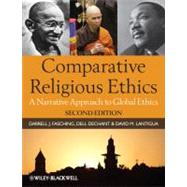
ISBN: 9781444331332 | 1444331337
Edition: 2nd
Format: Paperback
Publisher: Wiley-Blackwell
Pub. Date: 5/2/2011

Why Rent from Knetbooks?

Because Knetbooks knows college students. Our rental program is designed to save you time and money. Whether you need a textbook for a semester, quarter or even a summer session, we have an option for you. Simply select a rental period, enter your information and your book will be on its way!

Top 5 reasons to order all your textbooks from Knetbooks:

  • We have the lowest prices on thousands of popular textbooks
  • Free shipping both ways on ALL orders
  • Most orders ship within 48 hours
  • Need your book longer than expected? Extending your rental is simple
  • Our customer support team is always here to help
SummaryTable of ContentsAuthor Biography
The new edition of this popular textbook has been thoroughly revised and updated to reflect recent global developments. The book retains the unique and compelling narrative-style approach which has proved so successful with students; reflecting the ways in which ancient stories from diverse religions, such as the Bhagavad Gita and the lives of Jesus and Buddha, have been used to project an ethical framework and provide ethical orientation in the modern world.New to this edition are discussions of globalization and its influence on cross-cultura... MORE
Preface.

Acknowledgments.

PART I Religion, Ethics, And Stories Of War And Peace.

1 Religion, Ethics, And Storytelling.

Storytelling: from Comparative Ethics to Global Ethics.

Religion: the Sacred and the Holy.

Religion and the Deep Structures of the Sacred and the Holy and their Mediations.

The Awakening of Ethical Consciousness: the Power of Religious Stories, East and West.

The Great Religious Stories of the World – an Overview.

A Postscript on Religious Language.

Questions for Discussion.

Sources.

2 Stori... MORE

Overview.

Tales of Demonic Madness: from Auschwitz to Hiroshima.

Auschwitz and Hiroshima: the Formative Religious Events of the Postmodern World.

Techno-bureaucratic Rationality and the Demise of Ethical Consciousness Doubling and the Myth of Life through Death: the Spiritual Logic of Mass Death in the Twentieth Century.

The Way of All the Earth: Global Ethics and Tales of Divine Madness Questions for Discussion.

Sources.

PART II War And Peace: Ancient Stories And Postmodern Life Stories Introduction: Ethics after Auschwitz and Hiroshima.

3 Gilgamesh And The Religious Quest.

The Story of Gilgamesh: the Crises of Morality, Mortality, and Meaning Urbanization, Doubling, Death, and the Possibility of Ethical Reflection.

The Quest – the Way of the Virtues.

Questions for Discussion.

Sources.

4 The Socratic Religious Experience: From The Birth Of Ethics To The Quest For Cosmopolis.

The Story of the Trial of Socrates.

The Socratic Invention of Ethics – the Way of Doubt.

The Polis and the Quest for Cosmopolis: the Classical Era.

The Story of Augustine's Confessions – Faith as a Surrender to Doubt.

The Socratic–Augustinian Quest for a Global Ethic.

Questions for Discussion.

Sources.

5 Hindu Stories – Ancient And Postmodern.

Cosmic Story: the Myth of Liberation.

Formative Story: Arjuna and Krishna.

Life Story: Mohandas K. Gandhi and the Way of Brahmacharya.

Comparative Reflections: the Paradoxes of War and Peace.

Questions for Discussion.

Sources.

6 Buddhist Stories – Ancient And Postmodern.

Formative Story: Siddhartha.

The Cosmic Story Revised: the Myth of Liberation.

Life Story: Thich Nhat Hanh, the Way of Mindfulness and the Dao of Zen.

Comparative Reflections: Gandhi and Thich Nhat Hanh.

Postscript: the Virtues of the Quest in Gilgamesh, Augustine, and Siddhartha.

Questions for Discussion.

Sources.

7 Jewish Stories – Ancient And Postmodern.

Cosmic Story: the Myth of History.

Formative Story: the Audacity of Job.

Life Story: Abraham Joshua Heschel and the Way of Audacity.

Comparative Reflections: Heschel, Gandhi, and Thich Nhat Hanh.

Questions for Discussion.

Sources.

8 Christian Stories – Ancient And Postmodern.

Formative Story: Jesus of Nazareth.

The Cosmic Story Revised: the Incarnation of the Word.

Life Story: Martin Luther King, Jr. and the Way of the Cross.

Comparative Reflections: King, Heschel, Gandhi, and Thich Nhat Hanh.

Questions for Discussion.

Sources.

9 Islamic Stories – Ancient And Postmodern.

Formative Story: Muhammad.

Cosmic Story: Further Revisions of the Myth of History.

Life Story: Malcolm X and the Way of Pilgrimage.

Comparative Reflections: Just War or Non-Violence? – Malcolm X’s.

Argument with the Gandhian Tradition.

Questions for Discussion.

Sources.

PART III The Path To Global Ethics – The Way Of All The Earth.

Introduction.

10 Feminist Audacity And The Ethics Of Interdependence.

The Feminist Challenge to the Myths of Life through Death.

The Feminist Alternative: Interdependence and the Ethics of Care.

Life Story: Joanna Macy and Buddhist Ecofeminism.

Life Story: Rosemary Ruether and Christian Ecofeminism.

Conclusion.

Questions for Discussion.

Sources.

11 Cosmopolis: The Way Of All The Earth.

Globalization and the Story of Babel: from Ethnocentrism to Interdependence.

Ecofeminism: from the Social Ecology of Conscience to the Social Ecology of Justice.

The Way of All the Earth.

Questions for Discussion.

Sources.

Index of Names and Terms.

Index of Subjects.

See the Website for this book www.wiley.com/go/fasching for the following: Epilogue: Gandhian Ethics in an Age of Terrorism.

Darrell J. Fasching is Professor of Religious Studies at the University of South Florida where he has previously served as Associate Dean of the College of Arts and Sciences, and as Chair of the Department of Religious Studies. He is a co-author (with John Esposito and Todd Lewis) of World Religions Today (2008) and the author of The Coming of the Millenium, Religion and Globalization (1996), and Narrative Theology after Auschwitz (1992).

Dell deChant is Instructor and Director of Undergraduate Studies in Religious Studies at the University of South Florida. He is the author of a number of titles, including Religion and Culture in the West: A Primer (2008) and The Sacred Santa: Religious Dimensions of Consumer Culture (2002). He is editor of the Journal of the Society for the Study of Metaphysical Religions.

David Lantigua is a Ph.D. candidate in Moral Theology/Christian Ethics at the University of Notre Dame. He is a contributor to Hispanic American Religious Cultures (2009) and has published in Aporia Undergraduate Philosophy Journal. For the Spring of 2011 he has received a grant for dissertation research in Salamanca, Spain, to investigate the topics of religious rights, just war, and the limits of toleration among sixteenth-century Spanish theologians and jurists.


Please wait while this item is added to your cart...