FREE SHIPPING BOTH WAYS
ON EVERY ORDER!
LIST PRICE:
$79.60

Sorry, this item is currently unavailable.

Communication for the Classroom Teacher
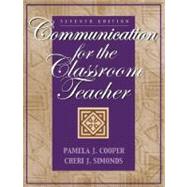
ISBN: 9780205359554 | 0205359558
Edition: 7th
Format: Paperback
Publisher: Allyn & Bacon
Pub. Date: 1/1/2003

Why Rent from Knetbooks?

Because Knetbooks knows college students. Our rental program is designed to save you time and money. Whether you need a textbook for a semester, quarter or even a summer session, we have an option for you. Simply select a rental period, enter your information and your book will be on its way!

Top 5 reasons to order all your textbooks from Knetbooks:

  • We have the lowest prices on thousands of popular textbooks
  • Free shipping both ways on ALL orders
  • Most orders ship within 48 hours
  • Need your book longer than expected? Extending your rental is simple
  • Our customer support team is always here to help
SummaryTable of Contents
This text provides prospective and current teachers with the skills and knowledge to understand, and improve their own communication behavior as well as their students'. By combining theory and practical advice, this text focuses on the reasons for using certain communication strategies and how to implement them. Communication for the Classroom Teacher covers a wide range of classroom communication issues, including interpersonal and small group communication; listening skills; verbal and nonverbal communication (from both the teacher's and stu... MORE
Prefacexv
UNIT I COMMUNICATION COMPETENCE1(112)
Foundations of Classroom Communication
7(28)
... MORE
Communication: Definition and Components
7(1)
The Nature of Communication
8(3)
Communication Is a Transactional Process
8(1)
Communication Is Complex
9(1)
Communication Is Symbolic
9(1)
Communication Has Both a Content and a Relational Component
10(1)
The Socialization Model
11(1)
Teacher Socialization
11(1)
Student Socialization
12(1)
Classroom Communication Climate
12(4)
Cultural Diversity
16(7)
Students with Special Needs
23(7)
Students with Learning Disabilities
24(1)
Students Who Are Intellectually Gifted
25(1)
Students Who Are Mainstreamed
26(1)
Physical Disabilities
26(1)
Students at Risk
27(3)
In Sum
30(2)
Activities
32(1)
Further Reading
33(2)
Interpersonal Communication
35(29)
Relationship Development
36(1)
Relationship Stages
36(1)
Communication Variables in Interpersonal Relationships
37(20)
Self-Concept
37(4)
Self-Disclosure
41(2)
Immediacy
43(3)
Communication Style
46(3)
Credibility
49(2)
Expectancy
51(6)
Parent-Teacher Conferences
57(2)
Communicating Electronically
59(2)
In Sum
61(1)
Activities
62(1)
Further Reading
63(1)
Listening
64(16)
What Is Listening?
65(1)
The Importance of Listening
65(1)
Types of Listening
66(1)
Empathy
67(1)
Predicting Accurately
67(1)
Communicating Empathy
67(1)
Barriers to Effective Listening
68(2)
Factual Distractions
68(1)
Semantic Distractions
69(1)
Mental Distractions
69(1)
Physical Distractions
70(1)
Improving Listening Skills
70(1)
Active Listening
71(2)
Paraphrasing
71(1)
Perception Checking
72(1)
Ask Questions
72(1)
Say More
72(1)
Beware of Cultural Differences
72(1)
In Sum
73(1)
Code for Listening
73(1)
Activities
74(5)
Further Reading
79(1)
Verbal and Nonverbal Communication
80(33)
Perception
80(4)
Differences in Perception
81(1)
The Process of Perception
82(1)
Perceptions and Classroom Communication
83(1)
Improving Perception Skills
83(1)
Shared Language and Meaning
84(2)
Characteristics of Language
84(1)
Meanings and Perception
85(1)
General Semantics
86(2)
Nonverbal Communication
88(1)
Nonverbal Communication and Culture
89(1)
Functions Of Nonverbal Communication In The Classroom
90(3)
Self Presentation
90(1)
Identification of Rules and Expectations
90(1)
Feedback and Reinforcement
90(1)
Liking and Affect
91(1)
Regulation of Conversational Flow
91(1)
Classroom Control
91(2)
Categories of Nonverbal Communication
93(14)
Proxemics
93(1)
Spatial Arrangements
94(4)
Environmental Factors
98(2)
Chronemics
100(1)
Physical Characteristics
100(3)
Kinesics
103(2)
Touch
105(1)
Paralanguage
106(1)
Improving Nonverbal Communication
107(1)
Love-Roderick Nonverbal Categories and Sample Teacher Behaviors
107(1)
In Sum
107(1)
Activities
108(3)
Further Reading
111(2)
UNIT II INSTRUCTIONAL STRATEGIES113(108)
Sharing Information
119(32)
The Lecture
119(1)
Variables Affecting Information Processing
120(12)
Student Variables
120(7)
Message Variables
127(4)
Principles of Information Exchange
131(1)
Communication Barriers to Effective Lecturing
132(4)
Communication Apprehension
132(4)
Preparing a Lecture
136(7)
Choose a Topic
136(1)
Narrow the Topic
136(1)
Gather Supporting Materials
137(4)
Organize the Lecture
141(2)
Practice the Lecture
143(1)
Deliver the Lecture
144(3)
Maintaining Attention
146(1)
Evaluating Your Lecture Skills
147(1)
In Sum
148(1)
Activities
148(2)
Further Reading
150(1)
Leading Classroom Discussions
151(29)
Planning the Discussion
152(1)
The Introduction
152(1)
The Body
152(1)
The Conclusion
153(1)
Characteristics of the Discussion Method
153(10)
Experiential Learning
153(1)
Emphasis on Students
153(1)
Focus on Critical Thinking
153(1)
Use of Questions
154(9)
The Role of the Student
163(10)
Student Communication Apprehension
168(1)
Identifying the Highly Communication-Apprehensive Student
169(1)
Treating the Highly Communication-Apprehensive Student
169(4)
Evaluating Your Discussion Skills
173(3)
In Sum
176(1)
Activities
177(2)
Further Reading
179(1)
Small Group Communication
180(20)
Definition of a Small Group
181(1)
Teacher Concerns
182(3)
Teacher Roles
182(1)
Collaborative Learning
182(2)
Classroom Climate
184(1)
Tasks
185(4)
Defining the Task
185(1)
Types of Tasks
185(4)
Student Concerns
189(6)
Roles
192(1)
Group Development
193(2)
Observing and Evaluating Small Groups
195(1)
In Sum
195(1)
Activities
195(3)
Further Reading
198(2)
Communicative Reading and Storytelling
200(21)
What Is Communicative Reading?
201(2)
Components of Communicative Reading
201(2)
Preparing the Selection
203(2)
Understanding the Selection
203(1)
Cutting the Selection
203(1)
Determining How the Selection Should & Read
204(1)
Marking the Script
204(1)
Introducing the Selection
205(1)
Delivering the Selection
205(1)
Evaluating Communicative Reading
206(1)
Storytelling
206(3)
Storytelling Techniques
209(1)
Choosing a Story
209(1)
Learning a Story
210(1)
Tips for Telling
210(1)
Evaluating Your Storytelling Skills
210(1)
In Sum
210(1)
Activities
211(7)
Further Reading
218(3)
Organizations
219(2)
UNIT III COMMUNICATION IMPACT221(50)
Influence
223(23)
Ethical Considerations
224(4)
Ethics Defined
224(1)
Ethics and the Teacher
224(3)
Ethical Standards
227(1)
Student Ethical Obligations
228(1)
Issues of Influence
228(12)
Classroom Management
228(1)
Creating a Supportive Climate
228(2)
Implementing a Supportive Climate
230(1)
Maintaining a Supportive Climate
231(1)
Power and Compliance
231(6)
Conflict
237(1)
Critical Reflection
238(1)
Alternative Perspective
239(1)
Practical Suggestions
240(4)
Handling Minor Misbehaviors
240(3)
Handling Disruptive Students
243(1)
In Sum
244(1)
Activities
244(1)
Further Reading
245(1)
Additional Resource
245(1)
Communication Concerns
246(25)
Sexism in the Classroom
246(9)
Curriculum Material
248(4)
Classroom Interaction
252(3)
Race and Ethnicity in the Classroom
255(8)
Cultural Dimensions
256(3)
Strategies for Change
259(4)
In Sum
263(1)
Activities
263(5)
Further Reading
268(3)
Appendix A: Systematic Observation271(8)
Appendix B: Instruments for Systematic Observation279(22)
References301(22)
Index323

Related Products


  • Communication for the Classroom Teacher
    Communication for the Classroo...
  • Communication for the Classroom Teacher
    Communication for the Classroo...
  • Communication for the Classroom Teacher
    Communication for the Classroo...
  • Communication for the Classroom Teacher
    Communication for the Classroo...


Please wait while this item is added to your cart...