FREE SHIPPING BOTH WAYS
ON EVERY ORDER!
LIST PRICE:
$75.24

Sorry, this item is currently unavailable.

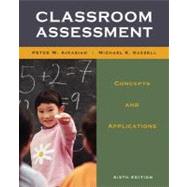
Classroom Assessment : Concepts and Applications
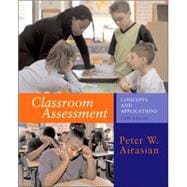
ISBN: 9780072488692 | 0072488697
Edition: 5th
Format: Paperback
Publisher: McGraw-Hill Humanities/Social Sciences/Languages
Pub. Date: 8/1/2004

Why Rent from Knetbooks?

Because Knetbooks knows college students. Our rental program is designed to save you time and money. Whether you need a textbook for a semester, quarter or even a summer session, we have an option for you. Simply select a rental period, enter your information and your book will be on its way!

Top 5 reasons to order all your textbooks from Knetbooks:

  • We have the lowest prices on thousands of popular textbooks
  • Free shipping both ways on ALL orders
  • Most orders ship within 48 hours
  • Need your book longer than expected? Extending your rental is simple
  • Our customer support team is always here to help
SummaryTable of Contents
Airasian presents complex concepts clearly so that pre-service teachers can understand them, and solidly grounds these concepts in best practice through practical, real, well-integrated examples. He talks to, not at users. The text conceives of classroom assessment in a broader way than many other texts. It focuses not only on the assessment needs of testing, grading, interpreting standardized tests, and performance assessments but also on assessment concerns in organizing a classroom at the start of school, planning and implementing instruction, and strategies of teacher self reflection. Classroom Assessment: Concepts and Applications views classroom assessment as an everyday, ongoing, integral part of teaching, not something that is separated from life in classrooms. The text is organized in a manner that follows the natural progression of teacher decision making, from organizing the class as a learning community to planning and conducting instruction to the formal evaluation of learning and, finally, to grading.
Preface
The Breadth of Classroom Assessment Purposes of Assessment
Types of Assessment Assessment, Testing, and Information
Three General Ways to Collect Data: Paper-and-Pencil, Observation, and Oral Questioning
Standardized and Nonstandardized Assessments
Good Assessments: Valid and Reliable
Ethical Issues and Responsibilities
Learning About Pupils: ... MORE
Gathering Information about Pupils
Sources of Learning about Pupils
Forming Pupil Descriptions
Concerns about Ethics and Accuracy
Improving Early Assessments
Clues to Language Disabilities
Lesson Planning and Assessment Objectives
The Instructional Process Instructional Planning
Three Levels of Educational Objectives
Three Domains of Objectives
Lesson Plans
Improving the Tie Between Planning and Assessment
Planning, Disabilities, and Accommodations
Other Sources of Educational Objectives and Assessments
Textbook Objectives and Assessments
Statewide Assessments
Implications of High-Stakes
Testing No Child Left Behind
Assessment During Instruction
Assessment Task During Instruction
Validity and Reliability in Instructional
Assessment Improving
Assessment During Instruction
Questioning Accommodations
During Instruction
Official Assessments Formative and Summative Assessments
The Logic of Formal Assessment
Planning an Official Assessment
Preparing Pupils for Official Assessments
Paper-and-Pencil Testing
Selection and Supply Test Items
Higher Level Questions
Guidelines for Writing and Critiquing
Test Items Accommodations: Substitutions for Paper-and-Pencil
Improving Paper-and-Pencil Assessments
Assembling Tests
Administering Tests
Issues of Cheating Scoring
Paper-and-Pencil Tests
Analyzing Item Validity
Discussing Test Results with Pupils
Testing Pupils with Disabilities
Performance Assessments
Performance Assessments in Schools
Developing Performance Assessments
Anecdotal Records, Checklists, and Rating Scales
Rubrics Portfolios Validity and Reliability of Performance Assessments
Grading Rationale and Difficulties of Grading
Grading as Judgement
Four Types of Comparison for Grading
Grading for Cooperative
Learning and Pupils with Disabilities
Deciding What to Grade
Summarizing Varied Types of Assessment
Two Approaches to Assigning Grades
Other Methods of Reporting Pupil Progress
Commercial Standardized Achievement Tests
How Commercial Achievement Tests are Created
Administering the Test
Interpreting Scores
Three Examples of Test Interpretation
The Validity of Commercial Achievement Tests
Reporting Results to Parents
Classroom Assessment: Summing Up
Standards for Teacher Competence in Educational Assessment of Students
Taxonomy of Educational Objectives (Major Categories and Illustrative Objectives)
Sample Individual Education Plan
Statistical Applications for Classroom Assessment
Glossary
References
Name Index
Subject Index
Table of Contents provided by Publisher. All Rights Reserved.

Related Products


  • Classroom Assessment
    Classroom Assessment
  • Classroom Assessment
    Classroom Assessment
  • Classroom Assessment with PowerWeb Bind-In Card
    Classroom Assessment with Powe...
  • Outlines and Highlights for Classroom Assessment by Airasian, Isbn : 9780073403762
    Outlines and Highlights for Cl...


Please wait while this item is added to your cart...