FREE SHIPPING BOTH WAYS
ON EVERY ORDER!
LIST PRICE:
$188.95

OUR PRICE:
$11.74

You may extend rentals at any time.


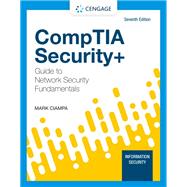
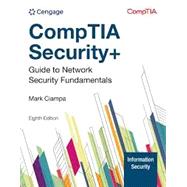
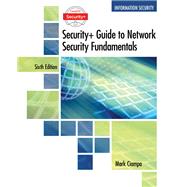
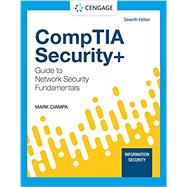
Security+ Guide to Network Security Fundamentals
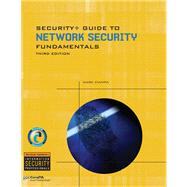
ISBN: 9781428340664 | 1428340661
Edition: 3rd
Format: Paperback
Publisher: Cengage Learning
Pub. Date: 11/11/2008

Why Rent from Knetbooks?

Because Knetbooks knows college students. Our rental program is designed to save you time and money. Whether you need a textbook for a semester, quarter or even a summer session, we have an option for you. Simply select a rental period, enter your information and your book will be on its way!

Top 5 reasons to order all your textbooks from Knetbooks:

  • We have the lowest prices on thousands of popular textbooks
  • Free shipping both ways on ALL orders
  • Most orders ship within 48 hours
  • Need your book longer than expected? Extending your rental is simple
  • Our customer support team is always here to help
SummaryTable of Contents
Now in its third edition, the best-selling SECURITY+ GUIDE TO NETWORK SECURITY FUNDAMENTALS provides the most up-to-date industry information, reflecting the changes in security that have occurred since the most recent CompTIA Security+ objectives were created. The book covers all of the new CompTIA Security+ 2008 exam objectives and maps to the new Security+ 2008 exam. This updated edition features many all-new topics, including topics new to the CompTIA exams like cross site scripting, SQL injection, rootkits, and virtualization, as well as topics of increasing importance in the industry as a whole, like the latest breeds of attackers, Wi-Fi Protected Access 2, and Microsoft Windows Vista security.
Introduction to Security
Challenges of Securing Information
Today+s security attacks
Difficulties in defending against attacks
What Is Information Security?
Defining information security
Information security terminology
Understanding the importance of information security
Preventing data theft
Thwart... MORE
Avoiding legal consequences
Maintaining Productivity
Foiling Cyberterrorism
Who Are the Attackers?
Hackers
Script Kiddies
Spies
Employees
Cybercriminals
Cyberterrorists
Attacks and Defenses
Steps of an attack
Defenses against attacks
Layering
Limiting
Diversity
Obscurity
Simplicity
Surveying Information Security Careers and the CompTIA Security+ Certification
System Threats and Risks
Software-Based Attacks {1.1)
Infecting Malware
Viruses (1.1)
Worms (1.1)
Concealing Malware
Trojan Horses (1.1)
Rootkits (1.1)
Logic Bombs (1.1)
Privilege escalation (1.1)
Profiting Malware
Spam (1.1)
Spyware (1.1)
Adware (1.1)
Keyloggers
Botnets (1.1)
Hardware Attacks {1.2}
BIOS (1.2)
USB devices (1.2)
Removable storage (1.2)
Network attached storage (1.2)
Cell phones (1.2)
Attacks on Virtualized Systems (1.6)
What is virtualization?
Attacks on virtual systems
Protecting Systems
Hardening the Operating System {1.3}
Managing operating system updates
Hot fixes (1.3)
Service packs (1.3)
Patches (1.3)
Patch management techniques (1.3)
Protecting the operating system through procedures
Group policies (1.3)
Security templates (1.3)
Configuration baselines (1.3)
Managing Application Security
Protecting the web browser (1.4)
ActiveX (1.4)
Java (1.4)
Scripting (1.4)
Cookies (1.4)
Input validation (1.4)
Cross-site scripting (1.4)
Protecting communication applications
Buffer overflows (1.4)
SMTP open relays (1.4)
Instant messaging (1.4)
P2P (1.4)
Applying System Security Applications
Host Intrusion Detection Systems (HIDS) (1.5)
Personal software firewalls (1.5)
Antivirus (1.5) iv. Anti-Spam (1.5) v. Popup blockers (1.5) NETWORK SECURITY
Network Vulnerabilities and Attacks
Liabilities in Networks
Media Liabilities
Vampire taps (2.6)
Cable placement
Wireless Network Liabilities
Data emanation (2.7)
SSID broadcast (2.7)
Weak encryption (2.7)
Attacks on Networks
Protocol-based attacks {2.1}
Antiquated protocols (2.1)
DNS poisoning (2.1)
ARP Poisoning (2.1)
Impersonation attacks
TCP/IP hijacking (2.1)
Spoofing (2.1)
Man in the middle (2.1)
Replay (2.1)
Wireless attacks
War driving (2.7)
Blue jacking (2.7)
Blue snarfing (2.7)
Rogue access points (2.7) iv. Other attacks {2.1}
Null sessions (2.1)
DOS (2.1)
DDOS (2.1)
Kiting (2.1)
Network Defenses
Creating a Secure Network
Security through network technologies
Network Address Translation (NAT) (2.2)
Network Access Control (NAC) (2.2)
Security through network design
Demilitarized zones (DMZ) (2.2)
Virtual LAN (VLAN) (2.2)
Virtual private network
Subnetting (2.2)
Network interconnections (2.2)
Convergence [? CompTIA has +Telephony+] (2.2)
Network Device Vulnerabilities {2.5}
Privilege escalation (2.5)
Weak passwords (2.5)
Back doors (2.5)
Def
Table of Contents provided by Publisher. All Rights Reserved.

Related Products


  • Security+ Guide to Network Security Fundamentals, 3rd Edition
    Security+ Guide to Network Sec...
  • Security+ Guide to Network Security Fundamentals
    Security+ Guide to Network Sec...
  • Security+ Guide To Network Security Fundamentals
    Security+ Guide To Network Sec...
  • Security+ Coursenotes for Ciampa's Security+ Guide to Network Security Fundamentals, 4th
    Security+ Coursenotes for Ciam...
  • Bundle Spl Ck Security+ Guide To Network Security Fundls, 2E
    Bundle Spl Ck Security+ Guide ...
  • Security+ Course Notes
    Security+ Course Notes
  • Virtualization Labs for Ciampa's Security+ Guide to Network Security Fundamentals
    Virtualization Labs for Ciampa...
  • Pkl/Security+ 2E & Update Supplement Bursting Package
    Pkl/Security+ 2E & Update Supp...
  • Security+ Guide to Network Security Fundamentals
    Security+ Guide to Network Sec...
  • Security+ Guide to Networking Security Fundamentals
    Security+ Guide to Networking ...


Please wait while this item is added to your cart...