FREE SHIPPING BOTH WAYS
ON EVERY ORDER!
LIST PRICE:
$53.95

OUR PRICE:
$13.24

You may extend rentals at any time.


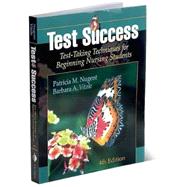
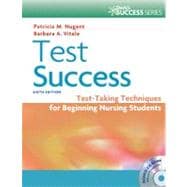
Test Success : Test Taking Techniques for Beginning Nursing Students

ISBN: 9780803611627 | 0803611625
Edition: 4th
Format: Paperback
Publisher: F a Davis Co
Pub. Date: 3/1/2004

Why Rent from Knetbooks?

Because Knetbooks knows college students. Our rental program is designed to save you time and money. Whether you need a textbook for a semester, quarter or even a summer session, we have an option for you. Simply select a rental period, enter your information and your book will be on its way!

Top 5 reasons to order all your textbooks from Knetbooks:

  • We have the lowest prices on thousands of popular textbooks
  • Free shipping both ways on ALL orders
  • Most orders ship within 48 hours
  • Need your book longer than expected? Extending your rental is simple
  • Our customer support team is always here to help
SummaryTable of Contents
Test Success is the only book that offers students solid, reliable, advice about studying for nursing exams to develop the skills and confidence they need to maximize success. They will learn time management, effective studying habits, and critical problem solving. The book's proven techniques for enhancing performance, along with classroom-tested practice questions, will guide students through the mastery of the examination process.
Illustration Creditsxiii
How to Use This Book to Maximize Successxv
1 Empowerment1(8)
Develop a Positive Mental Attitude,
1(5)
... MORE
Establish a Positive Internal Locus of Control,
2(1)
Challenge Negative Thoughts,
2(1)
Use Controlled Breathing (Diaphragmatic Breathing),
3(1)
Desensitize Yourself to the Fear Response,
4(1)
Perform Muscle Relaxation,
5(1)
Use Imagery,
5(1)
Overprepare for a Test,
6(1)
Exercise Regularly,
6(1)
Establish Control Before and During the Test,
6(2)
Manage Your Daily Routine Before the Test,
7(1)
Manage Your Study Habits Before the Test,
7(1)
Manage Your Travel the Day of the Test,
7(1)
Manage the Supplies You Need for the Test,
7(1)
Manage Your Personal Comfort,
7(1)
Manage the Test Environment,
8(1)
Maintain a Positive Mental Attitude,
8(1)
Manage Your Physical and Emotional Responses,
8(1)
Summary,
8(1)
2 Critical Thinking9(10)
Definition of Critical Thinking,
10(1)
Critical Thinking in Nursing,
10(3)
Left-Brain and Right-Brain Hemisphere Information Functioning,
11(1)
Clinical Judgments,
12(1)
Levels of Critical Thinking,
12(1)
Practice Critical Thinking,
13(4)
Apply Critical Thinking to Multiple-Choice Questions,
14(3)
Summary,
17(1)
Answers and Rationales for Sample Items in Chapter 2,
17(2)
3 Time Management19(16)
Time Management Equals Self-Management,
19(1)
Take the Time to Assess Your Time Management Abilities,
19(3)
Assessment of Inconsistencies Between Values and Behavior,
19(1)
Personal Time/Activity Journal,
20(1)
Self-Assessment of Barriers to Productivity,
21(1)
Maximize Your Productivity,
22(12)
Identify Goals and Priorities,
23(1)
Get Organized,
24(2)
Develop Self-Discipline,
26(4)
Saying NO,
27(1)
Time Traps,
28(2)
Motivation,
30(1)
Achieve a Personal Balance,
30(1)
Delegate,
31(1)
Overcome Procrastination,
32(2)
Summary,
34(1)
4 Study Techniques35(16)
General Study Techniques,
35(4)
Establish a Routine,
35(1)
Set Short- and Long-Term Goals,
36(1)
Simulate a School Environment,
36(1)
Control Internal and External Distractors,
36(1)
Prepare for Class,
37(1)
Take Class Notes,
37(1)
Identify Learning Domains,
37(1)
Cognitive Domain,
38(1)
Psychomotor Domain,
38(1)
Affective Domain,
38(1)
Capture Moments of Time,
38(1)
Use Appropriate Resources,
38(1)
Balance Sacrifices and Rewards,
39(1)
Specific Study Techniques,
39(9)
Cognitive Levels of Nursing Questions,
39(1)
Knowledge Questions,
40(2)
Memorization/Repetition,
41(1)
Alphabet Cues,
41(1)
Acronyms,
41(1)
Acrostics,
42(1)
Comprehension Questions,
42(2)
Explore "Whys" and "Hows,"
43(1)
Study in Small Groups,
43(1)
Application Questions,
44(1)
Relate New Information to Prior Learning,
45(1)
Recognize Commonalities,
45(1)
Analysis Questions,
45(7)
Recognize Differences,
46(1)
Practice Test Taking,
46(2)
Answers and Rationales for Sample Items in Chapter 4,
48(3)
5 The Multiple-Choice Question51(14)
Components of a Multiple-Choice Question,
52(1)
The Stem,
52(4)
The Stem That Is a Complete Sentence,
53(1)
The Stem That Is an Incomplete Sentence,
53(1)
The Stem with a Positive Polarity,
54(1)
The Stem with a Negative Polarity,
55(1)
The Options,
56(4)
The Option That Is a Sentence,
56(1)
The Option That Completes the Sentence Begun in the Stem,
57(1)
The Option That Is an Incomplete Sentence,
58(1)
The Option That Is a Word,
59(1)
Answers and Rationales for Sample Items in Chapter 5,
60(5)
6 The Nursing Process65(32)
Assessment,
65(5)
Collect Data,
66(3)
Verify Data,
69(1)
Communicate Information About Assessments,
70(1)
Analysis/Nursing Diagnosis,
70(4)
Cluster Data,
71(1)
Interpret Data,
72(1)
Collect Additional Data,
72(1)
Identify and Communicate Nursing Diagnoses,
73(1)
Planning,
74(4)
Identify Goals,
75(1)
Project Expected Outcomes,
75(1)
Set Priorities,
76(1)
Identify Interventions,
76(2)
Ensure That Health-Care Needs Will Be Met Appropriately,
78(1)
Modify the Plan of Care as Needed,
78(1)
Collaborate with Other Health Team Members,
79(1)
Implementation,
79(6)
Implement Nursing Care,
81(4)
Evaluation,
85(4)
Identify Patient Responses (Actual Outcomes),
85(2)
Compare Actual Outcomes with Expected Outcomes to Determine Goal Achievement, 86
Analyze Factors That Affect Actual Outcomes of Care,
87(1)
Modify the Plan of Care,
87(2)
Answers and Rationales for Sample Items in Chapter 6,
89(8)
Assessment,
89(2)
Analysis/Nursing Diagnosis,
91(1)
Planning,
92(1)
Implementation,
93(2)
Evaluation,
95(2)
7 Test Taking Techniques97(28)
Specific Test-Taking Techniques,
97(17)
Identify Key Words in the Stem That Indicate Negative Polarity,
98(1)
Identify Key Words in the Stem That Set a Priority,
99(2)
Identify Clues in the Stem,
101(1)
Identify the Central Person in the Question,
102(2)
Identify Patient-Centered Options,
104(1)
Identify Specific Determiners in Options,
105(1)
Identify Opposites in Options,
106(2)
Identify Equally Plausible or Unique Options,
108(1)
Identify the Global Option,
109(1)
Identify Duplicate Facts Among the Options,
110(1)
Identify Options That Deny Patient Feelings, Concerns, and Needs,
111(1)
Use Multiple Test-Taking Techniques,
112(2)
General Test-Taking Techniques,
114(5)
Follow Your Regular Routine the Night Before a Test,
114(1)
Arrive on Time for the Examination,
114(1)
Bring the Appropriate Tools,
114(1)
Understand All the Directions for the Test Before Starting,
115(1)
Manage the Allotted Time to Your Advantage,
115(1)
Concentrate on the Simple Before the Complex,
116(1)
Avoid Reading into the Question,
116(1)
Make Educated Guesses,
117(1)
Maintain a Positive Mental Attitude,
118(1)
Check Your Answers and Answer Sheet,
118(1)
Answers and Rationales for Sample Items in Chapter 7,
119(6)
8 Testing Formats Other Than Multiple-Choice Questions125(34)
Structured-Response Questions,
126(6)
Multiple Multiple-Choice Questions,
126(1)
True-False Questions,
127(4)
Matching Questions,
131(1)
Restricted-Response Questions,
132(2)
Completion Questions,
133(1)
Short-Answer Questions,
133(1)
Extended Essay Questions,
134(2)
Learning to Write,
135(1)
Writing to Learn,
136(1)
Performance Appraisal,
136(3)
The Performance of a Procedure,
137(1)
The Performance of Part of a Procedure Via a Realistic Image,
137(2)
Alternate Question Formats Reflective of NCLEX,
139(9)
Summary,
148(1)
Answers and Rationales for Sample Items in Chapter 8,
149(10)
9 Computer Applications in Education and Evaluation159(6)
The Computer as a Resource Tool,
160(1)
The Computer as an Information Manager,
160(1)
The Computer as an Instructor,
160(1)
The Computer as a Tool for Distance Education,
161(1)
The Computer as a Simulator,
162(1)
The Computer as an Evaluator,
162(1)
Summary,
163(2)
10 Fundamentals of Nursing Practice Tests165(30)
Introduction to Practice Tests,
165(30)
Practice Test A,
166(10)
Answers and Rationales for Practice Test A,
171(5)
Practice Test B,
176(9)
Answers and Rationales for Practice Test B,
180(5)
Practice Test C,
185(11)
Answers and Rationales for Practice Test C,
189(6)
11 Analyze Your Test Performance195(10)
How to Use the Test-Analysis Tools,
196(3)
Identify Information Processing Errors,
197(1)
Identify Knowledge Deficits,
198(1)
Corrective Action Plan,
199(2)
Corrective Action Guide for Information Processing Errors,
199(2)
Corrective Action to Address Problem Personal Performance Trends,
201(2)
Summary,
203(2)
12 Practice Questions with Answers and Rationales205(182)
The World of the Patient and Nurse,
205(13)
Questions,
206(6)
Rationales,
212(6)
Common Theories Related to Meeting Patients' Basic Human Needs,
218(12)
Questions,
218(6)
Rationales,
224(6)
Communication and Meeting Patients' Emotional Needs,
230(13)
Questions,
231(6)
Rationales,
237(6)
Physical Assessment of Patients,
243(12)
Questions,
244(5)
Rationales,
249(6)
Meeting Patients' Physical Safety and Mobility Needs,
255(13)
Questions,
256(6)
Rationales,
262(6)
Meeting Patients' Hygiene, Comfort, Rest, and Sleep Needs,
268(12)
Questions,
268(6)
Rationales,
274(6)
Meeting Patients' Fluid and Nutritional Needs,
280(12)
Questions,
280(6)
Rationales,
286(6)
Meeting Patients' Elimination Needs,
292(13)
Questions,
292(6)
Rationales,
298(7)
Meeting Patients' Oxygen Needs,
305(13)
Questions,
305(6)
Rationales,
311(7)
Administration of Medications,
318(14)
Questions,
318(7)
Rationales,
325(7)
Meeting the Needs of Perioperative Patients,
332(12)
Questions,
332(6)
Rationales,
338(6)
Meeting Patients' Microbiologic Safety Needs,
344(14)
Questions,
345(6)
Rationales,
351(7)
Meeting the Needs of Patients in the Community Setting,
358(14)
Questions,
358(6)
Rationales,
364(8)
Pharmacology,
372(15)
Questions,
373(6)
Rationales,
379(8)
Bibliography,387(2)
Index,389

Related Products


  • Test Success : Test-Taking Techniques for Beginning Nursing Students
    Test Success : Test-Taking Tec...
  • Test Success : Test-Taking Techniques for Beginning Nursing Students
    Test Success : Test-Taking Tec...
  • Nursing Diagnosis Manual: Planning, Individualizing and Documenting Client Care
    Nursing Diagnosis Manual: Plan...
  • Test Success : Test-Taking Techniques for Beginning Nursing Students
    Test Success : Test-Taking Tec...
  • Test Success: Test-Taking Techniques for Beginning Nursing Students (Book with CD-ROM)
    Test Success: Test-Taking Tech...


Please wait while this item is added to your cart...