FREE SHIPPING BOTH WAYS
ON EVERY ORDER!
LIST PRICE:
$50.67

Sorry, this item is currently unavailable.

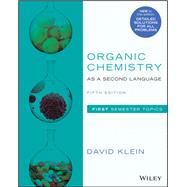
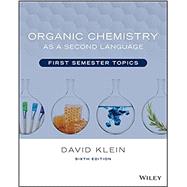
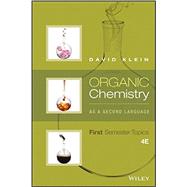
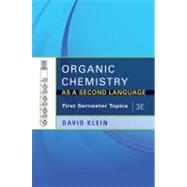
Organic Chemistry I as a Second LanguageTM: Translating the Basic Concepts, 2nd Edition
ISBN: 9780470129296 | 0470129298
Format: Paperback
Publisher: WILEY
Pub. Date: 6/1/2007

Why Rent from Knetbooks?

Because Knetbooks knows college students. Our rental program is designed to save you time and money. Whether you need a textbook for a semester, quarter or even a summer session, we have an option for you. Simply select a rental period, enter your information and your book will be on its way!

Top 5 reasons to order all your textbooks from Knetbooks:

  • We have the lowest prices on thousands of popular textbooks
  • Free shipping both ways on ALL orders
  • Most orders ship within 48 hours
  • Need your book longer than expected? Extending your rental is simple
  • Our customer support team is always here to help
SummaryTable of Contents
Get a Better Grade in Organic Chemistry Organic Chemistry may be challenging, but that doesn't mean you can't get the grade you want. With David Klein's Organic Chemistry as a Second Language: Translating the Basic Concepts, you'll be able to better understand fundamental principles, solve problems, and focus on what you need to know to succeed. Here's how you can get a better grade in Organic Chemistry: Understand the Big Picture. Organic Chemistry as a Second Language points out the major principles in Organic Chemistry and explains why they ... MORE
Introduction
Bond-Line Drawings
How to Read Bond-Line Drawings
How to Draw Bond-Line Drawings
Mistakes to Avoid
More Exercises
Identifying Formal Charges
Finding Lone Pairs That Are Not Drawn
Resonance
What Is Resonance?
Curved Arrows: The Tools for Drawing Resonance Structu... MORE
The Two Commandments
Drawing Good Arrows
Formal Charges in Resonance Structures
Drawing Resonance Structures--Step by Step
Drawing Resonance Structures--By Recognizing Patterns
A Lone Pair Next to a Pi Bond
A Lone Pair Next to a Positive Charge
A Pi Bond Next to a Positive Charge
A Pi Bond Between Two Atoms, Where One of Those Atoms Is Electronegative (N, O, etc.)
Pi Bonds Going All the Way Around a Ring
Assessing the Relative Importance of Resonance Structures
Acid-Base Reactions
Factor 1--What Atom Is the Charge on?
Factor 2--Resonance
Factor 3--Induction
Factor 4--Orbitals
Ranking the Four Factors
Quantitative Measurement (pKa values)
Predicting the Position of Equilibrium
Showing a Mechanism
Geometry
Orbitals and Hybridization States
Geometry
Nomenclature
Functional Group
Unsaturation
Naming the Parent Chain
Naming Substituents
Stereoisomerism
Numbering
Common Names
Going from a Name to a Structure
Conformations
How to Draw a Newman Projection
Ranking the Stability of Newman Projections
Drawing Chair Conformations
Placing Groups on the Chair
Ring Flipping
Comparing the Stability of Chairs
Don't Be Confused by the Nomenclature
Configurations
Locating Stereocenters
Determining the Configuration of a Stereocenter
Nomenclature
Drawing Enantiomers
Diastereomers
Meso Compounds
Drawing Fischer Projections
Optical Activity
Mechanisms
Curved Arrows
Arro w Pushing
Drawing Intermediates
Nucleophiles and Electrophiles
Bases Versus Nucleophiles
The Regiochemistry Is Contained Within the Mechanism
The Stereochemistry Is Contained Within the Mechanism
A List of Mechanisms
Substitution Reactions
The Mechanisms
Factor 1--The Electrophile (Substrate)
Factor 2--The Nucleophile
Factor 3--The Leaving Group
Factor 4--The Solvent
Using All Four Factors
Substitution Reactions Teach Us Some Important Lessons
Elimination Reactions
Mechanisms (E1 and E2)
Factor 1--The Substrate
Factor 2--The Base
Factor 3--The Leaving Group
Factor 4--Solvent Effects
Using All of the Factors
Elimination Reactions--Regiochemistry and Stereochemistry
Addition Reactions
Terminology Describing Regiochemistry
Terminology Describing Stereochemistry
Adding H and H
Adding H and X, Markovnikov
Adding H and Br, Anti-Markovnikov
Adding H and OH, Markovnikov
Adding H and OH, Anti-Markovnikov
Synthesis Techniques
Adding Br and Br; Adding Br and OH
Adding OH and OH, Anti
Adding OH and OH, Syn
Oxidati ve Cleavage of an Alkene
Predicting Products
General Tips for Predicting Products
Getting Practice
Substitution Versus Elimination Reactions
Looking Forward
Synthesis
One-step Syntheses
Multistep Syntheses
Retrosynthetic Analysis
Creating Your Own Problems
Answer Key
Index
Table of Contents provided by Publisher. All Rights Reserved.

Related Products


  • Organic Chemistry I As a Second Language: First Semester Topics, 3rd Edition
    Organic Chemistry I As a Secon...
  • Organic Chemistry I as a Second Language: Translating the Basic Concepts
    Organic Chemistry I as a Secon...


Please wait while this item is added to your cart...