FREE SHIPPING BOTH WAYS
ON EVERY ORDER!
LIST PRICE:
$124.60

OUR PRICE:
$26.06

You may extend rentals at any time.


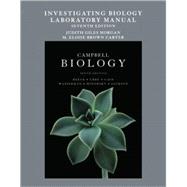
Investigating Biology Lab Manual

ISBN: 9780321668219 | 0321668219
Edition: 7th
Format: Spiral Bound
Publisher: Benjamin Cummings
Pub. Date: 10/8/2010

Why Rent from Knetbooks?

Because Knetbooks knows college students. Our rental program is designed to save you time and money. Whether you need a textbook for a semester, quarter or even a summer session, we have an option for you. Simply select a rental period, enter your information and your book will be on its way!

Top 5 reasons to order all your textbooks from Knetbooks:

  • We have the lowest prices on thousands of popular textbooks
  • Free shipping both ways on ALL orders
  • Most orders ship within 48 hours
  • Need your book longer than expected? Extending your rental is simple
  • Our customer support team is always here to help
SummaryTable of ContentsAuthor Biography
With its distinctive investigative approach to learning, this best-selling laboratory manual encourages you to participate in the process of science and develop creative and critical reasoning skills. You are invited to pose hypotheses, make predictions, conduct open-ended experiments, collect data, and apply the results to new problems. The Seventh Edition emphasizes connections to recurring themes in biology, including structure and function, unity and diversity, And The overarching theme of evolution. Select tables from the lab manual are pr... MORE

LABS

1. Scientific Investigation

2. Microscopes and Cells

3. Diffusion and Osmosis

4. Enzymes

5. Cellular Respiration and Fermentation

6. Photosynthesis

7. Mitosis and Meiosis

8. Mendelian Genetics I: Fast Plants

9. Mendelian Genetics II: Drosophila

... MORE

11. Population Genetics I: The Hardy-Weinberg Theorem

12. Population Genetics II: Determining Genetic Variation

13. Bacteriology

14. Protists and Fungi

15. Plant Diversity I: Nonvascular Plants (Bryophytes) and Seedless Vascular Plants

16. Plant Diversity II: Seed Plants

17. Molecular Phylogeny of Plants

18. Animal Diversity I: Porifera, Cnidaria, Platyhelminthes, Annelida, Mollusca

19. Animal Diversity II: Nematoda, Arthropoda, Echinodermata, Chordata

20. Plant Anatomy

21. Plant Growth

22. Vertebrate Anatomy I: The Skin and Digestive System

23. Vertebrate Anatomy II: The Circulatory and Respiratory Systems

24. Vertebrate Anatomy III: The Excretory, Reproductive, and Nervous Systems

25. Animal Development

26. Animal Behavior

27. Ecology I: Terrestrial Ecology

28. Ecology II: Computer Simulations of a Pond Ecosystem


APPENDIXES

A Scientific Writing and Communication

B Chi-Square Test

C Terminology and Techniques for Dissection

D Calculations and Answers to Problems for Lab Topic 12


Color Plates


Jane B. Reece
As Neil Campbell’s longtime collaborator, Jane Reece has participated in every edition of BIOLOGY. Earlier, Jane taught biology at Middlesex County College and Queensborough Community College. Her research as a doctoral student and postdoc focused on genetic recombination in bacteria. Besides her work on BIOLOGY, she has been a coauthor on Biology: Concepts & Connections, Essential Biology, and The World of the Cell.
 
Lisa A. Urry
Lisa Urry (Units 1-3) is a professor and developmental biologist, and recent Chair of the Biology Department, at Mills College. After graduating from Tufts University with a double major in Biology and French, Lisa completed her Ph.D. in molecular and developmental biology at MIT. She has published a number of research papers, most of them focused on gene expression during embryonic and larval development in sea urchins. Lisa is also deeply committed to promoting opportunities for women in science education and research.
 
Michael L. Cain
Michael Cain (Units 4 and 5) is an ecologist and evolutionary biologist who is now writing full time. Michael earned a joint degree in Biology and Math at Bowdoin College, an M.Sc. from Brown University, and a Ph.D. in Ecology and Evolutionary Biology from Cornell University. As a faculty member at New Mexico State University and Rose-Hulman Institute of Technology, he taught a wide range of courses including introductory biology, ecology, evolution, botany, and conservation biology. . Michael is the author of dozens of scientific papers on topics that include foraging behavior in insects and plants, long-distance seed dispersal, and speciation in crickets. In addition to his work on Campbell BIOLOGY, Michael is also the lead author of an ecology textbook.
 
Steven A. Wasserman
Steve Wasserman (Unit 7) is a professor at the University of California, San Diego (UCSD). He earned his A.B. in Biology from Harvard University and his Ph.D. in Biological Sciences from MIT. Through his research on regulatory pathway mechanisms in the fruit fly Drosophila, Steve has contributed to the fields of developmental biology, reproduction, and immunity. As a faculty member at the University of Texas Southwestern Medical Center and UCSD, he has taught genetics, development, and physiology to undergraduate, graduate, and medical students. He has also served as the research mentor for more than a dozen doctoral students and more than 50 aspiring scientists at the undergraduate and high school levels. Steve has been the recipient of distinguished scholar awards from both the Markey Charitable Trust and the David and Lucille Packard Foundation. In 2007, he received UCSD’s Distinguished Teaching Award for undergraduate teaching.
 
Peter V. Minorsky
Peter Minorsky (Unit 6) is a professor at Mercy College in New York, where he teaches evolution, ecology, botany, and introductory biology. He received his B.A. in Biology from Vassar College and his Ph.D. in Plant Physiology from Cornell University. He is also the science writer for the journal Plant Physiology. After a postdoctoral fellowship at the University of Wisconsin at Madison, Peter taught at Kenyon College, Union College, Western Connecticut State University, and Vassar College. He is an electrophysiologist who studies plant responses to stress. Peter received the 2008 Award for Teaching Excellence at Mercy College.


Robert B. Jackson
Rob Jackson (Unit 8) is a professor of biology and Nicholas Chair of Environmental Sciences at Duke University. Rob holds a B.S. in Chemical Engineering from Rice University, as well as M.S. degrees in Ecology and Statistics and a Ph.D. in Ecology from Utah State University. Rob directed Duke’s Program in Ecology for many years and just finished a term as the Vice President of Science for the Ecological Society of America. Rob has received numerous awards, including a Presidential Early Career Award in Science and Engineering from the National Science Foundation. He also enjoys popular writing, having published a trade book about the environment, The Earth Remains Forever, and two books of poetry for children, Animal Mischief and Weekend Mischief.
 

Related Products


  • Biological Science
    Biological Science
  • Biological Science Plus MasteringBiology with eText -- Access Card Package
    Biological Science Plus Master...
  • Biological Science Vol. 1 : The Cell, Genetics, and Development
    Biological Science Vol. 1 : Th...
  • Biological Science Vol. 2 : Evolution, Diversity, and Ecology
    Biological Science Vol. 2 : Ev...
  • Biological Science Volume 2
    Biological Science Volume 2
  • Biological Science Volume 2
    Biological Science Volume 2
  • Biological Science Volume 2 with MasteringBiology
    Biological Science Volume 2 wi...
  • Biological Science Volume 3
    Biological Science Volume 3
  • Biological Science Volume 3
    Biological Science Volume 3
  • Biological Science Volume 3
    Biological Science Volume 3


Please wait while this item is added to your cart...