FREE SHIPPING BOTH WAYS
ON EVERY ORDER!
LIST PRICE:
$122.80

OUR PRICE:
$19.24

You may extend rentals at any time.


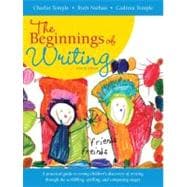
The Beginnings of Writing

ISBN: 9780205501847 | 0205501842
Edition: 4th
Format: Paperback
Publisher: Pearson
Pub. Date: 9/17/2012

Why Rent from Knetbooks?

Because Knetbooks knows college students. Our rental program is designed to save you time and money. Whether you need a textbook for a semester, quarter or even a summer session, we have an option for you. Simply select a rental period, enter your information and your book will be on its way!

Top 5 reasons to order all your textbooks from Knetbooks:

  • We have the lowest prices on thousands of popular textbooks
  • Free shipping both ways on ALL orders
  • Most orders ship within 48 hours
  • Need your book longer than expected? Extending your rental is simple
  • Our customer support team is always here to help
SummaryTable of ContentsAuthor Biography
In The Beginnings of Writing, the authors give the clearest, most comprehensive source on young children's development of writing, illustrating every concept with student artifacts. From scribbles and invented spelling to composition, this book also presents the most careful attention to children's development available, illuminating what they are trying to do as they write. Using this highly popular, well-respected book as a guide, teachers gain a practical, clear understanding of each child's present challenges and successes as (s)he develops... MORE

Preface

Chapter One: A Child Discovers How to Write

YUTS A LADE YET FEHEG AD HE KOT FLEPR

YUTS A LADE and You

What’s Next?


SECTION ONE: The Beginnings of Writing


Chapter Two: The Beginnings of Handwriting

The History of... MORE

The Evolution of Handwriting


Chapter Three: Learning to Write at the Level of Letters

Introduction

      The Precursors of Writing

Discovering the Basics of the Writing System

      Children and Iconic Writing

      Children and Syllabic Writing

      The Appearance of Letters:  Graphic Principles

Strategies for Early Writing

Encouraging Children to Make Print

      Providing Models of Writing

      Suggestions That Get Children Writing

Handwriting in the Curriculum

Assessing and Teaching Handwriting

      Handwriting Assessments

      Handwriting Instruction Programs

Conclusion


SECTION TWO: The Beginnings of Spelling


Chapter Four: What is there to learn about English spelling?

Introduction

      The Disappointment of English

How We Make Speech Sounds

      What are Phonemes, Really?

      How We Make Speech Sounds

      How Vowels Are Made

      How Vowels Are Represented in IPA

      How Consonants Are Made

The Development of English Spelling

      Runes Were Alphabet Letters

      The Coming of the Roman Alphabet

      The Norman Invasion

Steam Radiators, Minims, U’s, O’s, and N’s

Long Vowels, Short Vowels, and the Great Vowel Shift

Latin and (and in) English

Printing and the (Almost) Standardization of English Spelling

Toward Modern Spelling

English and the World

Greek and Latin Continue to Influence English

English Spelling and English Language Learners

Conclusion


Chapter Five: A Close Look at Children’s Invented Spelling

Introduction

A Progression of Spelling Development

      Prephonemic Spelling

      Early Phonemic spelling

      Letter-Name Spelling

      Transitional Spelling


Chapter Six: Helping Children Make Progress in Spelling

Introduction

Assessing Children’s Spelling Development

      Spelling Knowledge Inventory

      The Gentry Spelling Grade-Level Test

Helping Children Make Progress in Spelling

      For the Prephonemic Speller

      For the Early Phonemic Speller

      For the Letter-Name Speller

      For the Transitional Speller

Teaching Spelling Words

Working with English Language Learners

Conclusion


SECTION THREE: The Beginnings of Composition


Chapter Seven

Introduction

Composition: Who Defined Our Choices?

How Did the Teaching of Writing Evolve?

Children Discover the Forms and Functions of Composition

Self, Audience, Topic, and Purpose: A Menu of Writing Forms

      The Expressive Function

      The Poetic Function

      The Transactional Function

Conclusion


Chapter Eight: Writing in the Expressive Mode

Introduction

A Variety of Expressive Writing Forms

Assumptions About Expressive Writing: Symbol Systems and Thinking

Concerns About Expressive Writing in the Classroom

Classroom Strategies that Promote Expressive Writing

Working with English Language Learners

Conclusion  (needs to be added)

Useful Teacher Resources


Chapter Nine: Writing in the Poetic Mode

Introduction

Children Write Stories: Development and Instruction

Stages and Interpretations

      Caveats and Considerations

Nine Intermediate Forms: Developing Story Structures

      Labels

      Statements

      No Structure

      Descriptive Sequence

      Action Sequence

      Reactive Sequence

      Goal-directed 1

      Goal-directed 2

      Goal-directed 3

      Goal directed 4

Joey’s Works:  A First Grader Learns to Write Stories

Sarah’s Works: Literature Influences Story Development

Helping Children Write Stories

      Teaching the Structure of Stories

      Outer Actions and Inner States:  Souriau’s Dramatic Roles

Useful Ways of Assessing Story Writing

Poetry

Working with English Language Learners

Conclusion

Useful Teacher Resources


Chapter Ten: Writing in the Transactional Mode

Introduction

Transactional Writing: Explaining, Describing, and Arguing

The Importance of Transactional Texts in Children’s Lives

      Developmental Trends in Writing Exposition

      Teaching Strategies and Assessment

      Encouraging Writing/Thinking in a Variety of Genres and Across Modes

      Working with English Language Learners

      Useful Ways of Assessing Transactional Writing

Conclusion

Useful Teacher Resources


Chapter Eleven: Writing: The Child, The Teacher, and the Class

Writing is a Social Activity

A Description of the Writing Process

      The Stages of Writing

Atmosphere, Assignment and Response: The Teacher’s Role in the Writing Process

      An Atmosphere for Writing

      Choosing Topics for Writing

      Appropriate Responses to Children’s Writing

The Pre-Kindergarten and Kindergarten Years

      Setting Up a Literate Community

      Drawing Out Oral Language

      Connecting Writing to Speech

The Primary Years

      An Overview of a Process-Writing Classroom

      What to Do on the First Day

      Beyond Day One: A Typical Day

      Setting Up the Classroom

      The Dynamics of Moving a Promising Draft Along

      Conferencing Techniques

      Publishing Possibilities

      Evaluation

Conclusion

Useful Teacher Resources

Charles Temple, Ph.D. teaches courses in literacy, storytelling, children’s literature, and peace studies at Hobart and William Smith Colleges, in Geneva, New York. He has co-authored many editions of All Children Read, Understanding Reading Problems, Children’s Books in Children’s Hands, and also Intervening for Literacy and The Developmental Literacy Inventory, as well as a handful of books for children. Temple volunteers in Eastern Europe, the Caucasus, East and West Africa, and South America as a teacher trainer and children’s book developer through the Reading and Writing for Critical Thinking Project and CODE Canada.  He has a large and wonderful family and an aging Springer spaniel. He plays guitar and banjo. He sails, slowly, on Seneca Lake in Upstate New York, and other places, too, when he can.


Dr. Ruth Nathan, formerly an elementary and middle school teacher and university instructor and researcher, is currently working as a visiting scholar at the University of California, Berkeley, and as the developer of a second and third grade curriculum for a bay-area start-up. Directly prior to her current position at Berkeley, she served as a school-based, language and literacy consultant, as well as an educational consultant in the private sector. You’ll find publications by Ruth in such diverse journals as Child Development, Reading Research Quarterly, and Language Arts.  She’s written several books and chapters on literacy and has developed curriculum for LeapFrog SchoolHouse and Great Source/Houghton Mifflin. She’s written several columns for GRAND Magazine, a magazine for grandparents, and is the co-author of the chapter on orthographic development in the most recent edition of the Reading Research Handbook. She lives in Alamo, California, with her husband, Larry.  Three grandchildren live nearby.


Codruta Temple taught English and French in Romania before moving to the United States, where she earned a Ph.D. in English Education and Linguistics from Syracuse University. She now teaches ESL literacy and second language methods courses at State University of New York College at Cortland. She has co-authored the eighth edition of Understanding Reading Problems: Assessment and Instruction (Pearson), has contributed a chapter to the edited text Best Practices in Adolescent Literacy Instruction (Guilford), and has presented several papers on content area literacy at NCTE and AERA national conventions over the past six years. She lives in Geneva, New York, with her husband, son, and dog, and travels whenever she can to California, Texas, Illinois, the Netherlands, and Romania, to see her other six children, her grandson, her mother, and her grandmother. 

Related Products


  • Beginnings of Writing
    Beginnings of Writing
  • Beginnings of Writing, The Plus NEW MyEducationLab -- Access Card
    Beginnings of Writing, The Plu...
  • The Beginnings of Writing
    The Beginnings of Writing


Please wait while this item is added to your cart...