FREE SHIPPING BOTH WAYS
ON EVERY ORDER!
LIST PRICE:
$162.00

Sorry, this item is currently unavailable.

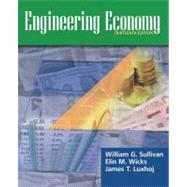
Engineering Economy

ISBN: 9780131486492 | 0131486497
Edition: 14th
Format: Hardcover
Publisher: Prentice Hall
Pub. Date: 1/1/2009

Why Rent from Knetbooks?

Because Knetbooks knows college students. Our rental program is designed to save you time and money. Whether you need a textbook for a semester, quarter or even a summer session, we have an option for you. Simply select a rental period, enter your information and your book will be on its way!

Top 5 reasons to order all your textbooks from Knetbooks:

  • We have the lowest prices on thousands of popular textbooks
  • Free shipping both ways on ALL orders
  • Most orders ship within 48 hours
  • Need your book longer than expected? Extending your rental is simple
  • Our customer support team is always here to help
SummaryTable of Contents
For undergraduate, introductory courses in Engineering Economics. Used by engineering students worldwide, this best-selling text provides a sound understanding of the principles, basic concepts, and methodology of engineering economy. Built upon the rich and time-tested teaching materials of earlier editions, it is extensively revised and updated to reflect current trends and issues, with an emphasis on the economics of engineering design throughout. It provides one of the most complete and up-to-date studies of this vitally important field.
Prefacexi
PART I FUNDAMENTALS OF ENGINEERING ECONOMY
1(198)
Introduction to Engineering Economy
3(20)
... MORE
Introduction
3(2)
Origins of Engineering Economy
5(1)
What are the Principles of Engineering Economy?
5(3)
Engineering Economy and the Design Process
8(9)
Using Spreadsheets in Engineering Economic Analysis
17(2)
Summary
19(4)
Problems
20(3)
Cost Concepts and Design Economics
23(56)
Introduction
24(1)
Cost Terminology
24(10)
The General Economic Environment
34(11)
Cost-Driven Design Optimization
45(5)
Present Economy Studies
50(10)
Case Study---The Economics of Daytime Running Lights
60(1)
Summary
61(1)
References
62(17)
Problems
62(9)
Appendix 2-A Accounting Fundamentals
71(8)
Cost Estimation Techniques
79(49)
Introduction
79(3)
An Integrated Approach
82(9)
Selected Estimating Techniques (Models)
91(5)
Parametric Cost Estimating
96(12)
Cost Estimation in the Design Process
108(8)
Case Study---Demanufacturing of Computers
116(2)
Summary
118(1)
References
119(9)
Problems
119(9)
Money--Time Relationships and Equivalence
128(71)
Introduction
128(1)
Why Consider Return to Capital?
129(1)
The Origins of Interest
130(1)
Simple Interest
130(1)
Compound Interest
131(1)
The Concept of Equivalence
132(1)
Notation and Cash-Flow Diagrams and Tables
133(4)
Interest Formulas Relating Present and Future Equivalent Values of Single Cash Flows
137(5)
Interest Formulas Relating a Uniform Series (Annuity) to its Present and Future Equivalent Values
142(7)
Interest Formulas for Discrete Compounding and Discrete Cash Flows
149(1)
Deferred Annuities (Uniform Series)
149(3)
Equivalence Calculations Involving Multiple Interest Formulas
152(5)
Interest Formulas for a Uniform (Arithmetic) Gradient of Cash Flows
157(6)
Interest Formulas Relating a Geometric Sequence of Cash Flows to its Present and Annual Equivalents
163(4)
Interest Rates that Vary with Time
167(1)
Nominal and Effective Interest Rates
168(2)
Interest Problems with Compounding More Often than Once per Year
170(2)
Interest Formulas for Continuous Compounding and Discrete Cash Flows
172(3)
Additional Solved Problems
175(4)
Case Study---Understanding Economic ``Equivalence''
179(3)
Summary
182(1)
References
182(17)
Problems
183(16)
PART II ENGINEERING ECONOMY IN ACTION
199(264)
Applications of Money--Time Relationships
201(46)
Introduction
201(1)
Determining the Minimum Attractive Rate of Return (MARR)
202(3)
The Present Worth Method
205(7)
The Future Worth Method
212(1)
The Annual Worth Method
213(4)
The Internal Rate of Return Method
217(10)
The External Rate of Return Method
227(2)
The Payback (Payout) Period Method
229(2)
Case Study---A Proposed Capital Investment to Improve Process Yield
231(2)
Summary
233(1)
References
233(14)
Problems
233(11)
Appendix 5-A The Multiple Rate of Return Problem with the IRR Method
244(3)
Comparing Alternatives
247(54)
Introduction
247(1)
Basic Concepts for Comparing Alternatives
248(4)
The Study (Analysis) Period
252(1)
Case 1: Useful Lives are Equal to the Study Period
253(21)
Case 2: Useful Lives are Different among the Alternatives
274(11)
Case Study---Ned and Larry's Ice Cream Company
285(2)
Summary
287(1)
References
288(13)
Problems
288(13)
Depreciation and Income Taxes
301(51)
Introduction
301(1)
Depreciation Concepts and Terminology
302(3)
The Classical (Historical) Depreciation Methods
305(5)
The Modified Accelerated Cost Recovery System
310(7)
A Comprehensive Depreciation Example
317(4)
Introduction to Income Taxes
321(2)
The Effective (Marginal) Corporate Income Tax Rate
323(4)
Gain (Loss) on the Disposal of an Asset
327(1)
General Procedure for Making After-Tax Economic Analyses
327(4)
Illustration of Computations of ATCFs
331(10)
Economic Value Added
341(2)
Summary
343(1)
References
344(8)
Problems
344(8)
Price Changes and Exchange Rates
352(30)
Introduction
352(2)
Terminology and Basic Concepts
354(6)
Fixed and Responsive Annuities
360(4)
Spreadsheet Application
364(2)
Foreign Exchange Rates and Purchasing Power Concepts
366(5)
Case Study---Selecting Electric Motors to Power an Assembly Line
371(3)
Summary
374(1)
References
375(7)
Problems
375(7)
Replacement Analysis
382(42)
Introduction
382(1)
Reasons for Replacement Analysis
383(1)
Factors that must be Considered in Replacement Studies
384(3)
Typical Replacement Problems
387(3)
Determining the Economic Life of a New Asset (Challenger)
390(3)
Determining the Economic Life of a Defender
393(3)
Comparisons in which the Defender's Useful Life Differs from that of the Challenger
396(3)
Retirement without Replacement (Abandonment)
399(1)
After-Tax Replacement Studies
400(10)
Case Study---Replacement of a Hospital's Emergency Electrical Supply System
410(2)
Summary
412(3)
References
415(9)
Problems
416(8)
Dealing with Uncertainty
424(39)
Introduction
424(1)
What are Risk, Uncertainty, and Sensitivity?
425(1)
Sources of Uncertainty
425(1)
Sensitivity Analysis
426(19)
Risk-Adjusted Minimum Attractive Rates of Return
445(2)
Reduction of Useful Life
447(3)
Case Study---Analyzing a Proposed Business Venture
450(4)
Summary
454(1)
References
455(8)
Problems
455(8)
PART III ADDITIONAL TOPICS IN ENGINEERING ECONOMY
463(144)
Evaluating Projects with the Benefit--Cost Ratio Method
465(34)
Introduction
465(2)
Perspective and Terminology for Analyzing Public Projects
467(1)
Self-Liquidating Projects
468(1)
Multiple-Purpose Projects
468(2)
Difficulties in Evaluating Public-Sector Projects
470(2)
What Interest Rate Should be Used for Public Projects?
472(1)
The Benefit---Cost Ratio Method
473(7)
Evaluating Independent Projects by B--C Ratios
480(2)
Comparison of Mutually Exclusive Projects by B--C Ratios
482(5)
Criticisms and Shortcomings of the Benefit--Cost Ratio Method
487(2)
Case Study---Improving a Railroad Crossing
489(2)
Summary
491(1)
References
492(1)
Problems
492(7)
Probabilistic Risk Analysis
499(49)
Introduction
499(1)
The Distribution of Random Variables
500(3)
Evaluation of Projects with Discrete Random Variables
503(9)
Evaluation of Projects with Continuous Random Variables
512(6)
Evaluation of Uncertainty by Monte Carlo Simulation
518(4)
Performing Monte Carlo Simulation with a Computer
522(4)
Decision Trees
526(9)
Case Study---The Oils Well That Ends Well Company
535(4)
Summary
539(1)
References
539(9)
Problems
540(8)
Capital Financing and Allocation
548(34)
Introduction
548(3)
Debt Capital
551(1)
Equity Capital
552(3)
The Weighted Average Cost of Capital (WACC)
555(4)
Project Selection
559(4)
Postmortem Review
563(1)
Budgeting of Capital Investments and Management Perspective
564(1)
Leasing Decisions
564(3)
Capital Allocation
567(8)
Case Study---Financing an Automobile
575(3)
Summary
578(1)
References
578(4)
Problems
579(3)
Dealing with Multiattributed Decisions
582(25)
Introduction
582(1)
Examples of Multiattributed Decisions
583(1)
Choice of Attributes
584(1)
Selection of a Measurement Scale
585(1)
Dimensionality of the Problem
585(1)
Noncompensatory Models
586(5)
Compensatory Models
591(8)
Summary
599(1)
References
600(7)
Problems
601(6)
PART IV APPENDIXES
607(58)
A Using Excel to Solve Engineering Economy Problems
609(17)
B Abbreviations and Notation
626(5)
C Interest and Annuity Tables for Discrete Compounding
631(19)
D Interest and Annuity Tables for Continuous Compounding
650(4)
E Standard Normal Distribution
654(3)
F Selected References
657(3)
G Answers to Selected Problems
660(5)
Index665

Related Products


  • Engineering Economy
    Engineering Economy
  • Engineering Economy
    Engineering Economy
  • Engineering Economy
    Engineering Economy
  • Engineering Economy
    Engineering Economy
  • Engineering Economy
    Engineering Economy
  • Outlines and Highlights for Engineering Economy by William G Sullivan, Isbn : 9780136142973
    Outlines and Highlights for En...


Please wait while this item is added to your cart...