FREE SHIPPING BOTH WAYS
ON EVERY ORDER!
LIST PRICE:
$95.00

OUR PRICE:
$19.74

You may extend rentals at any time.


Assessing and Guiding Young Children's Development and Learning
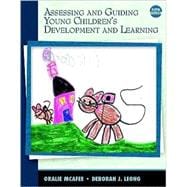
ISBN: 9780137041275 | 0137041276
Edition: 5th
Format: Paperback
Publisher: Pearson
Pub. Date: 1/29/2010

Why Rent from Knetbooks?

Because Knetbooks knows college students. Our rental program is designed to save you time and money. Whether you need a textbook for a semester, quarter or even a summer session, we have an option for you. Simply select a rental period, enter your information and your book will be on its way!

Top 5 reasons to order all your textbooks from Knetbooks:

  • We have the lowest prices on thousands of popular textbooks
  • Free shipping both ways on ALL orders
  • Most orders ship within 48 hours
  • Need your book longer than expected? Extending your rental is simple
  • Our customer support team is always here to help
SummaryTable of ContentsAuthor Biography
The purpose of this book is to demonstrate how to do authentic classroom-based assessment, and then how to interpret and use that information to plan curriculum responsive to and supportive of children's learning. The fifth edition of Assessing and Guiding Young Children's Development and Learning has been revised and updated to reflect the rapidly developing concepts of appropriate assessment, expected educational outcomes, The way young children develop and learn, And The early childhood teacher's assessment responsibilities.Features: Current... MORE

Part I             Professionalism in Assessment

Chapter 1          Assessment in Early Childhood: A Work in Progress    

Assessment Vocabulary    

Expectations of Teachers    

Factors Contributing to Current Practices in Assessmen... MORE

Professional Responsibility    

Summary    

For Personal Reflection    

For Further Study and Discussion    

Suggested Readings   


Chapter 2          Legal, Ethical, and Professional Responsibilities in Assessment    

Know Federal, State, and Local Requirements Related to  Assessment    

Ensure that Assessment Information is Accurate and Trustworthy

Assess All Children Fairly

Follow Professional and Ethical Guidelines

Use Assessment Results in Appropriate Ways    

Summary   

For Personal Reflection    

For Further Study and Discussion    

Suggested Readings   


Part II           Assessing and Teaching

Chapter 3          Why, What, and When to Assess    

Assessment Decisions    

Why Assess?    

What to Assess?    

When to Assess?    

Some Final Thoughts    

Summary    

For Personal Reflection    

For Further Study and Discussion    

Suggested Readings   


Chapter 4          Documenting: Collecting Information    

Multiple Windows    

Sources of Information    

Methods of Collecting Information    

Contexts for Assessment    

Choosing the Appropriate Assessment Window    

Summary    

For Personal Reflection    

For Further Study and Discussion    

Suggested Readings   


Chapter 5          Documenting: Recording Information    

Description and Examples of Recording Procedures    

Selecting a Recording Procedure    

Summary    

For Personal Reflection    

For Further Study and Discussion    

Suggested Readings   


Chapter 6            Compiling and Summarizing Information    

Portfolios    

Group and Individual Profiles and Summaries    

Summary    

For Personal Reflection    

For Further Study and Discussion    

Suggested Readings   


Chapter 7          Interpreting Assessment Information   

Ensure the Authenticity and Trustworthiness of the Data    

Interpret and Understand the Meaning of Assessment Findings   

Summary    

For Personal Reflection    

For Further Study and Discussion   

Suggested Readings   


Chapter 8          Using Assessment Information    

Planning Strategies 

Individual and Group Strategies    

Curriculum and Classroom Modification Strategies    

Examples of Using Assessment Information to Guide Instruction    

Summary   

For Personal Reflection    

For Further Study and Discussion    

Suggested Readings  


Chapter 9            Organizing for Assessment    

Integrating Assessment and Teaching   

Developing a Plan    

Organizing Files and Forms   

Summary    

For Personal Reflection   

For Further Study and Discussion    

Suggested Readings   


Part III          The Classroom and Beyond

Chapter 10          Standardized Tests: What Early Childhood Teachers Should Know    

The Difference between an Assessment That Has Standardized Procedures and a Standardized Test   

Definition of a Standardized Test    

Limitations and Inadequacies of Standardized Testing   

Types of Standardized Tests    

The Early Childhood Teacher’s Role in Standardized Testing    

Standardized Instruments Used to Measure Opportunities to Learn    

Finding Out More about Standardized Tests    

Summary    

For Personal Reflection    For Further Study and Discussion   

Suggested Readings   


Chapter 11        Communicating and Collaborating Using Assessment Processes and Results   

Communicating with Children    

Communicating with Parents    

Communicating and Collaborating with Other Professionals    

Professional and Personal Development and Learning   

Summary    

For Personal Reflection    

For Further Study and Discussion    

Suggested Readings   


Appendix A  Assessment and Analysis Guides   

Appendix B  Developmental Red Flags for Children Ages 3 to 5    

Glossary    

References    

Name Index    

Subject Index   

Oralie McAfee is professor emerita of early childhood education at Metropolitan State College of Denver. She is the author of books, research papers, articles, curriculum and teacher-training materials, and other publications related to working with young children and their families in the classroom and home, and has presented on these topics throughout the United States. She has done research on assessment practices and needs in Head Start and in selected state-funded prekindergarten programs. She is author (with Deborah J. Leong and Elena Bodrova) of Basics of Assessment: A Primer for Early Childhood Educators (National Association for the Education of Young Children, 2004).


Deborah J. Leong is a professor emerita  of psychology at Metropolitan State College of Denver and director of the Tools of the Mind Curriculum Project, a Vygotskian-based early childhood teacher-training program. She is also a research fellow at the National Institute for Early Education Research (NIEER) working on a computerized Pre-K state standards database and a database of preschool assessment instruments with Elena Bodrova. She is co-author with Dr. McAfee and Dr. Bodrova of Basics of Assessment (National Association for the Education of Young Children, 2004). Dr. Leong is also co-author with Dr. Bodrova of Tools of the Mind: The Vygotskian Approach to Early Childhood Education (Merrill/Prentice Hall, 2007) and four educational videos (Davidson Films). She has written many articles on assessment, play, early literacy, and the development of self-regulation in young children.

Related Products


  • Assessing and Guiding Young Children's Development and Learning
    Assessing and Guiding Young Ch...
  • Assessing and Guiding Young Children's Development and Learning
    Assessing and Guiding Young Ch...
  • Assessing And Guiding Young Children's Development And Learning
    Assessing And Guiding Young Ch...
  • Assessing and Guiding Young Children's Development and Learning
    Assessing and Guiding Young Ch...
  • Outlines and Highlights for Inventing Entrepreneurs : Technology Innovators and their Entrepreneurial Journey by George and Bock, ISBN
    Outlines and Highlights for In...


Please wait while this item is added to your cart...