FREE SHIPPING BOTH WAYS
ON EVERY ORDER!
LIST PRICE:
$58.61

OUR PRICE:
$23.21

You may extend rentals at any time.


American Military History : A Documentary Reader
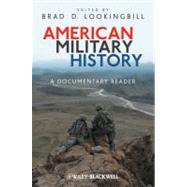
ISBN: 9781405190510 | 1405190515
Edition: 1st
Format: Paperback
Publisher: Wiley-Blackwell
Pub. Date: 10/11/2010

Why Rent from Knetbooks?

Because Knetbooks knows college students. Our rental program is designed to save you time and money. Whether you need a textbook for a semester, quarter or even a summer session, we have an option for you. Simply select a rental period, enter your information and your book will be on its way!

Top 5 reasons to order all your textbooks from Knetbooks:

  • We have the lowest prices on thousands of popular textbooks
  • Free shipping both ways on ALL orders
  • Most orders ship within 48 hours
  • Need your book longer than expected? Extending your rental is simple
  • Our customer support team is always here to help
SummaryTable of ContentsAuthor Biography
American Military History: A Documentary Reader presents a series of primary documents relating to America's armed forces from the colonial period to the present. Collectively, the documents consider military affairs in relation to the cultural, social, political, economic, and territorial development of the United States. While some readings address themes such as wartime strategy, operational tactics, and combat experience, others reveal the impact of warfare on society and feature poignant remembrances of ordinary men and women in uniform, a... MORE
Acknowledgments
Introduction
An Uncommon Defense
Powhatan Describes War among the Natives (1607)
John Mason Campaigns against the Pequot (1637)
Elizabeth Bacon Observes Skirmishes in Virginia(1676)
Benjamin Church Plans for Action in New England (1704)
James Oglethorpe Strikes Spanish Outposts (1739-1741)
Robert Rogers Provid... MORE
Parliament Passes a Quartering Act (1765)
An Unknown Soldier Sings "Yankee Doodle" (1775)
War for Independence
The Continental Congress Raises an Army (1775)
James Monroe Goes to War (1776)
Albigence Waldo Treats Soldiers at Valley Forge (1777)
Jeffrey Brace Fights for Liberty (1778)
John Paul Jones Captures a British Frigate (1779)
A French Officer Draws the Continental Line (1781)
Deborah Sampson Wears a Uniform (1782)
George Washington Bids Farewell to the Army (1783)
Establishing the Military
Alexander Hamilton Considers National Forces (1787)
Henry Knox Arranges the Militia (1790)
Anthony Wayne Prevails at Fallen Timbers (1794)
John Adams Prepares the Navy for War(1797)
Congress Passes the Military Peace Establishment Act (1802)
William Eaton Arrives on the Shores of Tripoli (1805)
James Wilkinson Faces a Court Martial (1811)
Mr. Madison's War
James Madison Calls for War (1812)
Lydia Bacon Enters Fort Detroit (1812)
Benjamin Tanner Engraves the U.S. Frigate Constitution (1812)
Black Hawk Takes the War Path (1813)
Oliver Hazard Perry Defends Lake Erie (1813)
Samuel White Campaigns in Canada (1814)
Francis Scott Key Pens "Defence of Fort McHenry" (1814)
Andrew Jackson Triumphs at New Orleans (1815)
The Martial Republic
John C. Calhoun Proposes an Expansible Army (1820)
The National Guard Parades in New York (1825)
John Downes Sails to Sumatra (1832)
Ethan Allen Hitchcock Patrols in Florida (1836)
Juan Seguín Remembers the Alamo (1837)
Army and Navy Chronicle Encourages Reform (1839)
Henry W. Halleck Lectures on War (1846)
The Forces of Manifest Destiny
James K. Polk Calls for War (1846)
James K. Holland Marches into Mexico (1846)
Whigs Denounce the Conduct of the War (1847)
Zachary Taylor Describes Buena Vista (1847)
Winfield Scott Lands at Veracruz (1847)
James Walker Paints The Battle of Chapultepec (1847)
Matthew C. Perry Steams to Japan (1852)
Elizabeth C. Smith Petitions for Bounty Land (1853)
The Blue and the Gray
Abraham Lincoln Issues Proclamations (1861)
Julia Ward Howe Composes "The Battle Hymn of the Republic" (1862)
Jefferson Davis Appoints Robert E. Lee to Command (1862)
Gideon Welles Appraises the Ironclads (1862)
Francis Lieber Promulgates Rules for War (1863)
Sam R. Watkins Survives Chickamauga (1863)
James Henry Gooding Protests Unequal Pay (1863)
Robert E. Lee Requests Additional Troops (1864)
Phoebe Yates Pember Works at Chimborazo (1864)
Ulysses S. Grant Offers Terms at Appomattox (1865)
Twilight of the Indian Wars
William T. Sherman Discusses Indian Policy (1868)
Philip H. Sheridan Assesses a Winter Campaign (1869)
Elizabeth B. Custer Camps with the Cavalry (1873)
Etahdleuh Sketches Kiowa Warriors (1877)
Emory Upton Evaluates Military Policy (1880)
The Soldier's Handbook Gives Healthy Advice (1884)
Nelson A. Miles Remembers Wounded Knee (1890)
A Rising Power
Alfred Thayer Mahan Advocates Sea Power (1890)
William McKinley Calls for War (1898)
Frank W. Pullen Charges in Cuba (1898)
Clara Barton Visits a Field Hospital (1898)
Frederick N. Funston Operates in the Philippines (1901)
The Committee on Naval Affairs Investigates Submarines (1902)
Elihu Root Regulates the General Staff (1903)
The Great White Fleet Tours the World (1907-1909)
The War to End all Wars
Woodrow Wilson Calls for War (1917)
Montgomery Flagg Creates a Recruiting Poster (1917)
Congress Passes the Selective Service Act (1917)
John J. Pershing Commands the AEF (1917)
Ida Clyde Clarke Supports the War (1918)
Josephus Daniels Manages the Navy Department (1918)
Ben Hur Chastaine Reaches the Front (1918)
The Stars and Stripes Notes the Armistice (1918)
Out of the Trenches
1 The American Legion Rallies Veterans (1919)
George S. Patton Ponders the Next War (1922)
Billy Mitchell Advocates Air Power (1927)
Holland M. Smith Studies Marine Landings (1932)
Fairfax Downey Parodies "The Caisson Song" (1936)
George C. Marshall Speaks to Historians (1939)
Harold R. Stark Recommends Plan Dog (1940)
Fighting World War II
Franklin D. Roosevelt Calls for War (1941)
Raymond A. Spruance Defends Midway (1942)
Charles C. Winnia Flies in the South Pacific (1943)
Grant Hirabayashi Volunteers for Combat (1944)
Dwight D. Eisenhower Invades Normandy (1944)
Congress Passes the GI Bill (1944)
Bill Mauldin Depicts Willie and Joe (1944)
Melvin E. Bush Crosses the Siegfried Line (1945)
Jacqueline Cochran Praises the WASPs (1945)
B-29s Drop Atomic Bombs on Japan (1945)
A Cold War Begins
James V. Forrestal Manages the Pentagon (1948)
Omar Bradley Discusses Desegregation (1949)
Harry S. Truman Intervenes in Korea (1950)
Douglas MacArthur Addresses Congress (1951)
Spike Selmyhr Maneuvers in Korea (1951)
Claudius O. Wolfe Reveals Communist Atrocities (1953)
Maxwell D. Taylor Suggests a Flexible Response (1955)
Presidential Candidates Debate the Arms Race (1960)
The Tragedy of Vietnam
Herbert L. Ogier Patrols in the Tonkin Gulf (1964)
Lyndon Johnson Escalates the War (1965)
Carolyn H. Tanaka Encounters Casualties (1967)
John S. McCain Enters Hanoi (1967)
William C. Westmoreland Reacts to Tet (1968)
The Gates Commission Proposes an All-Volunteer Force (1970)
George J. Eade Assesses the Christmas Bombings (1972)
Veterans Review Apocalypse Now (1979)
A New Military
Ronald Reagan Announces SDI (1983)
Lee Greenwood Releases "God Bless the U.S.A." (1984)
Colin L. Powell Evaluates National Security (1989)
H. Norman Schwarzkopf Defends the Persian Gulf (1990)
Daniel L. Davis Sees Action in Desert Storm (1991)
Congress Approves "Don't Ask, Don't Tell" (1993)
Wesley K. Clark Lauds NATO (1999)
Global War on Terror
Henrietta Snowden Renders September 11 (2001)
George W. Bush Condemns an Axis of Evil (2002)
Jessica Lynch Soldiers in Iraq (2003)
Pete Van Hooser Reveres the SEALs (2005)
FM 2-22.3 Guides the Interrogation of Detainees (2006)
David H. Petraeus Counters an Insurgency (2007)
Robert Gates Speaks at West Point (2009)
Full Chronology
Sources and Credits
Index
Table of Contents provided by Publisher. All Rights Reserved.
Brad D. Lookingbill is Professor and Chair of the Department of History and Social Sciences at Columbia College of Missouri. He is the author of War Dance at Fort Marion: Plains Indian War Prisoners (2006) and Dust Bowl, USA: Depression America and the Ecological Imagination (2001), and the recipient of the 2009 American Historical Association’s Eugene Asher Distinguished Teaching Award. While earning his B.A., M.A. and Ph.D. degrees in history, he served in the Army National Guard.


Please wait while this item is added to your cart...

