FREE SHIPPING BOTH WAYS
ON EVERY ORDER!
LIST PRICE:
$95.00

Sorry, this item is currently unavailable.

Active Credit Portfolio Management in Practice
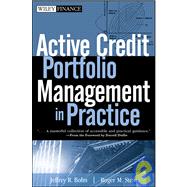
ISBN: 9780470080184 | 0470080183
Format: Hardcover
Publisher: Wiley
Pub. Date: 4/1/2009

Why Rent from Knetbooks?

Because Knetbooks knows college students. Our rental program is designed to save you time and money. Whether you need a textbook for a semester, quarter or even a summer session, we have an option for you. Simply select a rental period, enter your information and your book will be on its way!

Top 5 reasons to order all your textbooks from Knetbooks:

  • We have the lowest prices on thousands of popular textbooks
  • Free shipping both ways on ALL orders
  • Most orders ship within 48 hours
  • Need your book longer than expected? Extending your rental is simple
  • Our customer support team is always here to help
SummaryTable of ContentsAuthor Biography
State-of-the-art techniques and tools needed to facilitate effective credit portfolio management and robust quantitative credit analysisFilled with in-depth insights and expert advice, Active Credit Portfolio Management in Practice serves as a comprehensive introduction to both the theory and real-world practice of credit portfolio management. The authors have written a text that is technical enough both in terms of background and implementation to cover what practitioners and researchers need for actually applying these types of risk managemen... MORE
... MORE
Forewordp. xi
Prefacep. xiii
Acknowledgmentsp. xxvii
The Framework: Definitions and Conceptsp. 1
What Is Credit?p. 2
Evolution of Credit Marketsp. 7
Defining Riskp. 11
A Word about Regulationp. 13
What Are Credit Models Good For?p. 14
Active Credit Portfolio Management (ACPM)p. 16
Framework at 30,000 Feetp. 19
Building Blocks of Portfolio Riskp. 23
Using PDs in Practicep. 32
Value, Price, and Spreadp. 34
Defining Defaultp. 38
Portfolio Performance Metricsp. 38
Data and Data Systemsp. 42
Review Questionsp. 43
ACPM in Practicep. 45
Bank Valuationp. 50
Organizing Financial Institutions: Dividing into Two Business Linesp. 52
Emphasis on Credit Riskp. 57
Market Trends Supporting ACPMp. 59
Financial Instruments Used for Hedging and Managing Risk in a Credit Portfoliop. 60
Mark-to-Market and Transfer Pricingp. 63
Metrics for Managing a Credit Portfoliop. 68
Data and Modelsp. 72
Evaluating an ACPM Unitp. 75
Managing a Research Teamp. 77
Conclusionp. 86
Review Questionsp. 87
Exercisesp. 87
Structural Modelsp. 89
Structural Models in Contextp. 91
A Basic Structural Modelp. 95
Black-Scholes-Mertonp. 100
Valuationp. 107
Modifying BSMp. 117
First Passage Time: Black-Coxp. 118
Practical Implementation: Vasicek-Kealhoferp. 124
Stochastic Interest Rates: Longstaff-Schwartzp. 145
Jump-Diffusion Models: Zhoup. 150
Endogenous Default Barrier (Taxes and Bankruptcy Costs): Leland-Toftp. 151
Corporate Transaction Analysisp. 156
Liquidityp. 159
Other Structural Approachesp. 161
Conclusionp. 171
Derivation of Black-Scholes-Merton Framework for Calculating Distance to Default (DD)p. 171
Derivation of Conversion of Physical Probability of Default (PD) to a Risk-Neutral Probability of Default (PDQ)p. 177
Review Questionsp. 179
Exercisesp. 179
Econometric Modelsp. 183
Discrete-Choice Modelsp. 186
Early Discrete-Choice Models: Beaver (1966) and Altman (1968)p. 191
Hazard Rate (Duration) Modelsp. 196
Example of a Hazard-Rate Framework for Predicting Default: Shumway (2001)p. 204
Hazard Rates versus Discrete Choicep. 206
Practical Applications: Falkenstein et al. (2000) and Dwyer and Stein (2004)p. 207
Calibrating Econometric Modelsp. 215
Calibrating to PDsp. 216
Calibrating to Ratingsp. 227
Interpreting the Relative Influence of Factors in Econometric Modelsp. 234
Data Issuesp. 238
Taxonomy of Data Woesp. 241
Biased Samples Cannot Easily Be Fixedp. 244
Conclusionp. 249
Some Alternative Default Model Specificationsp. 249
Review Questionsp. 252
Exercisesp. 252
Loss Given Defaultp. 255
Road to Recovery: The Timeline of Default Resolutionp. 258
Measures of LGD (Recovery)p. 260
The Relationship between Market Prices and Ultimate Recoveryp. 265
Approaches to Modeling LGD: The LossCalc (2002, 2005) Approaches and Extensionsp. 273
Conclusionp. 285
Review Questionsp. 286
Exercisesp. 286
Reduced-Form Modelsp. 289
Reduced-Form Models in Contextp. 291
Basic Intensity Modelsp. 296
A Brief Interlude to Discuss Valuationp. 310
Duffie, Singleton, Lando (DSL) Intensity Modelp. 312
Credit Rating Transition Modelsp. 329
Default Probability Density Version of Intensity Models (Hull-White)p. 340
Generic Credit Curvesp. 348
Conclusionp. 353
Kalman Filterp. 354
Sample Transition Matricesp. 357
Review Questionsp. 358
Exercisesp. 358
PD Model Validationp. 361
The Basics: Parameter Robustnessp. 367
Measures of Model Powerp. 371
Measures of PD Levels and Calibrationp. 379
Sample Size and Confidence Boundsp. 396
Assessing the Economic Value of More Powerful PD Modelsp. 418
Avoiding Overfitting: A Walk-Forward Approach to Model Testingp. 431
Conclusionp. 437
Type I and Type II Error: Converting CAP Plots into Contingency Tablesp. 438
The Likelihood for the General Case of a Default Modelp. 440
Tables of ROC ϵ and nmaxp. 441
Proof of the Relationship between NPV Terms and ROC Termsp. 441
Derivation of Minimum Sample Size Required to Test for Default Rate Accuracy in Uncorrelated Casep. 446
Tables for Lower Bounds of ϵ and N on Probabilities of Defaultp. 447
Review Questionsp. 452
Exercisesp. 452
Portfolio Modelsp. 455
A Structural Model of Default Riskp. 460
Measurement of Portfolio Diversificationp. 460
Portfolio Risk Assuming No Credit Migrationp. 461
Structural Models of Default Correlationp. 465
Credit Migrationp. 470
A Model of Value Correlationp. 475
Probability of Large Lossesp. 481
Valuationp. 484
Return Calculationsp. 488
Risk Calculationsp. 491
Portfolio Loss Distributionp. 498
Capitalp. 514
Economic Capital and Portfolio Managementp. 519
Improving Portfolio Performancep. 521
Performance Metricsp. 526
Reduced-Form Models and Portfolio Modelingp. 530
Correlation in Intensity Modelsp. 531
Copulasp. 534
Frailtyp. 536
Integrating Market and Credit Riskp. 541
Counterparty Risk in Credit Default Swaps (CDS) and Credit Portfoliosp. 544
Conclusionp. 546
Review Questionsp. 547
Exercisesp. 548
Building a Better Bank: A Case Studyp. 551
Descriptionp. 552
Current Organizationp. 554
Transforming the Capital Allocation Processp. 556
Portfolio Analysisp. 558
Active Credit Portfolio Management (ACPM)p. 562
Data, Systems, and Metricsp. 563
ACPM and Transforming the Bankp. 566
Appendix: Figuresp. 569
Exercisesp. 574
Referencesp. 575
About the Authorsp. 589
Indexp. 591
Table of Contents provided by Ingram. All Rights Reserved.

Jeffrey R. Bohn, PhD, leads the Financial Strategies group at Shinsei Bank in Tokyo. Previously, he led Moody's KMV's (MKMV's) Global Research group and MKMV's Credit Strategies group. After Moody's acquired KMV, he and Roger Stein coheaded MKMV's research and product development.

Roger M. Stein, Phd, is Group Managing Director of the newly formed Quantitative Research and Analytics group at Moody's Investors Service in New York. Previously, he was head of research for Moody's Risk Management Services. After Moody's acquired KMV, he and Jeffrey Bohn co-headed MKMV's research and product development.

Related Products


  • Outlines and Highlights for Active Credit Portfolio Management in Practice by Jeffrey Bohn, Isbn : 9780470080184
    Outlines and Highlights for Ac...


Please wait while this item is added to your cart...