FREE SHIPPING BOTH WAYS
ON EVERY ORDER!
LIST PRICE:
$38.95

OUR PRICE:
$13.63

You may extend rentals at any time.


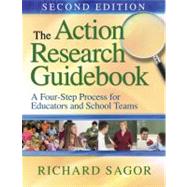
The Action Research Guidebook; A Four-Stage Process for Educators and School Teams
ISBN: 9781412981286 | 141298128X
Edition: 2nd
Format: Paperback
Publisher: Corwin Pr
Pub. Date: 11/19/2010

Why Rent from Knetbooks?

Because Knetbooks knows college students. Our rental program is designed to save you time and money. Whether you need a textbook for a semester, quarter or even a summer session, we have an option for you. Simply select a rental period, enter your information and your book will be on its way!

Top 5 reasons to order all your textbooks from Knetbooks:

  • We have the lowest prices on thousands of popular textbooks
  • Free shipping both ways on ALL orders
  • Most orders ship within 48 hours
  • Need your book longer than expected? Extending your rental is simple
  • Our customer support team is always here to help
SummaryTable of Contents
Best-selling author Richard Sagor's updated edition provides steps for effectively implementing research and data. The book is organized around Sagor's four-stage process and includes hands-on tools.
Preface
Acknowledgments
About the Author
Introduction to Action Research
Why Conduct Action Research?
The Complexity of Routine Instructional Decisions
Key Terms and Concepts
Universal Student Success
Finding a Focus
Zeroing in on Your Priorities
Using Reflective Writing to ... MORE
Using a Journal to Identify Action Research Foci
Reflective Interviews
Analytic Discourse
Team Reflection
Refining the Focus
Visualizing Success
Doing an Instructional Postmortem
Comparing Your Experience With the Experience of Others
Developing Criteria to Measure Changes With Priority Achievement Targets
Creating Rating Scales
The Special Problem of Long-Range Goals
Assessing Rate of Growth
Determining Adequate Yearly Progress in Real Time
Producing Your Own Rate-of-Growth Charts
End of Stage
Articulating a Theory in Action
If Not Us, Who?
An Adequate Knowledge Base Already Exists
Going Beyond Proven Practices: Building a Theory of Action
Two Kinds of Variables
Creating Mileposts on the Route to Mastery
Inferring Independent Variables
Using the Priority Pie to Identify, Clarify, and Weigh Independent Variables
Using the Priority Pie With Descriptive Research
Drawing a Theory in Action
Why a Map?
Building a Graphic Reconstruction
Graphic Reconstructions for Quasi-Experimental Research
Graphic Reconstructions With Descriptive Research
Determining the Research Questions
Three Generic Action Research Questions
Developing Your Own Research Questions
Two-Step Walk-Through
Drafting the Questions
Building a Data-Collection Plan
Data Collection and the Competing Demands for Your Time
What Qualifies as Teaching?
What Qualifies as Data?
Data in Descriptive Research
Data in Quasi-Experimental Research
Data Collection and Concerns About Precision
Fishing in a Sea of Data
Securing Research Assistants
Building a Triangulated Data-Collection Plan
Integrating Efficiencies Into Your Data-Collection Work
Using Technology to Compile and Assemble Action Research Data
Keeping a Researcher's Journal
Analyzing the Data
Trend Analysis
Organizing Data to Help Answer the Three Generic Questions
What Did We Do?
What Changes Occurred Regarding the Achievement Targets?
Disaggregation
What Was the Relationship Between Actions Taken and Any Changes in Performance on the Targets?
Drawing Tentative Assertions
Using Member Checking to Add Credibility to the Tentative Assertions
Additional Tools for Qualitative Data Analysis
Qualitative Data Analysis Using Bins and a Matrix
Low-Tech Strategies for Bins and Matrixes
High-Tech Strategies for Bins and Matrixes
Turning Findings Into Action Plans
Modifying Your Theory of Action
Data-Based Decision Making
Turning Your Findings Into Ed Specs
Solicit and Brainstorm Action Alternatives
Assessing the Action Alternatives
Completing the Cycle: Revised Theory of Action 2
Reporting and Sharing Action Research
Common Issues
Formats for Reporting
Creating a Bank of Abstracts
Creating a District Archive
Conclusion: The School as a Learning Organization
The Two Keys: Coherence and Congruence
Putting the Pieces Together
How to Use the Feedback Forms and Summary Reports
Five Characteristics of a Quality Action Research Project
Applications for Leadership Projects
Glossary
References
Index
Table of Contents provided by Ingram. All Rights Reserved.


Please wait while this item is added to your cart...

