FREE SHIPPING BOTH WAYS
ON EVERY ORDER!
LIST PRICE:
$39.75

OUR PRICE:
$11.41

You may extend rentals at any time.


Writing and Grammar: Communication in Action Silver Level
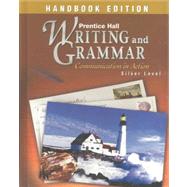
ISBN: 9780130373434 | 0130373435
Format: Hardcover
Publisher: Pearson Prentice Hall
Pub. Date: 5/1/2003

Why Rent from Knetbooks?

Because Knetbooks knows college students. Our rental program is designed to save you time and money. Whether you need a textbook for a semester, quarter or even a summer session, we have an option for you. Simply select a rental period, enter your information and your book will be on its way!

Top 5 reasons to order all your textbooks from Knetbooks:

  • We have the lowest prices on thousands of popular textbooks
  • Free shipping both ways on ALL orders
  • Most orders ship within 48 hours
  • Need your book longer than expected? Extending your rental is simple
  • Our customer support team is always here to help
Table of Contents
... MORE
PART 1: WRITING
The Writer in You
2(4)
Writing in Everyday Life
2(1)
Why Write?
3(1)
What Are the Qualities of Good Writing?
3(1)
Developing Your Writing Life
4(2)
A Walk Through the Writing Process
6(14)
Types of Writing
6(1)
The Process of Writing
7(1)
A Guided Tour
7(1)
What Is Prewriting?
8(5)
What Is Drafting?
13(2)
What Is Revising?
15(3)
What Are Editing and Proofreading?
18(1)
What Are Publishing and Presenting?
19(1)
Paragraphs and Compositions Structure and Style
20(12)
Writing Effective Paragraphs
21(4)
Main Idea and Topic Sentence
21(1)
Writing a Topic Sentence
22(1)
Writing Supporting Sentences
23(1)
Placing Your Topic Sentence
24(1)
Maintaining Unity and Coherence
25(1)
Paragraphs in Essays and Other Compositions
25(5)
Understanding the Parts of a Composition
27(1)
Types of Paragraphs
28(2)
Writing Style
30(2)
Developing Your Style
30(1)
Using Formal and Informal English
31(1)
Narration Autobiographical Writing
32(16)
What Is Autobiographical Writing?
33(1)
Prewriting
Choosing Your Topic
34(1)
Freewriting
34(1)
Blueprinting
34(1)
Writing Round
34(1)
Topic Bank
35(1)
Narrowing Your Topic
36(1)
Use Looping to Narrow a Topic
36(1)
Considering Your Audience and Purpose
37(1)
Analyze Your Purpose
37(1)
Gathering Details
37(1)
Interview Others
37(1)
Drafting
Shaping Your Writing
38(1)
Order Events
38(1)
Emphasize Tension
38(1)
Providing Elaboration
39(1)
Add Significant Details
39(1)
Revising
Revising Your Overall Structure
40(1)
Revision Strategy: Using Clues to Take Your Story's ``Temperature''
41(1)
Revising Your Paragraphs
42(1)
Revision Strategy: Check-Marking for Coherence
42(1)
Revising Your Sentences
43(1)
Revision Strategy: Color-Coding
Sentence Beginnings
43(1)
Revising Your Word Choice
44(1)
Revision Strategy: Highlighting Nouns
44(1)
Peer Review
45(1)
``Say Back''
45(1)
Editing and Proofreading
Focusing on Commas
46(1)
Publishing and Presenting
Building Your Portfolio
47(1)
Reflecting on Your Writing
47(1)
Rubric for Self-Assessment
47(1)
Narration Short Story
48(18)
What Is a Short Story?
49(1)
Prewriting
Choosing Your Topic
50(1)
Freewriting
50(1)
Periodical Flip-Through
50(1)
Writing Round
50(1)
Topic Bank
51(1)
Developing Narrative Elements
52(1)
List and Itemize
52(1)
Considering Your Audience and Purpose
53(1)
Gathering Details
53(1)
Interview Your Characters
53(1)
Drafting
Shaping Your Writing
54(1)
Create a Plot
54(1)
Build to a Climax
54(1)
Providing Elaboration
55(1)
Use Details to Define Character
55(1)
Revising
Revising Your Overall Structure
56(1)
Revision Strategy: Magnifying Your Clues
56(1)
Revising Your Paragraphs
57(1)
Revision Strategy: Fleshing Out Reactions
57(1)
Revising Your Sentences
58(1)
Revision Strategy: Coding Clusters to Combine Sentences
58(1)
Revising Your Word Choice
59(1)
Revision Strategy: Highlighting Verbs
59(1)
Peer Review
60(1)
``Say Back''
60(1)
Editing and Proofreading
Focusing on Dialogue
61(1)
Publishing and Presenting
Building Your Portfolio
62(1)
Reflecting on Your Writing
62(1)
Rubric for Self-Assessment
62(4)
Description
66(16)
What Is Descriptive Writing?
67(1)
Prewriting
Choosing Your Topic
68(1)
Freewriting
68(1)
Blueprinting
68(1)
Topic Bank
69(1)
Narrowing Your Topic
70(1)
Select a Perspective to Narrow a Topic
70(1)
Considering Your Audience and Purpose
70(1)
Gathering Details
71(1)
Cubing
71(1)
Drafting
Shaping Your Writing
72(1)
Organize Effectively
72(1)
Providing Elaboration
73(1)
Present a Perspective
73(1)
Revising
Revising Your Overall Structure
74(1)
Revision Strategy: Cutting and Pasting for Order
74(1)
Revision Strategy: Coding Details to Focus Perspective
75(1)
Revising Your Paragraphs
76(1)
Revision Strategy: Adding Functional Paragraphs
76(1)
Revising Your Sentences
77(1)
Revision Strategy: Underlining Conjunctions to Find Parallels
77(1)
Revising Your Word Choice
78(1)
Revision Strategy: Highlighting Adjectives and Adverbs
78(1)
Peer Review
79(1)
Double Dyad
79(1)
Editing and Proofreading
Focusing on Commas
80(1)
Publishing and Presenting
Building Your Portfolio
81(1)
Reflecting on Your Writing
81(1)
Rubric for Self-Assessment
81(1)
Persuasion Persuasive Essay
82(18)
What Is a Persuasive Essay?
83(1)
Prewriting
Choosing Your Topic
84(1)
Self-Interview
84(1)
Round Table
84(1)
Media Flip-Through
84(1)
Topic Bank
85(1)
Narrowing Your Topic
86(1)
Use the ``Reporter's Questions''
86(1)
Considering Your Audience and Purpose
86(1)
Gathering Support
87(1)
Provide Support
87(1)
Drafting
Shaping Your Writing
88(1)
Develop a Thesis Statement
88(1)
Organize to Create Drama
88(1)
Providing Elaboration
89(1)
Use a Variety of Persuasive Techniques
89(1)
Revising
Revising Your Overall Structure
90(1)
Revision Strategy: Coding Main Points and Support
90(1)
Revision Strategy: Using ``Image Shots''
91(1)
Revising Your Paragraphs
92(1)
Revision Strategy: ``Finding the Glue'' Between Paragraphs
92(1)
Revising Your Sentences
93(1)
Revision Strategy: Coding Parallel Ideas
93(1)
Revising Your Word Choice
94(1)
Revision Strategy: Coding Focus Words
94(1)
Peer Review
94(1)
Double Dyad
94(1)
Editing and Proofreading
Focusing on Colons and Dashes
95(1)
Publishing and Presenting
Building Your Portfolio
96(1)
Reflecting on Your Writing
96(1)
Rubric for Self-Assessment
96(4)
Exposition: Comparison-and-Contrast Essay
100(14)
What Is a Comparison-and-Contrast Essay?
101(1)
Prewriting
Choosing Your Topic
102(1)
Blueprinting
102(1)
Personal-Experience Timeline
102(1)
Topic Bank
103(1)
Narrowing Your Topic
104(1)
Considering Your Audience and Purpose
104(1)
Gathering Details
105(1)
Use a Venn Diagram
105(1)
Drafting
Shaping Your Writing
106(1)
Select an Effective Organization
106(1)
Find a Theme
106(1)
Providing Elaboration
107(1)
Layer Ideas Using See
107(1)
Revising
Revising Your Overall Structure
108(1)
Revision Strategy: Color-Coding to Check Organization and Balance
108(1)
Revision Strategy: Circling Unfocused Details
109(1)
Revising Your Paragraphs
110(1)
Revision Strategy: Marking Paragraph Patterns
110(1)
Revising Your Sentences
110(1)
Revision Strategy: Coding Repetitive Sentences
110(1)
Revising Your Word Choice
111(1)
Revision Strategy: Highlighting Repeated Words
111(1)
Peer Review
111(1)
``Say Back''
111(1)
Editing and Proofreading
Focusing on Pronouns
112(1)
Publishing and Presenting
Building Your Portfolio
113(1)
Reflecting on Your Writing
113(1)
Rubric for Self-Assessment
113(1)
Exposition Cause-and-Effect Essay
114(16)
What Is a Cause-and-Effect Essay?
115(1)
Prewriting
Choosing Your Topic
116(1)
Browsing
116(1)
Self-Interview
116(1)
Topic Bank
117(1)
Narrowing Your Topic
118(1)
Use ``Classical Invention'' Questions
118(1)
Considering Your Audience and Purpose
119(1)
Appeal to Your Audience
119(1)
Define Your Purpose
119(1)
Gathering Details
119(1)
Conduct Research
119(1)
Drafting
Shaping Your Writing
120(1)
Focus and Organize Your Ideas
120(1)
Providing Elaboration
121(1)
Elaborate on Causal Connections
121(1)
Revising
Revising Your Overall Structure
122(1)
Revision Strategy: Marking Main Causes and Effects
122(1)
Revising Your Paragraphs
123(1)
Revision Strategy: Adding Specific Illustrations
123(1)
Revising Your Sentences
124(1)
Revision Strategy: Circling Events to Analyze Order
124(2)
Revising Your Word Choice
126(1)
Revision Strategy: Underlining Vague Verbs
126(1)
Peer Review
126(1)
``Say Back''
126(1)
Editing and Proofreading
Focusing on Prepositions
127(1)
Publishing and Presenting
Building Your Portfolio
128(1)
Reflecting on Your Writing
128(1)
Rubric for Self-Assessment
128(1)
Connected Assignment: Documentary Video Script
129(1)
Exposition How-to Essay
130(16)
What Is a How-to Essay?
131(1)
Prewriting
Choosing Your Topic
132(1)
Invisible Ink
132(1)
Listing
132(1)
Topic Bank
133(1)
Narrowing Your Topic
134(1)
Divide Your Topic Into Subtopics
134(1)
Considering Your Audience and Purpose
134(1)
Complete an Audience Profile
134(1)
Gathering Details
135(1)
Use Research
135(1)
Gather Visual Aids
135(1)
Drafting
Shaping Your Writing
136(1)
Organize Details in Chronological Order
136(1)
Choose the Best Format
136(1)
Providing Elaboration
137(1)
Use Graphic Devices
137(1)
Add Details by ``Exploding the Moment''
137(1)
Revising
Revising Your Overall Structure
138(1)
Revision Strategy: Highlighting Main Steps and Substeps
138(1)
Revising Your Paragraphs
139(1)
Revision Strategy: Using Steps, Stacks, Chains, and Balances
139(1)
Revising Your Sentences
140(1)
Revision Strategy: Underlining Sentence Beginnings
140(1)
Revising Your Word Choice
141(1)
Revision Strategy: Circling Repeated Words
141(1)
Peer Review
142(1)
Ask a Group to Try It Out
142(1)
Editing and Proofreading
Focusing on Commas and Semicolons
143(1)
Publishing and Presenting
Building Your Portfolio
144(1)
Reflecting on Your Writing
144(1)
Rubric for Self-Assessment
144(1)
Connected Assignment: Problem-and-Solution Essay
145(1)
Research Research Report
146(16)
What Is a Research Report?
147(1)
Prewriting
Choosing Your Topic
148(1)
Browsing
148(1)
Newswatch
148(1)
Self-Interview
148(1)
Topic Bank
149(1)
Narrowing Your Topic
150(1)
Use ``Classical Invention'' Questions
150(1)
Considering Your Audience and Purpose
151(1)
Gathering Details
151(1)
Use a Variety of Sources
151(1)
Take Notes
151(1)
Drafting
Shaping Your Writing
152(1)
Choose a Perspective
152(1)
Develop a Thesis Statement
152(1)
Make an Outline
152(1)
Providing Elaboration
153(1)
Be Your Own Reader
153(1)
Bring Out Your Perspective
153(1)
Revising
Revising Your Overall Structure
154(1)
Revision Strategy: Matching Your Draft to Your Outline
154(1)
Revision Strategy: Coding Details for Perspective
154(1)
Revising Your Paragraphs
155(1)
Revision Strategy: Coding Paragraph Blocks
155(1)
Revising Your Sentences
156(1)
Revision Strategy: Coding the Main Action
156(2)
Revising Your Word Choice
158(1)
Revision Strategy: Highlighting Technical Words
158(1)
Peer Review
158(1)
Analytic Talk
158(1)
Editing and Proofreading
Focusing on Citations
159(2)
Publishing and Presenting
Building Your Portfolio
161(1)
Reflecting on Your Writing
161(1)
Rubric for Self-Assessment
161(1)
Response to Literature
162(18)
What Is a Response to Literature?
163(1)
Prewriting
Choosing Your Topic
164(1)
Reader's Response Journal
164(1)
Interview Yourself
164(1)
Browsing
164(1)
Topic Bank
165(1)
Focusing Your Response
166(1)
Use a Pentad
166(1)
Considering Your Audience and Purpose
167(1)
Gathering Details
168(1)
Use a Hexagonal
168(1)
Look for Patterns
169(1)
Drafting
Shaping Your Writing
170(1)
Define and Develop Your Focus
170(1)
Conclude With an Insight
170(1)
Providing Elaboration
171(1)
Turn Your Perspective Upside Down
171(1)
Revising
Revising Your Overall Structure
172(1)
Revision Strategy: Coding Points Related to Focus
172(1)
Revision Strategy: Building to Your Best Point
172(1)
Revising Your Paragraphs
173(1)
Revision Strategy: Adding Support by Using Points to Illuminate
173(1)
Revising Your Sentences
174(1)
Revision Strategy: Highlighting Related and Contrasting Points
174(2)
Revising Your Word Choice
176(1)
Revision Strategy: Coding Key Terms
176(1)
Peer Review
177(1)
Conduct a ``Process Share''
177(1)
Editing and Proofreading
Focusing on Quotations
178(1)
Publishing and Presenting
Building Your Portfolio
179(1)
Reflecting on Your Writing
179(1)
Rubric for Self-Assessment
179(1)
Writing for Assessment
180(12)
Prewriting
Choosing Your Topic
182(1)
Strategies for Choosing an Assessment Topic
182(1)
Topic Bank
182(1)
Narrowing Your Topic
183(1)
Analyze the Prompt
183(1)
Drafting
Shaping Your Writing
184(1)
Organize Details in Order of Importance
184(1)
Organize Details in Chronological Order
184(1)
Providing Elaboration
185(1)
Give Details
185(1)
Revising
Revising Your Overall Structure
186(1)
Revision Strategy: Checking Your Introduction and Conclusion
186(1)
Revising Your Paragraphs
186(1)
Revision Strategy: Checking for Unity
186(1)
Revising Your Sentences
187(1)
Revision Strategy: Eliminating Fragments and Run-ons
187(1)
Revising Your Word Choice
187(1)
Revision Strategy: Replacing Flat Word Choices
187(1)
Editing and Proofreading
Focusing on Punctuation
188(1)
Publishing and Presenting
Building Your Portfolio
189(1)
Reflecting on Your Writing
190(1)
Rubric for Self-Assessment
190(2)
PART 2: GRAMMAR, USAGE, AND MECHANICS
Nouns and Pronouns
192(16)
Diagnostic Test
193(1)
Nouns
194(6)
Recognizing Collective Nouns
195(1)
Recognizing Compound Nouns
196(1)
Using Common and Proper Nouns
197(1)
Hands-on Grammar
198(1)
Section Review
199(1)
Pronouns
200(7)
Recognizing Antecedents of Pronouns
201(1)
Using Personal Pronouns
202(1)
Using Demonstrative Pronouns
203(1)
Using Relative Pronouns
204(1)
Using Interrogative Pronouns
205(1)
Using Indefinite Pronouns
206(1)
Section Review
207(1)
Verbs
208(14)
Diagnostic Test
209(1)
Action Verbs
210(4)
Using Transitive Verbs
211(1)
Using Intransitive Verbs
212(1)
Section Review
213(1)
Linking Verbs
214(4)
Recognizing Forms of Be
214(1)
Using Other Linking Verbs
215(1)
Distinguishing Between Action Verbs and Linking Verbs
216(1)
Section Review
217(1)
Helping Verbs
218(4)
Hands-on Grammar
220(1)
Section Review
221(1)
Adjectives and Adverbs
222(22)
Diagnostic Test
223(1)
Adjectives
224(12)
Articles
226(1)
Nouns Used as Adjectives
227(3)
Compound Adjectives
230(1)
Pronouns Used as Adjectives
231(3)
Hands-on Grammar
234(1)
Section Review
235(1)
Adverbs
236(8)
Adverbs Modifying Verbs
236(2)
Adverbs Modifying Adjectives
238(1)
Adverbs Modifying Other Adverbs
239(1)
Adverbs or Adjective?
240(2)
Section Review
242(1)
Chapter Review
243(1)
Prepositions
244(8)
Diagnostic Test
245(1)
Recognizing Prepositions
246(2)
Recognizing Prepositional Phrases
248(1)
Distinguishing Between Prepositions and Adverbs
249(2)
Hands-on Grammar
251(1)
Conjunctions and Interjections
252(12)
Diagnostic Test
253(1)
Conjunctions
254(6)
Coordinating Conjunctions
254(1)
Correlative Conjunctions
255(1)
Subordinating Conjunctions
256(2)
Hands-on Grammar
258(1)
Section Review
259(1)
Interjections
260(4)
Section Review
262(1)
Chapter Review
263(1)
Basic Sentence Parts
264(30)
Diagnostic Test
265(1)
The Basic Sentence
266(4)
Section Review
269(1)
Complete Subjects and Predicates
270(4)
Hands-on Grammar
272(1)
Section Review
273(1)
Compound Subjects and Compound Verbs
274(4)
Section Review
277(1)
Hard-to-Find Subjects
278(6)
Section Review
283(1)
Complements
284(10)
Recognizing Direct Objects
285(1)
Distinguishing Between Direct Objects, Adverbs, and Objects of Prepositions
286(1)
Finding Direct Objects in Questions
287(1)
Recognizing Indirect Objects
288(1)
Distinguishing Between Indirect Objects and Objects of Prepositions
289(1)
Using Subject Complements
290(3)
Section Review
293(1)
Phrases and Clauses
294(30)
Diagnostic Test
295(1)
Phrases
296(16)
Using Prepositional Phrases
296(1)
Using Prepositional Phrases That Act as Adjectives
297(1)
Using Prepositional Phrases as Adverbs
298(1)
Using Appositives in Phrases
299(2)
Using Verbals and Verbal Phrases
301(9)
Hands-on Grammar
310(1)
Section Review
311(1)
Clauses
312(12)
Using Adjective Clauses
314(2)
Using Adverb Clauses
316(2)
Classifying Sentences by Structure
318(5)
Section Review
323(1)
Effective Sentences
324(34)
Diagnostic Test
325(1)
The Four Functions of a Sentence
326(3)
Section Review
328(1)
Combining Sentences
329(7)
Hands-on Grammar
334(1)
Section Review
335(1)
Varying Sentences
336(4)
Section Review
339(1)
Avoiding Sentence Problems
340(18)
Section Review
357(1)
Using Verbs
358(30)
Diagnostic Test
359(1)
The Principal Parts of Verbs
360(10)
Section Review
369(1)
The Six Tenses of Verbs
370(12)
Hands-on Grammar
380(1)
Section Review
381(1)
Troublesome Verbs
382(6)
Section Review
387(1)
Using Pronouns
388(10)
Diagnostic Test
389(2)
The Nominative Case
391(1)
The Objective Case
392(1)
The Possessive Case
393(4)
Hands-on Grammar
397(1)
Making Words Agree
398(16)
Diagnostic Test
399(1)
Subject and Verb Agreement
400(8)
Section Review
407(1)
Agreement Between Pronouns and Antecedents
408(6)
Hands-on Grammar
412(1)
Section Review
413(1)
Using Modifiers
414(16)
Diagnostic Test
415(1)
Comparisons Using Adjectives and Adverbs
416(10)
Hands-on Grammar
424(1)
Section Review
425(1)
Troublesome Modifiers
426(4)
Section Review
429(1)
Punctuation
430(38)
Diagnostic Test
431(1)
End Marks
432(4)
Section Review
435(1)
Commas
436(10)
Section Review
445(1)
Semicolon and Colons
446(4)
Section Review
449(1)
Quotation Marks and Underlining
450(9)
Section Review
458(1)
Hyphens and Apostrophes
459(9)
Hands-on Grammar
466(1)
Section Review
467(1)
Capitalization
468(18)
Diagnostic Test
469(14)
Hands on Grammar
483(3)
PART 3: ACADEMIC AND WORKPLACE SKILLS
Speaking, Listening, Viewing, and Representing
486(20)
Speaking and Listening Skills
487(7)
Using Informal Speaking Skills
487(1)
Using Formal Speaking Skills
488(3)
Listening Effectively
491(1)
Listening Critically
492(2)
Viewing and Representing Skills
494(12)
Interpreting Maps and Graphs
494(3)
Viewing Information Media Critically
497(2)
Interpreting Fine Art
499(1)
Creating Visual Aids
500(2)
Using Formatting Features
502(1)
Working With Multimedia
503(1)
Creating a Video
504(1)
Performing and Interpreting
505(1)
Vocabulary and Spelling
506(22)
Developing Vocabulary
507(4)
Developing Your Vocabulary Through Listening
507(1)
Using Context
508(2)
Studying Meanings in the Content Areas
510(1)
Studying Words Systematically
511(3)
Keeping a Vocabulary Notebook
511(1)
Studying New Words
511(2)
Using a Dictionary
513(1)
Using Other Reference Aids
513(1)
Studying Word Parts and Origins
514(4)
Using Roots
514(1)
Using Prefixes
515(1)
Using Suffixes
516(1)
Examining Word Origins
517(1)
Improving Your Spelling
518(10)
Starting a Personal Spelling List
518(1)
Studying Spelling Words
519(1)
Applying Spelling Rules
520(1)
Adding Suffixes
521(1)
Adding Prefixes
522(1)
Using Memory Aids
523(1)
Understanding the Influence of Other Languages and Cultures
523(1)
Forming Plurals
524(2)
Spelling Homophones
526(1)
Proofreading and Using References
527(1)
Reading Skills
528(20)
Reading Methods and Tools
529(6)
Reading Nonfiction Critically
535(6)
Reading Literary Writings
541(5)
Reading From Varied Sources
546(2)
Study, Reference, and Test-Taking Skills
548(52)
Basic Study Skills
549(3)
Reference Skills
552(11)
Test-Taking Skills
563(5)
Resources
Citing Sources and Preparing Manuscript
568(1)
Penmanship Reference
568(7)
Internet Research Handbook
575(3)
Commonly Overused Words
578(2)
Commonly Misspelled Words
580(2)
Abbreviations Guide
582(4)
Proofreading Symbols Reference
586(1)
Student Publications
587(1)
Sentence Diagraming Workshop
588(12)
Index600


Please wait while this item is added to your cart...

