FREE SHIPPING BOTH WAYS
ON EVERY ORDER!
LIST PRICE:
$32.50

OUR PRICE:
$14.48

You may extend rentals at any time.


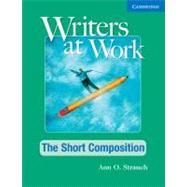
Writers at Work: The Short Composition Student's Book
ISBN: 9780521544962 | 0521544963
Format: Paperback
Publisher: Cambridge University Press
Pub. Date: 3/21/2005

Why Rent from Knetbooks?

Because Knetbooks knows college students. Our rental program is designed to save you time and money. Whether you need a textbook for a semester, quarter or even a summer session, we have an option for you. Simply select a rental period, enter your information and your book will be on its way!

Top 5 reasons to order all your textbooks from Knetbooks:

  • We have the lowest prices on thousands of popular textbooks
  • Free shipping both ways on ALL orders
  • Most orders ship within 48 hours
  • Need your book longer than expected? Extending your rental is simple
  • Our customer support team is always here to help
SummaryTable of Contents
Writers at Work: The Short Composition teaches low-intermediate to intermediate-level students how to compose multi-paragraph short compositions. Students tap into their personal experience to organize their writing, using academic modes of organization such as exemplification and cause and effect. In addition, students learn how to write about works of fiction and nonfiction by summarizing and citing sources.

This low intermediate to intermediate level writing book teaches the basics of short composition writing.
Begin with the Basics
Paragraphs and Short Compositions
2(4)
Paragraph format
2(... MORE
The paragraph
Paragraph format
Short compositions
4(2)
The short composition
Parts of a Short Composition
6(11)
The main idea
6(3)
General and specific ideas
The topic and the comment
Supporting ideas
9(1)
The body
Supporting details
10(2)
Using details
The conclusion
12(2)
Types of conclusions
Titles
14(3)
Guidelines for titles
Process Writing
17(3)
Steps in process writing
Writing about a Person
Getting Started
20(4)
Read sample compositions
20(3)
Determine your audience
23(1)
Audience
Select a topic
23(1)
Interview your partner
23(1)
Preparing the First Draft
24(6)
The first draft
Identify types of information
24(1)
A composition about a person
Make a rough outline
25(2)
Rough outlines
Compose the main idea
27(1)
The main idea
Organize the body
28(1)
The body
Write a conclusion
28(1)
The conclusion
Put together the first draft
29(1)
Revising Your Writing
30(3)
Revising
Analyze supporting details
30(2)
Benefit from peer feedback
32(1)
Peer feedback
Make revision decisions
32(1)
Write the second draft
32(1)
Editing Your Writing
33(2)
Use editing symbols
33(1)
Editing
Edit for subjects and verbs
33(2)
Subjects and verbs
Benefit from peer feedback
35(1)
Peer feedback
Write the final draft
35(1)
Following Up
35(3)
Share your writing
35(1)
Small group read-around
Check your progress
36(2)
Narrating a Personal Experience
Getting Started
38(5)
Read sample compositions
38(3)
Select a topic
41(1)
Topics
Ask yourself questions about your topic
41(1)
Developing your topic
Discuss your experience with others
42(1)
Talking to get ideas
Preparing the First Draft
43(7)
Make a rough outline
43(1)
Compose the main idea
43(2)
The main idea
Provide background information
45(1)
Background information
Use time order to organize ideas
46(1)
Organizing using time order
Include plenty of action and specific ideas
47(1)
Using details
Write a conclusion
48(1)
The conclusion
Put together the first draft
49(1)
Revising Your Writing
50(2)
Revising
Delete irrelevant material
50(1)
Irrelevant material
Benefit from peer feedback
51(1)
Peer feedback
Make revision decisions
52(1)
Write the second draft
52(1)
Editing Your Writing
52(3)
Check for past time verbs
52(1)
Action verbs and tense
Include direct quotations
53(2)
Direct quotations
Benefit from peer feedback
55(1)
Peer feedback
Write the final draft
55(1)
Following Up
55(3)
Share your writing
55(1)
Traveling compositions
Check your progress
56(2)
Providing Examples
Getting Started
58(4)
Read sample compositions
58(3)
Select a topic
61(1)
Freewrite about your topic
61(1)
Freewriting
Discuss your ideas with others
62(1)
Preparing the First Draft
62(8)
Make a rough outline
62(1)
Compose the main idea
62(1)
The main idea
Organize examples in a logical order
63(2)
Organizing examples
Use transition signals to introduce examples
65(1)
Transition signals
Use specific, supporting details
66(2)
Supporting details
Write a conclusion
68(1)
The conclusion
Put together the first draft
69(1)
Revising Your Writing
70(1)
Practice revising
70(1)
Benefit from peer feedback
70(1)
Make revision decisions
71(1)
Write the second draft
71(1)
Editing Your Writing
71(2)
Check spelling
71(1)
Personal spelling list
Edit for subjects, verbs, and spelling
72(1)
Benefit from peer feedback
72(1)
Write the final draft
72(1)
Following Up
73(3)
Share your writing
73(1)
Writing to a classmate
Check your progress
74(2)
Supplying Reasons
Getting Started
76(5)
Read sample compositions
76(3)
Select a topic
79(1)
Explore ideas by making a list
79(2)
Listing and organizing ideas
Preparing the First Draft
81(6)
Make a rough outline
81(1)
Compose the main idea
81(1)
The main idea
Organize reasons in a logical order
82(1)
Organizing reasons
Use transition signals to introduce reasons
83(1)
Transition signals
Use specific, supporting details
84(2)
Supporting details
Write a conclusion
86(1)
The conclusion
Put together the first draft
87(1)
Revising Your Writing
87(2)
Practice revising
87(1)
Benefit from peer feedback
88(1)
Make revision decisions
88(1)
Write the second draft
88(1)
Editing Your Writing
89(2)
Identify clauses
89(1)
Independent and dependent clauses
Identify sentence types
90(1)
Types of sentences
Benefit from peer feedback
91(1)
Write the final draft
91(1)
Following Up
91(3)
Share your writing
91(1)
Check your progress
92(2)
Supporting with Parallel Points
Getting Started
94(3)
Read sample compositions
94(3)
Select a topic
97(1)
Topics
Explore ideas
97(1)
Preparing the First Draft
97(8)
Make a rough outline
97(1)
Compose the main idea
98(1)
The main idea
Organize your points
99(1)
Organizing points
Use transition signals to introduce points
99(2)
Transition signals
Write points to introduce details
101(1)
Supporting a point
Use specific, supporting details
102(1)
Write a conclusion
103(1)
Put together the first draft
104(1)
Revising Your Writing
105(1)
Practice revising
105(1)
Revising
Benefit from peer feedback
106(1)
Make revision decisions
106(1)
Write the second draft
106(1)
Editing Your Writing
106(3)
Edit for run-on sentences
106(2)
Run-on sentences
Edit for stringy sentences
108(1)
Stringy sentences
Write the final draft
109(1)
Following Up
109(3)
Share your writing
109(1)
Check your progress
110(2)
Interpreting Quotations and Proverbs
Getting Started
112(5)
Read sample compositions
112(3)
Select a topic
115(1)
Explore ideas by clustering
115(1)
Discuss your ideas with others
116(1)
Preparing the First Draft
117(5)
Make a rough outline
117(1)
Compose the main idea
117(1)
The main idea
Organize the body
118(1)
Organization
Use sense details for description
119(2)
Write a conclusion
121(1)
The conclusion
Put together the first draft
121(1)
Revising Your Writing
122(2)
Check for wordiness
122(1)
Wordiness
Benefit from peer feedback
123(1)
Make revision decisions
123(1)
Write the second draft
123(1)
Editing Your Writing
124(3)
Edit for correct use of articles
124(3)
Articles with count nouns
Noncount nouns
Indefinite and definite articles
Definite articles in specific contexts
Benefit from peer feedback
127(1)
Write the final draft
127(1)
Following Up
127(3)
Share your writing
127(1)
Check your progress
128(2)
Writing a Summary
Getting Started
130(5)
Read a story and a newspaper article
130(2)
Analyze summaries
132(1)
Select a topic
133(1)
Explore ideas by listing
134(1)
Listing important points
Discuss your ideas with others
135(1)
Preparing the First Draft
135(2)
Make a rough outline
135(1)
Compose the main idea
136(1)
The main idea
Summarize essential ideas
137(1)
Summarizing
Put together the first draft
137(1)
Revising Your Writing
137(2)
Delete unnecessary details
137(1)
Revising
Benefit from peer feedback
138(1)
Make revision decisions
138(1)
Write the second draft
138(1)
Editing Your Writing
139(1)
Edit for verb tense
139(1)
The literary present
Benefit from peer feedback
139(1)
Write the final draft
139(1)
Following Up
140(2)
Share your writing
140(1)
Check your progress
140(2)
Responding to Nonfiction
Getting Started
142(5)
Read sample compositions
142(3)
Select a topic
145(1)
Explore ideas
146(1)
Discuss your ideas with others
146(1)
Preparing the First Draft
147(3)
Make a rough outline
147(1)
Compose the main idea
147(1)
The main idea
Write the body
148(1)
Organizing a response to nonfiction
Write a conclusion
148(1)
The conclusion
Put together the first draft
149(1)
Revising Your Writing
150(1)
Write a suitable title
150(1)
Titles
Benefit from peer feedback
150(1)
Make revision decisions
151(1)
Write the second draft
151(1)
Editing Your Writing
151(2)
Edit for sentence fragments
151(2)
Sentence fragments
Benefit from peer feedback
153(1)
Write the final draft
153(1)
Following Up
153(3)
Share your writing
153(1)
Check your progress
153(3)
Critiquing Fiction
Getting Started
156(10)
Read sample compositions
156(4)
Select a topic
160(6)
Explore ideas
166(1)
Discuss your ideas with others
166(1)
Preparing the First Draft
166(3)
Make a rough outline
166(1)
Compose the main idea
167(1)
The main idea sentence of a critique
Summarize and critique the selection
167(1)
Summary and critique
Write a conclusion
168(1)
The conclusion
Put together the first draft
168(1)
Revising Your Writing
169(3)
Develop your critique with details
169(2)
Using details
Benefit from peer feedback
171(1)
Make revision decisions
171(1)
Write the second draft
171(1)
Editing Your Writing
172(3)
Edit for correct modals
172(2)
Modals
Benefit from peer feedback
174(1)
Write the final draft
174(1)
Following Up
175
Share your writing
175(1)
Check your progress
175


Please wait while this item is added to your cart...

