Because Knetbooks knows college students. Our rental program is designed to save you time and money. Whether you need a textbook for a semester, quarter or even a summer session, we have an option for you. Simply select a rental period, enter your information and your book will be on its way!
| Illustrations | p. xiii |
| Preface | p. xvii |
| Introduction | p. 1 |
| Artworlds and Definitions: How That Became Art | p. 3 |
| Introduction | p. 3 |
| Art | p. 3 |
| Honorific Definitions of "Art" | p. 3 |
| Classificatory Definitions | p. 4 |
| The Open Definition | p. 6 |
| Aesthetics | p. 7 |
| Art Criticism | p. 8 |
| ... MORE | p. 9 |
| Critics on Criticizing | p. 10 |
| Criticizing Criticism | p. 12 |
| Criticism and Aesthetics | p. 13 |
| Skepticism about Art, Aesthetics, and Criticism | p. 14 |
| Aesthetics, Art Criticism, and Visual Culture | p. 14 |
| Aestheticians, Artists, Critics, and Readers | p. 15 |
| Questions for Further Reflection | p. 15 |
| Notes | p. 16 |
| Realism: Art Is Realistic, Truthful, and Beautiful | p. 19 |
| Introduction | p. 19 |
| A Brief Overview of Realism | p. 19 |
| Plato | p. 20 |
| Aristotle | p. 22 |
| Kitsch | p. 25 |
| Pornography | p. 26 |
| Obscenity and Censorship | p. 27 |
| Photography, Reality, and Truth | p. 28 |
| What Does It Mean to Say That a Work Is "Realistic"? | p. 31 |
| Works of Art by Jeff Koons | p. 33 |
| Critical Commentary on Koons's Work | p. 33 |
| Koons's Thoughts about His Own Work | p. 42 |
| Paintings by Alexis Rockman | p. 42 |
| Critical Commentary on Rockman's Paintings | p. 43 |
| Rockman's Thoughts about His Own Work | p. 47 |
| Photographs by Andres Serrano | p. 48 |
| Critical Commentary on Serrano's Photographs | p. 49 |
| Serrano's Thoughts about His Own Work | p. 54 |
| Conclusion | p. 56 |
| Realism and Artists | p. 56 |
| Realism and Artworks | p. 56 |
| Realism and Audiences | p. 57 |
| Questions for Further Reflection | p. 58 |
| Notes | p. 58 |
| Expressionism and Cognitivism: Art Shows Feelings, Communicates Thoughts, and Provides Knowledge | p. 63 |
| Introduction | p. 63 |
| Expressionism and Cognitivism | p. 64 |
| Expressionist and Cognitivist Theories of Art | p. 65 |
| Leo Tolstoy | p. 66 |
| Benedetto Croce | p. 66 |
| R. G. Collingwood | p. 67 |
| Suzanne Langer | p. 68 |
| John Dewey | p. 68 |
| Nelson Goodman | p. 69 |
| Arthur Danto | p. 70 |
| Metaphor | p. 71 |
| Psychoanalytic Theory | p. 72 |
| Marxist Aesthetics | p. 73 |
| Joan Mitchell, Painter | p. 74 |
| Critical Commentary on Mitchell's Paintings | p. 75 |
| Mitchell's Thoughts about Her Own Work | p. 79 |
| Mitchell and Expressionism | p. 81 |
| Louise Bourgeois, Sculptor | p. 83 |
| Critical Commentary on Bourgeois's Sculptures | p. 83 |
| Bourgeois's Thoughts about Her Own Work | p. 90 |
| Bourgeois and Expressionism | p. 93 |
| Kiki Smith, Printmaker and Sculptor | p. 94 |
| Critical Commentary on Smith's Work | p. 94 |
| Smith's Thoughts about Her Own Work | p. 102 |
| Smith and Cognitivism | p. 103 |
| The Problem of Artistic Intent | p. 104 |
| Limitations of Expressionism and Cognitivism | p. 106 |
| Strengths of Expressionism and Cognitivism | p. 107 |
| Conclusion | p. 107 |
| Expressionism, Cognitivism, and Artists | p. 107 |
| Expressionism, Cognitivism, and Artworks | p. 108 |
| Expressionism, Cognitivism, and Audiences | p. 108 |
| Questions for Further Reflection | p. 109 |
| Notes | p. 109 |
| Formalism: Art Is Significant Form | p. 115 |
| Introduction | p. 115 |
| Precursors to Formalism | p. 116 |
| Is Beauty Objective or Subjective? | p. 116 |
| Early Formalism | p. 118 |
| Aesthetic Attitude and Aesthetic Experience | p. 118 |
| The Sublime | p. 120 |
| Immanuel Kant | p. 121 |
| G. W. F. Hegel | p. 122 |
| Twentieth-Century Formalism | p. 123 |
| Early Modern Abstractionists Kandinsky, Mondrian, and Malevich | p. 124 |
| Clive Bell | p. 125 |
| Clement Greenberg | p. 126 |
| Structuralism | p. 127 |
| Ferdinand de Saussure | p. 127 |
| Roland Barthes | p. 129 |
| Structuralism and Formalism | p. 131 |
| Agnes Martin: Paintings and Drawings | p. 131 |
| Critical Commentary on Martin's Work | p. 132 |
| Martin's Thoughts about Her Own Work | p. 134 |
| Joel Shapiro: Sculptures | p. 137 |
| Critical Commentary on Shapiro's Work | p. 138 |
| Shapiro's Thoughts about His Own Work | p. 140 |
| Andy Goldsworthy: Environmental Sculptures | p. 142 |
| Critical Commentary on Goldsworthy's Work | p. 143 |
| Goldsworthy's Thoughts about His Own Work | p. 148 |
| Martin, Shapiro, Goldsworthy, and Formalism | p. 151 |
| Strengths and Weaknesses of Formalism | p. 152 |
| Conclusion | p. 153 |
| Formalism and Artists | p. 153 |
| Formalism and Artworks | p. 154 |
| Formalism and Audiences | p. 154 |
| Questions for Further Reflection | p. 154 |
| Notes | p. 154 |
| Postmodern Pluralism: Art Destabilizes the Good, the True, the Beautiful, and the Self | p. 161 |
| Introduction | p. 161 |
| Precursors to Poststructuralism and Postmodernism | p. 162 |
| Friedrich Nietzsche | p. 162 |
| Critical Theory, the Frankfurt School, and Neo-Marxism | p. 163 |
| Poststructuralism | p. 164 |
| Jacques Lacan | p. 165 |
| Michel Foucault | p. 166 |
| Julia Kristeva | p. 167 |
| Jacques Derrida | p. 168 |
| Gilles Deleuze and Felix Guattari | p. 169 |
| Richard Rorty | p. 170 |
| Feminism | p. 171 |
| Postmodernism | p. 175 |
| Jean-François Lyotard | p. 177 |
| Jean Baudrillard | p. 178 |
| Fredric Jameson | p. 179 |
| Postcolonialism | p. 179 |
| Cindy Sherman: Photographs | p. 181 |
| Critical Commentary on Sherman's Photographs | p. 183 |
| Sherman's Thoughts about Her Own Work | p. 187 |
| Cindy Sherman and Postmodern Pluralism | p. 188 |
| Lorna Simpson: Photographs with Words | p. 189 |
| Critical Commentary on Simpson's Work | p. 190 |
| Simpson's Thoughts about Her Own Work | p. 194 |
| Lorna Simpson and Postmodern Pluralism | p. 195 |
| Paul McCarthy: Performances, Videos, and Sculptures | p. 195 |
| Critical Commentary on McCarthy's Work | p. 195 |
| McCarthy's Thoughts about His Own Work | p. 201 |
| McCarthy and Postmodern Pluralism | p. 205 |
| Strengths and Weaknesses of Postmodern Pluralism | p. 205 |
| Approaches to Postmodern Artmaking | p. 206 |
| Escaping the Confines of Museums | p. 206 |
| Collapsing Boundaries Between "High" and "Low" | p. 207 |
| Rejecting "Originality" | p. 207 |
| Jouissance | p. 208 |
| Working Collaboratively | p. 208 |
| Appropriating | p. 208 |
| Simulating | p. 209 |
| Hybridizing | p. 209 |
| Mixing Media | p. 210 |
| Layering | p. 210 |
| Mixing Codes | p. 211 |
| Recontextualizing | p. 212 |
| Confronting the Gaze | p. 212 |
| Facing the Abject | p. 213 |
| Constructing Identities | p. 213 |
| Using Narratives | p. 214 |
| Creating Metaphors | p. 214 |
| Using Irony, Parody, and Dissonance | p. 215 |
| Conclusion | p. 215 |
| Postmodern Pluralism and Artists | p. 215 |
| Postmodern Pluralism and Artworks | p. 216 |
| Postmodern Pluralism and Audiences | p. 216 |
| Questions for Further Reflection | p. 217 |
| Notes | p. 217 |
| Conclusion | p. 225 |
| Introduction | p. 225 |
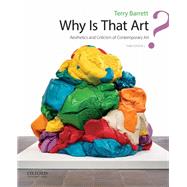
| Why Is Stacked Art? | p. 225 |
| Art by Definitions | p. 225 |
| Is Stacked a Good Work of Art? | p. 227 |
| Realist Considerations | p. 227 |
| Expressionist Considerations | p. 227 |
| Formalist Considerations | p. 228 |
| Postmodernist Considerations | p. 228 |
| Purposes of Art | p. 229 |
| Selecting Criteria | p. 230 |
| A Single Criterion or Multiple Criteria for All Works of Art | p. 230 |
| Questions for Further Reflection | p. 231 |
| Notes | p. 231 |
| Glossary | p. 233 |
| Bibliography | p. 241 |
| Index | p. 253 |
| Table of Contents provided by Ingram. All Rights Reserved. |