Free Shipping On Every Order



Amazon no longer offers textbook rentals. We do!
The Way We Live Now
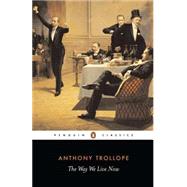
The Way We Live Now
- ISBN 13:
9780142437131
- ISBN 10:
0142437131
- Format: Paperback
- Copyright: 02/26/2002
- Publisher: Penguin Classics
- Newer Edition
 Free Shipping On Every Order
Note: Supplemental materials are not guaranteed with Rental or Used book purchases.
Extend or Purchase Your Rental at Any Time
Need to keep your rental past your due date? At any time before your due date you can extend or purchase your rental through your account.
Summary
This was the new metropolitan disease Trollope set out brilliantly to expose in The Way We Live Now. His milieux are the City's financial institutions, London's exclusive West End squares and drones' clubs populated by languorous aristocrats, all offering rich pickings for the unscrupulous speculator, whether in the marriage or the money market. Among the unscrupulous are the hack-writer Lady Carbury, her son Felix and, above all, Melmotte, a financier of uncertain origins and Napoleonic ruthlessness, energy and charm, whose dramatic rise and fall dominates the novel.
The Way We Live Now, unpopular on its first appearance in 1874-5, is now widely recognized as Trollope's masterpiece. An unorthodox satire with a happy ending, it explores decadence and change in what Frank Kermode calls 'a world increasingly more congenial to the speculator than to the gentleman'.
Author Biography
Read moreTable of Contents
Read moreSupplemental Materials
Read moreRelated Products