Because Knetbooks knows college students. Our rental program is designed to save you time and money. Whether you need a textbook for a semester, quarter or even a summer session, we have an option for you. Simply select a rental period, enter your information and your book will be on its way!
| Introduction | |
| Current Issues in Peer influence Research | p. 3 |
| Peer Influence Mechanisms | |
| A Comprehensive Conceptualization of the Peer Influence Process in Adolescence | p. 17 |
| Cognitive Social Influence: Moderation, Mediation, Modification, and … the Media | p. 45 |
| Dynamics and Ecology of Adolescent Peer Influence | p. 72 |
| Deviance Regulation Theory: Applications to Adolescent Social I... MORE | p. 94 |
| Altering Peer Influence Effects: Moderators and Interventions | |
| Variation in Patterns of Peer Influence: Considerations of Self and Other | p. 125 |
| Adolescent Peer Influences: Beyond the Dark Side | p. 141 |
| Mobilizing and Weakening Peer Influence as Mechanisms for Changing Behavior: Implications for Alcohol Intervention Programs | p. 161 |
| Identity Signaling, Social Influence, and Social Contagion | p. 181 |
| Underexplored Contexts for Potential Peer Influence Effects | |
| Homophily in Adolescent Romantic Relationships | p. 203 |
| Peer Influence in Involuntary Social Groups: Lessons from Research on Bullying | p. 225 |
| Index | p. 245 |
| Table of Contents provided by Ingram. All Rights Reserved. |
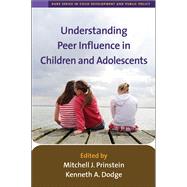
Mitchell J. Prinstein, PhD, is Associate Professor and Director of Clinical Psychology at the University of North Carolina at Chapel Hill. His research examines interpersonal models of internalizing symptoms and health-risk behaviors among adolescents, with a focus on the unique role of peer relationships in the developmental psychopathology of depression, self-injury, and suicidality. Currently an Associate Editor of the Journal of Consulting and Clinical Psychology and a member of the National Institutes of Health’s Study Section on Psychosocial Development, Risk, and Prevention, Dr. Prinstein is a recipient of the Blau Early Career Award from the Society of Clinical Psychology of the American Psychological Association (APA). He is a Fellow of the APA Society of Clinical Child and Adolescent Psychology.
Kenneth A. Dodge, PhD, is the William McDougall Professor of Public Policy and Professor of Psychology and Neuroscience at Duke University, and Director of the Duke Center for Child and Family Policy. He is interested in how problem behaviors such as chronic violence, school failure, drug use, and child abuse develop across the lifespan; how they can be prevented; and how communities can implement policies to prevent these outcomes and promote children’s optimal development. Dr. Dodge has been honored with the Distinguished Scientific Contribution Award from the APA; the Boyd McCandless Award from APA Division 7, Developmental Psychology; and the Senior Scientist Award from the National Institutes of Health.