FREE SHIPPING BOTH WAYS
ON EVERY ORDER!
LIST PRICE:
$39.95

OUR PRICE:
$17.80

You may extend rentals at any time.


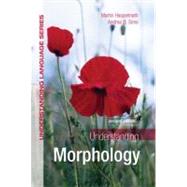
Understanding Morphology

ISBN: 9780340950012 | 0340950013
Edition: 2nd
Format: Nonspecific Binding
Publisher: Routledge
Pub. Date: 9/24/2010

Why Rent from Knetbooks?

Because Knetbooks knows college students. Our rental program is designed to save you time and money. Whether you need a textbook for a semester, quarter or even a summer session, we have an option for you. Simply select a rental period, enter your information and your book will be on its way!

Top 5 reasons to order all your textbooks from Knetbooks:

  • We have the lowest prices on thousands of popular textbooks
  • Free shipping both ways on ALL orders
  • Most orders ship within 48 hours
  • Need your book longer than expected? Extending your rental is simple
  • Our customer support team is always here to help
SummaryTable of ContentsAuthor Biography
This new edition of Understanding Morphology has been fully revised in line with the latest research. It now includes 'big picture' questions to highlight central themes in morphology as well as research exercises for each chapter.Understanding Morphology presents an introduction to the study of word structure that starts at the very beginning. Assuming no knowledge of the field of morphology on the part of the reader, the book presents a broad range of morphological phenomena from a wide variety of languages. Starting with the core areas of in... MORE
Introduction
What is morphology?
Morphology in different languages
The goals of morphological research
A brief user's guide to this book
Summary of chapter 1
Further reading
Exercises
Research skills
Lexical units
Lexems and word forms
Morphemes as ... MORE
Some difficulties in morpheme analysis
Words as the basic lexical units
Reconciling words and morphemes
Summary of chapter 2
Further reading
Appendix: morpheme-by-morpheme glosses
Exercises
Research skills
Rules
Productivity
Formal operations
The form of morphological rules
Summary of chapter 3
Further reading
Exercises
Research skills
Inflection and derivation
Inflectional categories
Derivational meanings
Properties of inflection and derivation
Conceptualizations in morphological theory
Associating inflectional properties with words
Summary of chapter 4
Further reading
Exercises
Research skills
Productivity
Possible, actual and occasional words
Measuring productivity
Morphological change
The relationship between morphological change and synchronic productivity
Restrictions on word-formation rules
Speakers' knowledge of productivity
Summary of chapter 5
Further reading
Exercises
Research skills
The hierarchical structure of words
Compounding
Hierarchical structure and head-dependent relations in compounds
Hierarchical structure and head-dependent relations in derived lexemes
Parallelism in syntax and morphology
Summary of chapter 6
Further reading
Exercises
Inflectional paradigms
Types of inflection classes
Describing global inflection classes
Inheritance hierarchies
The role of stmes in inflection
Syncretism
Missing cells: defectiveness, deponency and periphrasis
Syntagmatic and paragigmatic relations in morphology
Summary of Chapter 7
Further reading
Exercises
Research skills
Words and phrases
Diving text into words
Free forms versus bound forms
Clitics versus affixes
Compounds versus phrases
Lexical integrity
Summary of chapter 8
Further reading
Exercises
Research skills
Morphophonology
Two types of sound alternations
Process descriptions and sound alternations
Three types of morphophonological alternations
The diachrony of morphophonological alternations
Integrated accounts of phonology and morphology
Summary of chapter 9
Further reading
Exercises
Research skills
Morphology and valence
Valence-changing operations
Valence in compounding
Transpositional derivation
Transpositional inflection
Summary of chapter 10
Further reading
Exercises
Research skills
Frequency effects in morphology
Asymmetries in inflection
Table of Contents provided by Publisher. All Rights Reserved.

Martin Haspelmath is Senior Researcher in the Linguistics Department, Max Planck Institute for Evolutionary Anthropology and an Honorary Professor at the University of Leipzig.
Andrea D. Sims is Assistant Professor of Slavic Linguistics, Ohio State University.


Please wait while this item is added to your cart...