FREE SHIPPING BOTH WAYS
ON EVERY ORDER!
LIST PRICE:
$47.80

OUR PRICE:
$11.74

You may extend rentals at any time.


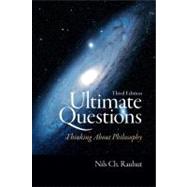
Ultimate Questions : Thinking about Philosophy

ISBN: 9780205731978 | 020573197X
Edition: 3rd
Format: Paperback
Publisher: Pearson
Pub. Date: 10/21/2010

Why Rent from Knetbooks?

Because Knetbooks knows college students. Our rental program is designed to save you time and money. Whether you need a textbook for a semester, quarter or even a summer session, we have an option for you. Simply select a rental period, enter your information and your book will be on its way!

Top 5 reasons to order all your textbooks from Knetbooks:

  • We have the lowest prices on thousands of popular textbooks
  • Free shipping both ways on ALL orders
  • Most orders ship within 48 hours
  • Need your book longer than expected? Extending your rental is simple
  • Our customer support team is always here to help
SummaryTable of ContentsAuthor Biography
This inexpensive and brief text examines the main problems in contemporary philosophy and uses more than 100 "Food for Thought" exercises to promote critical thinking and help students become active learners of philosophy. Ultimate Questions explores how the timeless problems of Western philosophy are located inside our ordinary ways of thinking and being. It encourages readers to think about philosophy first-hand by using vivid and engaging examples. It also introduces readers to prominent up-to-date theories being applied to the same problems... MORE
Prefacep. xi
What Is Philosophy?p. 1
Making Sense of the Worldp. 1
The Relationship Between Science and Philosophyp. 6
The Main Branches of Philosophyp. 10
Philosophical Toolsp. 15
Logical Consistencyp. 16
A Demand of Reason: Avoid Contradictionsp. 17
Logical Possibilityp. 19
Definitionsp. 2... MORE
Lexical vs. Real Definitionsp. 21
Challenging Definitions: Counterexamples and Thought Experimentsp. 23
The Basic Structure of Argumentsp. 25
Putting Arguments into Standard Formp. 26
Deductive and Inductive Argumentsp. 28
Evaluating Deductive Arguments: Validity and Soundnessp. 30
Evaluating Deductive Arguments: Logical Formp. 32
Evaluating Inductive Arguments: Probabilityp. 35
What Do We Know?p. 42
Why Knowledge Mattersp. 42
Searching for a Definition of Knowledgep. 44
Three Different Theories of Knowledgep. 47
Skepticismp. 48
The Case for Skepticismp. 48
Descartes' Quest for Certaintyp. 51
Empiricismp. 57
The Case for Empiricismp. 59
Problems with Perceptionp. 60
The Problem of Inductionp. 65
Rationalismp. 67
The Case for Rationalismp. 70
Problems for Rationalismp. 72
Final Remarks on Epistemologyp. 74
The Problem of Free Willp. 77
Why Is There a Problem with Free Will?p. 77
The Case for Hard Determinismp. 82
Can Indeterminism Save Free Will?p. 86
Compatibilismp. 88
Traditional Compatibilismp. 90
Deep Self-Compatibilismp. 91
A Fundamental Problem for Compatibilismp. 95
Libertarianismp. 97
The Case for Libertarianismp. 97
Problems for Libertarianismp. 99
Final Remarks on the Problem of Free Willp. 101
The Problem of Personal Identityp. 104
What Is the Problem?p. 104
The Illusion Theoryp. 110
The Case for the Illusion Theoryp. 110
Problems for the Illusion Theoryp. 112
The Body Theory, or Animalismp. 113
The Case for the Body Theoryp. 113
Problems for the Body Theoryp. 115
The Soul Theoryp. 116
The Case for the Soul Theoryp. 116
Problems for the Soul Theoryp. 117
The Memory Theoryp. 118
The Case for the Memory Theoryp. 118
Problems for the Memory Theoryp. 119
Final Remarks on Personal Identityp. 124
The Mind/Body Problemp. 126
What Is the Problem?p. 126
Possible Solutions to the Mind/Body Problemp. 129
Substance Dualismp. 131
Arguments for Substance Dualismp. 132
Arguments Against Substance Dualismp. 136
Varieties of Physicalismp. 139
Behaviorismp. 140
Logical Behaviorismp. 141
Arguments Against Logical Behaviorismp. 143
The Identity Theoryp. 144
Arguments Against the Identity Theoryp. 145
Functionalismp. 146
Functional Concepts and ôStuffö Conceptsp. 146
Functionalism: Mind as Softwarep. 147
Functionalism and Artificial Intelligence: The Turing Testp. 147
Arguments Against Functionalismp. 148
Eliminative Materialismp. 152
Final Remarks on the Mind/Body Problemp. 153
Does God Exist?p. 156
God, Faith, and Reasonp. 156
What Do We Mean by the Word God?p. 157
Arguments in Defense of Classical Theismp. 161
Arguments from Religious Experiencesp. 161
The Cosmological Argumentp. 164
The Design Argumentp. 169
The Ontological Argumentp. 176
Pascal's Wagerp. 181
The Effect of These Argumentsp. 184
Arguments Against Classical Theismp. 185
The Logical Problem of Evilp. 186
The Evidential Problem of Evilp. 189
Final Remarks on the Problem of God's Existencep. 192
What Ought We to Do?p. 197
Moral Intuitions and Moral Principlesp. 197
A Fundamental Challenge: Relativismp. 199
The Case for Ethical Subjectivismp. 200
Problems for Ethical Subjectivismp. 202
The Case for Cultural Relativismp. 203
Problems for Cultural Relativismp. 204
Final Remarks on Cultural Relativismp. 207
Some Important Ethical Theoriesp. 208
Divine Command Theoryp. 209
Utilitarianismp. 211
Duty-Based Theoriesp. 220
Virtue-Based Theoriesp. 226
Final Remarks on the Problem of Moralityp. 231
Creditsp. 234
Indexp. 235
Table of Contents provided by Ingram. All Rights Reserved.

In This Section:


I. Author Bio

II. Author Letter


I. Author Bio


Nils Ch. Rauhut studied philosophy and history at the University of Regensburg (Germany). He received an M.A. degree in philosophy from the University of Colorado at Boulder, and a Ph.D. in philosophy from the University of Washington in Seattle. He taught at Weber State University in Ogden, Utah, and he is currently teaching at Coastal Carolina University in Conway, South Carolina.


Website: http://ww2.coastal.edu/nrauhut/ 


II. Author Letter


Dear Colleague,


I have taught Introduction to Philosophy in various class sizes and at various academic institutions for more than fifteen years. I enjoy it tremendously but I also know that teaching the course is challenging.


A genuine introduction to philosophy requires a conversation between us, the students, and the content. However, students are often reluctant to engage in genuine conversations about great ideas. Why think, argue, or speak in class if listening to lectures seems so much more convenient? My textbook, Ultimate Questions: Thinking about Philosophy 3e, is constructed to get students actively engaged in doing philosophy together with you in the classroom. More than 100 Food for Thought Exercises in the text are designed to generate lively classroom discussions and sharpen critical thinking. The exercises are designed to make the philosophy classroom more interactive and they help students realize whether they have grasped important concepts clearly.


My text does not presuppose that students already have a natural curiosity to think and talk about great philosophical questions. Instead, it is designed to awaken such curiosity by showing them how the great questions arise naturally in our ordinary ways of being. The book is an invitation for students to realize that the great questions of philosophy are invariably intertwined with the way all of us live every day. To study the great questions then, is ultimately an attempt to get to know ourselves.


Students read much less than we instructors hope. I have tried to write Ultimate Questions such that students are seduced into reading. I have tried to write clearly without oversimplifying any philosophical position or problem. My hope is that the book can provide for students partly what a lecture normally provides, so that instructors have more freedom to use class time for discussions, group work, role play or any other form of active learning.


I would be delighted to hear from anyone using this book in their classes, and would especially value any suggestions for improvement, my e-mail is nrauhut@coastal.edu.


Sincerely,


Nils Rauhut


Coastal Carolina University

Related Products


  • Ultimate Questions : Thinking about Philosophy
    Ultimate Questions : Thinking ...
  • Ultimate Questions: Thinking About Philosophy (Penguin Academics Series)
    Ultimate Questions: Thinking A...


Please wait while this item is added to your cart...