FREE SHIPPING BOTH WAYS
ON EVERY ORDER!
LIST PRICE:
$151.00

OUR PRICE:
$59.80

You may extend rentals at any time.


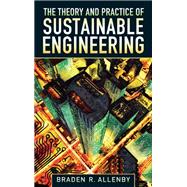
The Theory and Practice of Sustainable Engineering

ISBN: 9780132127998 | 0132127997
Edition: 1st
Format: Hardcover
Publisher: Prentice Hall
Pub. Date: 4/27/2011

Why Rent from Knetbooks?

Because Knetbooks knows college students. Our rental program is designed to save you time and money. Whether you need a textbook for a semester, quarter or even a summer session, we have an option for you. Simply select a rental period, enter your information and your book will be on its way!

Top 5 reasons to order all your textbooks from Knetbooks:

  • We have the lowest prices on thousands of popular textbooks
  • Free shipping both ways on ALL orders
  • Most orders ship within 48 hours
  • Need your book longer than expected? Extending your rental is simple
  • Our customer support team is always here to help
SummaryTable of ContentsAuthor Biography
The Theory and Practice of Sustainable Engineering is appropriate to use in sustainable engineering classes for both majors and non-majors. This textbook was designed as the basis for a course in itself, but it can be used to provide modules in existing courses, or as a supplementary text in sustainable engineering, green engineering, industrial ecology, sustainability law and policy, and environmental courses. Sustainable engineering is learning how to engineer responsibly and professionally in the Anthropocene: the Age of the Human. This text... MORE

Chapter 1 So What Is Different Now? Or, Why We Need Sustainable Engineering

1.1. Introduction

1.2. Welcome to the Anthropocene

1.3  Evolution of the Anthropocene

1.4  The Fingerprint of the Anthropocene: Energy and Water

1.5  The Fingerprint of the Anthropocene: Human Imprints on Sinks and Material

... MORE

1.6  Conclusion

Exercises

Annotated Bibliography


Chapter 2 Themes of the Anthropocene

2.1 Introduction

2.2 Globalization and Multiculturalism, Then and Now

2.3  Information and Communications Technology and Systems

2.4 Technology and Sustainability

2.5  Demographic Trends

Exercises

Annotated Bibliography


Chapter 3 Complexity

3.1  Complexity

3.2  Simple versus Complex Systems

3.3  Different Forms of Complexity

3.4  Understanding Complexity

3.5  Models, Ideology and Complexity

Exercises

Annotated Bibliography


Chapter 4 Sustainability

4.1  Introduction

4.2  Sustainable Development

4.3  Sustainability and Resources

4.4  From Sustainability to Sustainable Engineering

4.5  Sustainability and Global States

Exercises

Annotated Bibliography


Chapter 5 Homo Faber: Human History and Technology

5.1 Introduction

5.2 The Railroad as Technology System

5.3 Technology Clusters 

Exercises

Annotated Bibliography


Chapter 6 Characteristics of Technology

6.1  Introduction

6.2  Product Design

6.3  Behavior of Technological Systems

6.4  The Three Levels of Technology Systems

6.5  Concluding Observations

Exercises

Annotated Bibliography


Chapter 7 Industrial Ecology        

7.1  Introduction

7.2  Industrial Ecology

7.3  Life Cycle Assessment

7.4 Streamlined LCA

7.5  Systems Engineering

Exercises

Annotated Bibliography


Chapter 8 The Five Horsemen: Emerging Technologies

8.1  Introduction

8.2  The Five Horsemen

8.3  The Human as Design Space

Exercises

Annotated Bibliography


Chapter 9 Green Chemistry

9.1  Introduction

9.2  The Chlorofluorocarbon Case Study

9.3  Antimicrobials and Pharmaceuticals as Earth Systems

9.4 Policy Implications

Exercises

Annotated Bibliography


Chapter 10 Sustainable Engineering: Information and Communication Technology

10.1 Introduction

10.2 Framing ICT

10.3  Infrastructure Operations

10.4  Services

10.5  The Virtualization of Work, Digital Nomads, and the Triple Bottom Line

10.6 Virtualization of Work and the Evolution of Institutional Complexity

10.7  Conclusion

Exercises

Annotated Bibliography


Chapter 11 The Five Horsemen, Military Operations, and National Security

11.1  Introduction      

11.2  Thinking about National Security

11.3  Concluding Thoughts

Exercises

Annotated Bibliography


Chapter 12 The Macroethics of Sustainable Engineering

12.1  Introduction

12.2  Framing Ethics

12.3 The Challenge of Macroethics

Exercises

Annotated Bibliography


Chapter 13 The Aral Sea, The Everglades, and Adaptive Management

13.1  Introduction: Adaptive Management

13.2  The Aral Sea

13.3  The Florida Everglades

13.4  Themes

13.5  Adaptive Management Principles

Exercises

Annotated Bibliography


Chapter 14 Earth Systems Engineering and Management: Sustainable Engineering at a Planetary Scale

14.1  Introduction

14.2  Geoengineering

14.3  Urban Design and Management, and High Modernism

14.4  Theoretical ESEM Principles 

14.5  ESEM Governance Principles  

14.6  ESEM Design and Management Principles

14.7  Sustainable Engineering, ESEM, and the Final Principle

Exercises

Annotated Bibliography


Chapter 15 The Engineer as Leader           

15.1  Introduction

15.2  Attitude and Preparation

15.3  Lead by Following

15.4  Personal Characteristics

Exercises


Index of Boxes


Box 1.1:  What is Sustainable Engineering?

Box 1.2:  Exponentials

Box 1.3:  Case Study: Corn-Based Ethanol

Box 1.4:  Writing for your Audience

Box 2.1:  Monsanto, Genetically Modified Organisms, and Corporate Responsibility

Box 2.2:  Lessons of the Autonomic City for Sustainable Engineering

Box 3.1:  Plug-in Automobiles and Bio-Fuel: Why Not to Fall in Love with a                                         Technology

Box 4.1:  The President’s Council on Sustainable Development

Box 4.2:  Reserves and Resources

Box 4.3:  Toxicity, Hazard, and Risk

Box 5.1:  Aspects of Technology

Box 5.2:  Technological Determinism

Box 5.3:  The Technological Trajectory of Money

Box 5.4:  Perception and Technology

Box 6.1:  Levels I and II, Revisited: The Shop Floor

Box 8.1:  Transhumanism

Box 8.2:  Who Defines the Playing Field?  Conservation Biology and the Biodiversity Crisis

Box 8.3:   Integrating the Brain with the Machine

Box 8.4:    Using Metaphors and Analogies

Box 9.1:  Principles of Green Chemistry

Box 9.2:  Arsenic Management in the United States

Box 10.1:  A Telecom Firm Perspective on Sustainable Engineering

Box 10.2:  Design for Environment

Box 10.3:  Scenarios and Scenario Planning

Box 10.4:  ICT at the Bottom of the Pyramid

Box 11.1:  Hard and Soft Power in the Modern World

Box 12.1:  Respect and Reciprocity: The Golden Rule 

Box 14.1:  Mining as ESEM


Braden R. Allenby is currently Lincoln Professor of Engineering and Ethics, and Professor of Civil and Environmental Engineering, and of Law, at Arizona State University, having moved from his previous position as the Environment, Health and Safety Vice President for AT&T in 2004. He is also a Batten Fellow in Residence at the University of Virginias Darden Graduate School of Business Administration, and a Fellow of the Royal Society for the Arts, Manufactures & Commerce. Dr. Allenby received his BA from Yale University in 1972, his J. D. from the University of Virginia Law School in 1978, his Masters in Economics from the University of Virginia in 1979, his Masters in Environmental Sciences from Rutgers University in the Spring of 1989, and his Ph.D. in Environmental Sciences from Rutgers in 1992.


Please wait while this item is added to your cart...