Because Knetbooks knows college students. Our rental program is designed to save you time and money. Whether you need a textbook for a semester, quarter or even a summer session, we have an option for you. Simply select a rental period, enter your information and your book will be on its way!
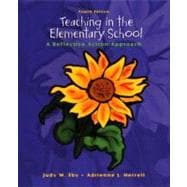
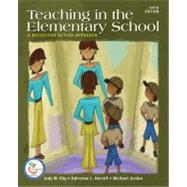
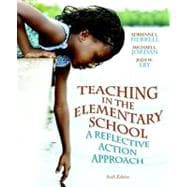
Are you looking for a brief, practical guide to elementary teaching methods? If so, you will want to explore Teaching in the Elementary School: A Reflective Action Approach, 5th Edition. Using a unique reflective action model, this book provides you with a step-by-step model for active decision-making and accommodating diversity with inclusion to develop a sense of community among your students. Through an easy and inviting writing style this 5th Edition promotes reflective and creative teachi... MORE
FEATURES FOR YOUR PROFESSIONAL SUCCESS:
Reflective Action in Teaching Model. This unique step-by-step model for active decisionmaking
and accommodating diversity is now revised to illustrate the need to plan with
standards in mind (Chapter 1).
Classroom-Based Video Clips. Throughout the book you will find video clips
demonstrating many of the strategies recommended in the text and practiced in todays
classrooms. Margin notes identify each video and direct you to its location on the MyEducationLab website (www.MyEducationLab.com)
Guided Exploration. Instructor-led hands-on activities help you explore chapter concepts
and provide examples from teachers of hands-on activities you can use with your students
in the elementary classroom.
Reflective Action Experiences for Your Portfolio of Professional Practice. Serving
as a basis for your portfolio, this feature includes simulated experiences and reflective
essays that invite reflection and focus you on ways to meet standards while still providing
meaningful curriculum for your students.
Playing Catch Up. This feature provides practical strategies for working with students
who are not working on grade level.
Communicating with Parents. This feature offers practical suggestions for including
parents as members of the learning team.
Technology Icons. These icons indicate where you will find technology applications that
highlight different ways technology can be infused into curriculum.
Conflict Resolution and Preventing Bullying. The information on these two vital
classroom management issues has been updated
Numerous New Reflective Action Case Studies. These real-life examples model how
teachers create school curricula and programs, select teaching strategies, and plan
appropriate assessments for their students that achieve the standards of their school
districts (Ch. 2, 9, 10, 11).
To order this book WITHOUT MyEducationLab use this ISBN: 978013406826 . To order this book WITH MyEducationLab use this ISBN: 9780137147724. Click here to learn more about MyEducationLab.
| Communicating with Parents | |
| Playing Catch Up | |
| Guided Exploration | |
| Portfolio of Professional Practices Activity | |
| Reflective Action in Teaching | |
| Susan reflects on her teaching relative to her students | |
| Using a Reflective Action Approach | |
| A Reflective Action Model | |
| Definitions of Reflective Thinking and Action | |
| ... MORE | |
| Withitness | |
| Reflective Action as it Relates to Withitness | |
| Standards That Apply to Reflective Action in Teaching | |
| Reflecting on Your Ethics and Principles | |
| A Graphic Model of Reflective Action in Teaching | |
| Communication with Parents | |
| Guided Group Exploration | |
| Reflective Action Portfolio of Professional Practices Activity | |
| Creating a Safe, Healthy, and Happy Classroom | |
| The First Week of School | |
| Diana's Reflective Process | |
| Practical Classroom Management Strategies | |
| Case Study: Establishing Two-Way Communication with Parents | |
| Issues in Classroom Management | |
| Case Study: Teaching Students How to Resolve Conflicts | |
| Scheduling Time for Active Learning | |
| Communicating with Parents | |
| Guided Exploration | |
| Reflective Action Portfolio of Professional Practices Activity | |
| Lesson Planning and Sequencing | |
| Bloom's Taxonomy of Educational Objectives | |
| Clarifying Educational Goals and Outcomes | |
| Writing Useful and Appropriate Outcome Statements | |
| Writing Objectives to Fit Goals and Outcome Statements | |
| Educational Objectives | |
| Planning for Higher Level Thinking | |
| Planning Lessons for Active Learning | |
| Planning Assessments That Fit Your Lesson's Objectives | |
| Predicting Possible Outcomes of Your Lesson Plans | |
| Varying Objectives for Students with Special Needs | |
| Writing a Well-Organized Lesson Plan | |
| A Lesson Plan Model | |
| Sequencing Objects in School Subjects | |
| Sample Lesson Plans | |
| Communicating with Parents | |
| Playing Catch Up | |
| Guided Exploration | |
| Portfolio of Professional Practices Activity | |
| Planning Curriculum Units | |
| Diane Leonard's First Three Months at School | |
| How School Curricula Are Planned | |
| Evaluation and Use of Textbooks | |
| Planning Thematic Units to Fit Your Curriculum | |
| Sequencing Learning Experiences | |
| Designing the Curriculum to Reflect Multicultural Values | |
| Planning Curriculum for a Multicultural, Bilingual Classroom | |
| Timelines That Fit Your Goals and Outcome Statement | |
| Collaborative Long-Term Planning | |
| Examples of Long-Term Curriculum Planning | |
| Examples of Thematic Units | |
| Communicating with Parents | |
| Playing Catch Up | |
| Guided Exploration | |
| Communicating with Parents | |
| Playing Catch Up | |
| Guided Exploration | |
| Portfolio of Professional Practices Activity | |
| Assessing Students' | |
| Diverse Needs | |
| Language Acquisition and the Classroom Teacher | |
| Language Scaffolding | |
| The Stages in Language Acquisition | |
| Optimal Levels of Instruction | |
| Five Factors in Meeting the Needs of Diverse Students | |
| The Forgotten Minority | |
| Interactive Goal Setting | |
| Building Self Esteem and Intrinsic Motivation | |
| The Enhancing Effects of Stress | |
| Classrooms as Communities | |
| Reforming Schools to Provide Multicultural Equity | |
| Using Assessment Devices to Identify Student Needs | |
| Interpreting Data From Students' | |
| Cumulative Files | |
| Avoid Labeling Students | |
| Authentic Assessments for a Diverse Student Body | |
| Using Pre-tests to Diagnose Student Needs | |
| Placement and Grouping Decisions | |
| Performance Sampling | |
| Communicating with Parents | |
| Playing Catch Up | |
| Guided Exploration | |
| Portfolio of Professional Practices Activity | |
| Establishing a Basis for Active, Authentic Learning | |
| Retrieval Process | |
| Presentation Skills That Increase Clarity and Motivation | |
| Systematic Classroom Instruction | |
| Communicating with Parents | |
| Playing Catch Up | |
| Guided Exploration | |
| Portfolio of Professional Practices Activity | |
| Teaching Strategies That Increase Authentic Learning | |
| Examples of Teaching Strategies in Action | |
| Reflective Action Case Study | |
| Cooperative Learning Strategies | |
| Learning Teams Enhance Achievement | |
| Cooperative Learning in Science | |
| Literature Circles | |
| Peacemaking Groups | |
| Creating Well-Balanced Cooperative Groups | |
| The Effects of Cooperative Learning | |
| Communicating with Parents | |
| Guided Exploration | |
| Portfolio of Professional Practices Activity | |
| Engaging Students in Classroom Discussions | |
| Asking Questions That Stimulate Higher Level Thinking | |
| Strategies for Interactive Discussions | |
| Role of the Teacher in Leading Discussions | |
| Communicating with Parents | |
| Guided Exploration | |
| Portfolio of Professional Practices Activity | |
| Balancing Standards and Creative Activities | |
| Encouraging Creativity - Provide Materials | |
| Setting a Creative Tone | |
| Creative Atmosphere | |
| How to Encourage Creativity in Children | |
| The Self-Fulfilling Prophecy | |
| Stereotypes Stifle Creativity | |
| Ways to Demonstrate Valuing Creativity | |
| Core Attitudes in Creative Thought | |
| Creativity in Language Arts | |
| Email Stories | |
| Creative Activities in Mathematics | |
| Creative Activities in Social Sciences | |
| Creative Activities in Science | |
| Creative Activities in the Visual and Performing Arts | |
| Humor and Creativity | |
| Creative Training | |
| Communicating with Parents | |
| Playing Catch Up | |
| Guided Exploration | |
| Portfolio of Professional Practices Activity | |
| Assessing and Reporting Student Accomplishments | |
| How Teachers Select and Use Assessment Procedures | |
| Designing Authentic Assessment Tasks | |
| Reflective Action Case Study: Teacher's Reflection on Portfolio Assessment | |
| Reporting Student Accomplishments | |
| Communicating with Parents | |
| Playing Catch Up | |
| Guided Exploration | |
| Portfolio of Professional Practices Activity | |
| Integrating Technology into the Curriculum | |
| Preparing Students to Thrive in a High-Tech World | |
| Using Technology to Track How Teachers Meet State Standards | |
| Reasons to Incorporate Technology into Your Curriculum | |
| Managing Your Classroom with (and for) Technology | |
| Enhancing Your Instructional Strategies with Technology | |
| Word Processing Programs | |
| Educational Software | |
| Extending Classroom Experiences Beyond the Classroom Walls | |
| Computer-Assisted Research Projects | |
| Computer Literacy Program at Beardsley School | |
| Reflective Action Case Study: Planning a Technology-Based Endangered Species Unit | |
| The Advantages of Teacher to Teacher Networking | |
| Communicating with Parents | |
| Playing Catch Up | |
| Guided Exploration | |
| Portfolio of Professional Practices Activity | |
| Relfecting on Teaching and the School Community | |
| No Child Left Behind | |
| Two-Way Communication with Parents | |
| Community Involvement in Classroom Activities | |
| Teachers Mentoring and Coaching One Another | |
| Communicating with Parents | |
| Playing Catch Up | |
| Guided Exploration | |
| Portfolio of Professional Practices Activity | |
| Table of Contents provided by Publisher. All Rights Reserved. |