Free Shipping On Every Order



Amazon no longer offers textbook rentals. We do!
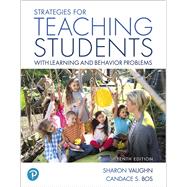
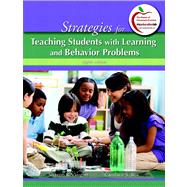
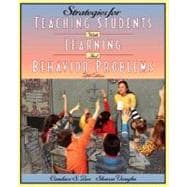
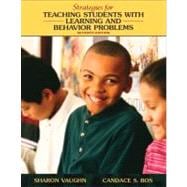
Strategies For Teaching Students With Learning And Behavior Problems
Strategies For Teaching Students With Learning And Behavior Problems
- ISBN 13:
9780205407729
- ISBN 10:
0205407722
- Edition: 6th
- Format: Paperback
- Copyright: 01/01/2009
- Publisher: Allyn & Bacon
- Newer Edition
Rent
Sorry, this item is currently unavailable.
 Free Shipping On Every Order
Note: Supplemental materials are not guaranteed with Rental or Used book purchases.
Extend or Purchase Your Rental at Any Time
Need to keep your rental past your due date? At any time before your due date you can extend or purchase your rental through your account.
Summary
Give your students the help they need-and can use immediately. Based on current research on the best practices for teaching students with learning and behavior problems in a variety of settings, the sixth edition of Strategies for Teaching Students with Learning and Behavior Problems contains more applied teaching strategies than ever before. There is also increased emphasis on the topics of progress monitoring and assessment, diversity and English language learners, and family involvement. Icons throughout the text highlight discussions related to these topics. About the Book bull; bull;Focuses on how to teach and how to apply methods, making it easy to transfer new skills to school settings. bull;Basic ";how-tos"; regarding IEPs, consultation, classroom and behavior management, scheduling, and classroom design are covered extensively. bull;Apply the Concept boxes allow the reader to see how concepts can be applied to learning situations. bull;Instructional Activities throughout the book provide teaching activities and games that can be taken right into the classroom. bull;Case studies of teachers and students working to succeed in classrooms are included in every chapter. Information is presented in a way that is accessible and relevant. New to This Edition bull; bull;Reflects new IDEA 2004 legislation. bull;Increased coverage of progress monitoring reflects the increased importance of assessment today. bull;Increased coverage of methods for communicating and working effectively with parents and families. bull;Spotlight on Diversity features incorporate the most current methods for teaching diverse students populations, including students from culturally and linguistically diverse backgrounds. bull;All new Tech Tips highlight software and other technology that can enhance teaching and learning. bull;Classroom Applications discuss the use of in-depth teaching methods in the classroom.
Table of Contents
Read moreSupplemental Materials
Read moreRelated Products