FREE SHIPPING BOTH WAYS
ON EVERY ORDER!
LIST PRICE:
$84.80

OUR PRICE:
$16.74

You may extend rentals at any time.


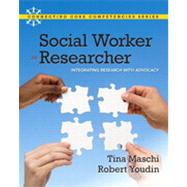
Social Worker as Researcher : Integrating Research with Advocacy

ISBN: 9780205594948 | 0205594948
Edition: 1st
Format: Paperback
Publisher: Pearson
Pub. Date: 9/23/2011

Why Rent from Knetbooks?

Because Knetbooks knows college students. Our rental program is designed to save you time and money. Whether you need a textbook for a semester, quarter or even a summer session, we have an option for you. Simply select a rental period, enter your information and your book will be on its way!

Top 5 reasons to order all your textbooks from Knetbooks:

  • We have the lowest prices on thousands of popular textbooks
  • Free shipping both ways on ALL orders
  • Most orders ship within 48 hours
  • Need your book longer than expected? Extending your rental is simple
  • Our customer support team is always here to help
SummaryTable of ContentsAuthor Biography
Provides a unique human rights and social justice framework to social work research. This book is part of the Connecting Core Competencies Series. This series helps students understand and master CSWE's core competencies with a variety of pedagogy highlighted competency content and critical thinking questions for the competencies throughout. Using an innovative approach, Social Worker as Researcher: Integrating Research with Advocacy, applies a human rights and social justice framework to social work research and evaluation as an essential tool... MORE

IN THIS SECTION:

1.) BRIEF TABLE OF CONTENTS

2.) FULL TABLE OF CONTENTS


BRIEF TABLE OF CONTENTS:


Chapter 1: Social Work Research and Evaluation: Foundations in Human Rights and Social Justice

Ch... MORE The Value of Values and Ethics in Social Work Research and Evaluation

Chapter 3: Problem Solving, Critical Thinking, and Evidence Based Practice

Chapter 4: Problem Formulation: From Conceptualization To Operationalization

Chapter 5: The Literature as Source Evidence: From Search To Appraisal

Chapter 6: Sampling In Evidence-Based Practice Research

Chapter 7: Tapping the Scientist Within: Quantitative Research Methods for Social Work

Chapter 8: Causation-Experimental, Quasi-Experimental, and Non-Experimental Designs

Chapter 9: Tapping the Evidence-Based Practitioner Within: Single Subject Designs

Chapter 10: The Qualitative Approach: Tapping the Artist and Scientist Within

Chapter 11: Evaluation as a Theory of Change

Chapter 12: Writing for a Change and Other Advocacy Tips 


COMPREHENSIVE TABLE OF CONTENTS:


Chapter 1: Social Work Research and Evaluation: Foundations in Human Rights and Social Justice

Background

The History of Social Work and Research: Evidence and the Altruistic Imagination

Human Rights and Social Justice: Implications for Social Work Research

Social Work at the Intersection of Human Rights History

Summary


Chapter 2: The Value of Values and Ethics in Social Work Research and Evaluation

Introduction

Professional Code of Ethics: History and Meaning

The Research to Evaluation Continuum

NASW Ethical Standards for Social Work Research and Evaluation

History and Meaning-Making in 20th Century Research Ethics

Core Ethical Principles and Practices

Ethical Research Decision-Making Process

Research Ethical Decision-Making Model

Summary


Chapter 3: Problem Solving, Critical Thinking, and Evidence Based Practice

Introduction

Evidence-Based Practice (EBP)

Summary


Chapter 4: Problem Formulation: From Conceptualization To Operationalization

Introduction

Linking Approaches to Study Types

Integrating Research and Practice Using Theory

From Conceptualization to Operationalization

Summary


Chapter 5: The Literature as Source Evidence: From Search To Appraisal

Introduction

Case Examples

Professional Practice Contexts

Empirical Literacy for Social Workers

The Scholarly Literature and Peer Review Process

Social Work Education and the Literature Review

The Literature Review Experience

The STAIR MODEL for Conducting Literature Reviews

Summary


Chapter 6: Sampling In Evidence-Based Practice Research

Introduction

Generalizability

Homogeneity

Representativeness

Sampling Methods

Non-Probability Sampling

Summary


Chapter 7: Tapping the Scientist Within: Quantitative Research Methods for Social Work

Introduction

The Anatomy of a Quantitative Study

Summary


Chapter 8: Causation-Experimental, Quasi-Experimental, and Non-Experimental Designs

Introduction

Practitioner Considerations for Causation

Experimental Designs

Quasi-Experimental Designs

Non-Experimental Designs

Social Justice Issues in Research Designs

Summary


Chapter 9: Tapping the Evidence-Based Practitioner Within: Single Subject Designs

Introduction

Elements of Single Subject Design

Single Subject Designs

Summary  


Chapter 10: The Qualitative Approach: Tapping the Artist and Scientist Within

Introduction

Qualitative Approach: The Journey as the Reward

Research Cycle

Research Design

Qualitative Research Design Choices

Data Analysis Strategies              

Rigor in Qualitative Research

Recommendations for Writing Qualitative Research

Summary


Chapter 11: Evaluation as a Theory of Change

Introduction

Needs, Rights, and Social Work Intervention

Conceptualizing Change              

Intervention and Impact Theories

The Nature of Evaluation

Evaluation and the Logic Model

Additional Evaluation Strategies

Mixed Methods Designs and Evaluation

Common Data Sources for Evaluation

Evaluation and Cultural Competence

Summary


Chapter 12: Writing for a Change and Other Advocacy Tips

Introduction

Dissemination and Human Rights

Writing: Start with a Commitment and a Purpose

Writing a Review of the Literature

Other Types of Research Reports

Presentations

Advocacy and Research for Change

Action Steps

Future Directions: Think and Act Global

Implications for Human Rights and Social Justice             

Summary


Appendix: Assessment of Organizational Cultural Competence Survey   

References

Index

Dr. Tina Maschi is an assistant professor at the Fordham University Graduate School of Social Service in New York City. She is a 2010 recipient of the competitive Hartford Geriatric Social Work Faculty Scholars Program Award, which is funded by the Hartford Foundation and the Gerontological Society of America (GSA). She is the principal investigator for the research project, "Trauma, coping resources, and well-being among older adults in prison". She also has received intramural research grants and fellowships for her research. Dr. Maschi also is a 2009 recipient of the Council on Social Work Education’s Faculty Scholar’s Award for the research project for Promising Practices in Social Work Research Education.


Dr. Maschi also has over 15 years of clinical social work and research experience in juvenile and criminal justice settings and community mental health settings. She also is a professional musician and integrates the use of creative arts interventions for increasing well-being and empowerment among diverse populations, such as older adults and social work students, and professionals. She currently teaches both research and practice courses at the Lincoln Center Campus at the Fordham University Graduate School of Social Service. Her website can be visited at: http://www.practitionerasresearcher.net/


Dr. Robert Youdin is an adjunct associate professor at the Fordham University Graduate School of Social Service in New York City.  In 2007-2008, he was a Project Director for a Gero Innovations Grant for the Master’s Advanced Curriculum Project funded by the John A. Hartford Foundation and Council on Social Work Education.  In 2005-2007 Dr. Youdin was a participant in the Curriculum Development Institute (Gero-Ed) sponsored by John A. Hartford Foundation and Council on Social Work Education.  He is a past assistant research scientist of the Biometrics Unit of the New York State Psychiatric Institute in New York City.  In 1977 he was elected as member of Sigma Xi — the Scientific Research Society of North America


Dr. Youdin has been a private practitioner for the past 28 years and currently practices in Princeton, New Jersey.  He has an existential humanistic orientation and is trained in Eriksonian hypnosis.  Over the years, Dr. Youdin has been a professional jazz pianist.  He enjoys performing in small, intimate venues.  In addition, he has appeared on numerous public service radio programs discussing substance abuse problems.  Dr. Youdin’s website can be visited at: http://www.youdin.net/


Please wait while this item is added to your cart...