FREE SHIPPING BOTH WAYS
ON EVERY ORDER!
LIST PRICE:
$34.00

Sorry, this item is currently unavailable.

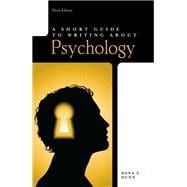
Short Guide to Writing About Psychology, A

ISBN: 9780321094247 | 0321094247
Edition: 1st
Format: Paperback
Publisher: Longman
Pub. Date: 1/1/2004

Why Rent from Knetbooks?

Because Knetbooks knows college students. Our rental program is designed to save you time and money. Whether you need a textbook for a semester, quarter or even a summer session, we have an option for you. Simply select a rental period, enter your information and your book will be on its way!

Top 5 reasons to order all your textbooks from Knetbooks:

  • We have the lowest prices on thousands of popular textbooks
  • Free shipping both ways on ALL orders
  • Most orders ship within 48 hours
  • Need your book longer than expected? Extending your rental is simple
  • Our customer support team is always here to help
SummaryTable of Contents
Featuring up-to-date writing techniques and the latest APA-style guidelines, this brief guide helps students master the skills necessary for writing in psychology. This brief guide takes students step-by-step through the writing processfrom choosing a topic, to outlining, drafting, and revising their papers, to seeking feedback from peers. In addition, it presents thorough discussions of researching psychological literature in the library and on the Internet and presenting those findings in written and oral formats. Special attention is given t... MORE
PREFACExi
1 WRITING ABOUT PSYCHOLOGY
1(12)
Writing is a Process
1(3)
... MOREWhy Write, Anyway?
2(2)
Forms of Writing in Psychology
4(2)
Student Papers
5(1)
Introducing APA Style
6(2)
Planning Your Writing: Timing is Everything
8(3)
Answering a Test Question
8(1)
Writing a Paper
9(1)
A Basic Timeline
9(2)
Writing Habits
11(1)
EXERCISES
12(1)
2 SEARCHING THE PSYCHOLOGICAL LITERATURE
13(25)
Selecting a Research Topic
13(5)
Maintaining a Research Notebook
15(1)
Narrowing Your Focus
16(2)
Process Overview: Searching the Psychological Literature
18(1)
Doing Library Research
19(9)
A Brief Guide to Reference Works in Psychology
21(1)
Using Online Catalogs
21(3)
Psychology Online: Using Databases
24(4)
Manually Searching the Psychological Literature
28(1)
Searching the Internet
28(6)
Search and Metasearch
30(1)
Other Internet Resources
30(3)
Using the Internet: Caveat Emptor
33(1)
Keeping Track of References
34(3)
Logging References in a Working Bibliography
35(2)
EXERCISES
37(1)
3 READING THE PSYCHOLOGICAL LITERATURE
38(16)
The Scientific Pecking Order: Why Journals Are First
39(1)
How to Read and Evaluate the Literature
40(6)
How to Read a Journal Article
41(2)
Skimming: Doing a Quick Prereading
43(3)
Taking Notes on What You Read
46(1)
Using Notecards
46(1)
Using Your Research Notebook
47(1)
Recognizing and Preventing Plagiarism
47(6)
Try This Plagiarism-Awareness Exercise
49(3)
One More Word of Advice
52(1)
EXERCISES
53(1)
4 GETTING STARTED WRITING
54(27)
Getting Started: Prewriting Activities
55(9)
Freewriting
56(2)
Outlining
58(6)
Writing a First Draft
64(5)
"Trick Drafts": Starting With the Roughest Draft
64(1)
Writing a Hypothesis and Composing Paragraphs
65(2)
A Recommended Order for Drafting APA-Style Papers
67(2)
Writing Subsequent Drafts
69(4)
Three Issues to Consider
69(2)
Suggestions for Further Improvement
71(1)
How Many Drafts?
72(1)
Revising: Top to Bottom Every Time
73(4)
Revisiting a Draft
74(3)
Seeking Feedback
77(3)
Professor, Peer, or Writing Center?
77(1)
How to (Graciously) Receive Feedback
78(1)
How to (Graciously) Give Feedback
79(1)
EXERCISES
80(1)
5 WRITING APA-STYLE PAPERS: CONTENT AND GUIDANCE
81(38)
Benefits of APA Style
81(2)
Bem's Hourglass Model for Empirical Writings
83(1)
Writing the Empirical, or Research, Paper in APA Style
83(20)
Title
83(2)
Abstract
85(2)
Introduction
87(5)
Method
92(5)
Results
97(1)
Discussion
98(3)
References
101(1)
Tables and Figures
101(1)
Appendix
102(1)
Author Note
102(1)
A Sample Research Paper
103(11)
Writing an Article Critique
114(1)
Writing a Research Proposal
114(1)
Writing a Literature Review Paper
115(2)
Writing a Theory Paper
117(1)
EXERCISES
117(2)
6 WRITING UP RESULTS
119(11)
Conveying Statistical Results In Words
119(7)
Starting With a Hypothetical Research Result
119(4)
Organizing the Results Section
123(3)
Reflecting Further on Your Results
126(3)
New APA Guidelines on Statistical Methods
126(2)
Meaning Before Numbers: The MAGIC Criteria
128(1)
EXERCISES
129(1)
7 CITING REFERENCES IN APA STYLE
130(20)
Citations and References
130(2)
Learn the Psychological Literature by Reading Reference Sections
131(1)
Basic Citation Mechanics
132(9)
Citing References Within Text
132(2)
Quoting and Paraphrasing
134(6)
Citing Secondary Sources
140(1)
Formats for APA-Style References
141(8)
Journal Articles
142(1)
Books
143(1)
Edited Books
144(1)
Chapters in Edited Books
144(1)
Magazine or Newspaper Articles
144(1)
Presentations at Professional Meetings or Conferences
145(1)
Electronic (Online) Sources
145(1)
Reviews
146(1)
Personal Communications
146(1)
Letter to the Editor
146(1)
Dissertations and Masters Theses
147(1)
Unpublished Manuscripts or Data
147(2)
EXERCISES
149(1)
8 DISPLAYING DATA IN TABLES AND FIGURES
150(10)
Tables
150(4)
Constructing a Table
151(3)
Figures
154(5)
Constructing a Figure
156(3)
EXERCISES
159(1)
9 FORMATTING AND PROOFREADING YOUR PAPER
160(23)
Grammar Guidelines
160(4)
Punctuation Basics
164(3)
Some Common Usage Errors in Student Writing
167(2)
Checking Your Spelling
169(1)
Check Your Writing Voice: Be Active, Not Passive
170(1)
Using Inclusive Language
171(4)
Gender and Sex
173(2)
Race and Ethnicity
175(1)
Guidelines for Formatting in APA Style
175(4)
Title Page
176(1)
Page Numbering
177(1)
Headings and Subheadings
177(2)
Quickly Checking a Paper's Format
179(1)
Proofreading the Penultimate Draft: Once More with Feeling
179(3)
EXERCISES
182(1)
10 BEYOND WRITING: PRESENTING PSYCHOLOGICAL RESEARCH183(26)
The Call for Papers
183(5)
Understanding Call Types and Requirements
184(2)
Knowing Your Audience
186(2)
The Talk
188(7)
Outlining a Talk
189(1)
Preparing Overheads, Slides, and Handouts
190(1)
Computer-Aided Programs
190(1)
Practice, Practice, Practice
191(1)
Giving the Talk: Be a Pro, Avoid the Cons
191(4)
Symposia: Talks in Common
195(2)
Student Symposia
197(1)
Poster Presentations
197(5)
Knowing What to Expect
198(1)
Creating a Poster: Less Is More-and More Is a Bore
199(3)
Return to Writing: Submitting Your Research to a Journal
202(6)
Student Journals
202(1)
Professional Journals
203(2)
Submission, Peer Review, and Editorial Decision: A Process Outline
205(2)
Patience, Patience, Patience
207(1)
EXERCISES
208(1)
APPENDIX209(2)
REFERENCES211(9)
CREDITS220(3)
INDEX223

Related Products


  • Short Guide to Writing about Psychology
    Short Guide to Writing about P...
  • Short Guide to Writing About Psychology
    Short Guide to Writing About P...


Please wait while this item is added to your cart...